

Follow this tag to curate your own personalized Activity Stream and email alerts.
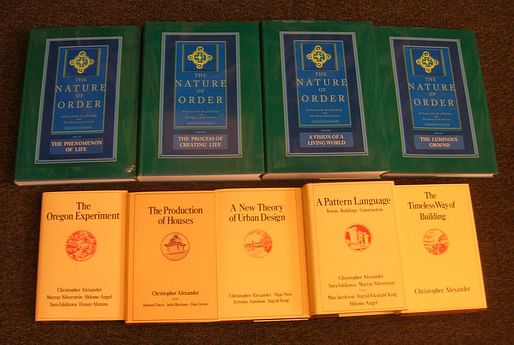
“A Pattern Language” is not about architecture, but about how specific design choices can help us build better relationships. By fitting a series of those choices—the patterns—together, you get a room, a house, a neighborhood and eventually a city. — Curbed
Curbed architecture critic Alexandra Lange takes us on a journey through some of the key lessons from Christopher Alexander's seminal work, A Pattern Language. The book, originally published in 1977 has long been out of fashion in architecture schools, but, Lange argues, with the rise... View full entry

Join us in celebrating New Investigations In Collective Form: The Open Workshop, the latest book by Neeraj Bhatia at Archinect Outpost on Friday, April 26, 7–9pm. Keith Krumwiede will give a short introduction to kick off the event, followed by a panel conversation between Neeraj Bhatia... View full entry
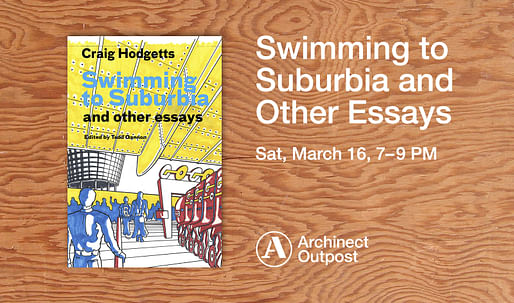
Join us March 16th at Archinect Outpost to celebrate Swimming to Suburbia, the latest book of essays by UCLA professor Craig Hodgetts. Hodgetts will provide a lecture about the books, followed by a book signing. The book is available for presale here, to be signed by Craig Hodgetts at the event... View full entry
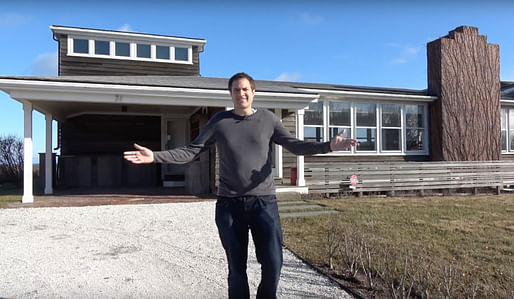
This $2 million house is perched on an ocean cliff. Today I'm showing you the quirks and features of this rather unusual house. It's not a car, but it's still interesting, and quirky, and exciting -- and this house is worth checking out. — YouTube
What happens when a world famous car reviewer turns his sights towards a house? While on vacation, Doug Demuro of YouTube fame couldn't help but review the 2 million dollar home he was staying in on the island of Nantucket. His insights were impressively thorough and refreshingly unlike those one... View full entry

First with a white cover, then black, then grey, then red and then finally pink, Log Journal has carried itself as a unique voice in the architectural community for an astounding 15 years. Log Journal logoEdited by Cynthia Davidson, the magazine has been published three times a year, often as... View full entry

This week Ken, Donna and I talk about some topics in recent architecture news, along with a little discussion about dealing with criticism. Listen to episode 120 of Archinect Sessions, “Radical Candor”. iTunes: Click here to listen, and click the "Subscribe" button below the logo to... View full entry
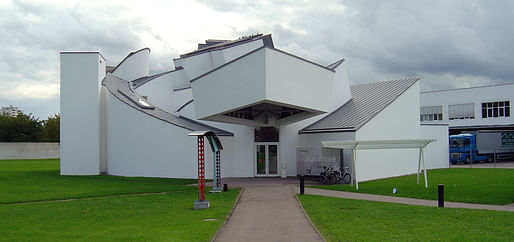
In that spirit I set a challenge for myself: Could I come up not just with one but with 25 buildings that might have deserved the award this year? It took me a few days — and I was helped by some terrific suggestions from architects, critics and historians on Twitter and elsewhere online — but in the end finding 25 wasn't that difficult. — LA Times
LA Times journalist Christopher Hawthorne has penned, or passionately typed, an inquiry into the fact that this year's 25-Year-Award was awarded to—no one. In the article, Hawthorne walks us through the importance and aim of such an award and how to him, there are more than a few projects that... View full entry
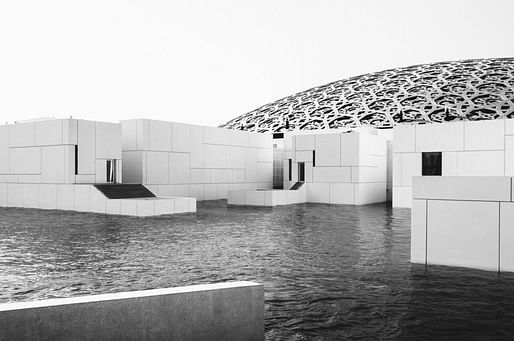
Starchitecture is out of fashion these days, but it can still produce visual wonders. The look of the Louvre Abu Dhabi, designed by Jean Nouvel, might be described as Arabic-galactic. In the form of an immense, filigreed gray half-sphere resting on a low base infiltrated by water channels, it could pass as a spaceship, an unfinished mosque or a Venetian pavilion set on the edge of the Persian Gulf. — NYT
Holland Cotter reviews the new building and collection/inaugural installation, of the Louvre Abu Dhabi. View full entry
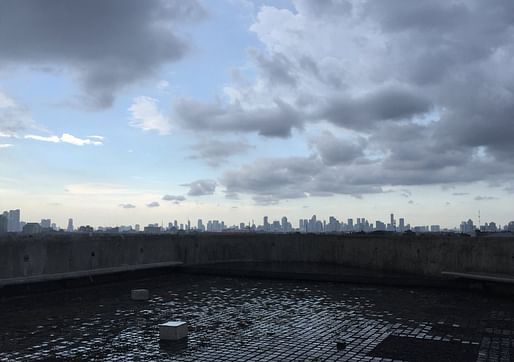
Jakarta is perhaps the truest realization of a post-colonial cosmopolis. Many former colonial capitals stage a rivalry between quaint traditional centers and desperation-driven peripheries. But Jakarta can be understood not as a dialogue with its former foreign overlords but rather as a fiercely insistent projection of Indonesian independence. — Places Journal
In his latest article for Places, Joe Day examines the contemporary architecture of Jakarta through the framework of the utopian terms of the Five Pancasilas, the founding principles of modern Indonesia. Day traces the development of Indonesian architecture from founding president Pak Sukarno's... View full entry
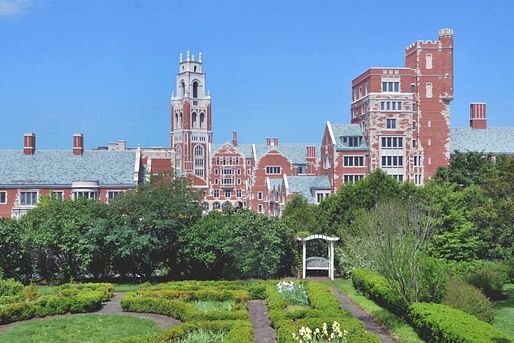
Yale has just completed two new residential colleges near the heart of campus: a superblock of neo-Gothic fantasy. This reversion to an archaic visual language exemplifies a troubling trend. With their new architecture, universities all too often abdicate leadership in promoting artistic innovation as they pander to plutocratic donors. — Places Journal
Columnist Belmont Freeman takes a critical look at Yale's RAMSA-designed Benjamin Franklin College and Pauli Murray College in his latest piece for Places. While Freeman marvels at their extraordinary evocation of tradition, he argues that their historicism represents a missed opportunity to... View full entry
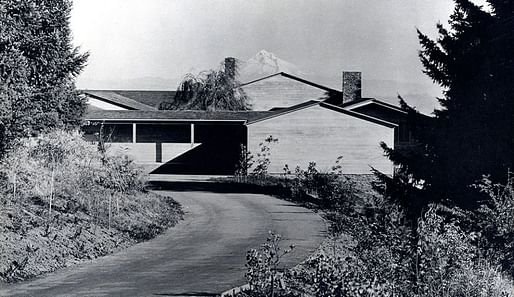
“Whether there is or is not a Northwest regional style of architecture is debatable,” said John Yeon in 1986, “but what is certain is that lot of people want to think there is.” — Places Journal
In "A Fortuitous Shadow," Keith Eggener is inspired by the Portland Art Museum's recent exhibition on John Yeon's life and legacy to explore the concept of regionalism in architecture, beginning with the doubts expressed by the architect long associated with Pacific Northwest regional modernism. View full entry

This week we're joined by Inga Saffron, the Pulitzer Prize-winning architecture critic for the Philadelphia Inquirer. If you haven't read her latest piece on Henry Wilcots, the relatively unknown architect responsible for finishing Louis Kahn's masterpiece in Dhaka, go read it now. We talk with... View full entry
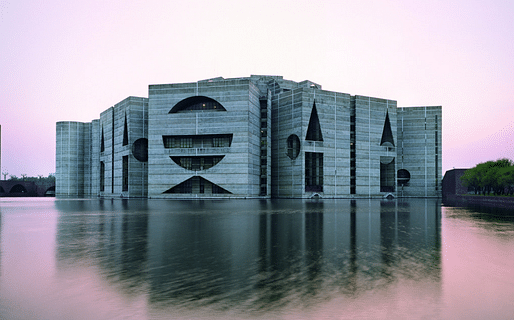
Kahn led a generation of architects away from the standard-issue modernism of glass and steel boxes, but his route was gentle, thoughtful, philosophical, and sometimes vaguely mystical, which is part of the reason that he never really became famous. Kahn’s semi-obscurity didn’t just extend to the cops at Penn Station: The Times obituary had to be written on deadline the night his death became known, because the obit editors hadn’t considered him important enough to merit one in advance. — The Nation
In his essay on Kahn, Goldberger examines methodologies of biographical writing, and explores the enigmatic aspects of the architect's identity and work. "You get his essence almost as much through his words as his buildings. Both are somewhat spare and cryptic, and both are rich in meaning. Who... View full entry
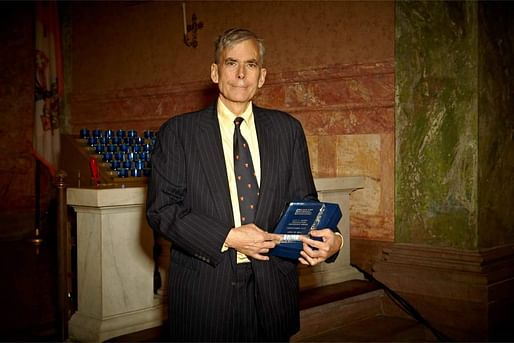
Rooting himself less in a strictly academic tradition and more in an observed, on-the-street context, architecture author and researcher Christopher Gray catalogued what he considered to be beautiful and surprising for The New York Times from 1987 to 2014 in his "Streetscapes" column. He also... View full entry

Blair Kamin, Pulitzer Prize-winning architecture critic for the Chicago Tribune, has had a tempestuous relationship with Donald Trump for years. As a developer working in Chicago, Trump's buildings have been critiqued by Kamin, and as often happens when Trump is criticized, he does not shy away... View full entry


