

Follow this tag to curate your own personalized Activity Stream and email alerts.

The German far-right AfD party has attacked the original Bauhaus as a pernicious example of design, saying it led the project of modernism in the "wrong direction." Their statement, which echoes the disdain put forth by Hitler and the Nazi party, comes from an official motion in... View full entry

The second-ever built Eileen Gray home design from 1934 has hit the local real estate market in France’s Côte d'Azur region for €3.5 million ($3.87 million USD). The home is not far away from Gray’s earlier historic E-1027 villa in Roquebrune-Cap-Martim and boasts 8 bedrooms... View full entry

The latest addition to Hollywood’s famous Sheats-Goldstein Residence and Estate has been completed by Los Angeles-based firm Conner + Perry Architects. Named Club James, the new annex was originally envisioned by mid-century architect John Lautner and estate owner James Goldstein. Image credit... View full entry

The story of modern architecture in St. Louis is complex and often contradictory. Beginning in the 1930s, internationally known architects such as Eric Mendelsohn, Eero Saarinen and Minoru Yamasaki — alongside important regional and national figures like Harris Armstrong, Charles Fleming... View full entry

A group of eight important Black modernist sites across the country has been selected for a round of grants worth a total of $1.2 million by the Getty Foundation in partnership with the National Trust for Historic Preservation. They were part of the Conserving Black Modernism program that is being... View full entry
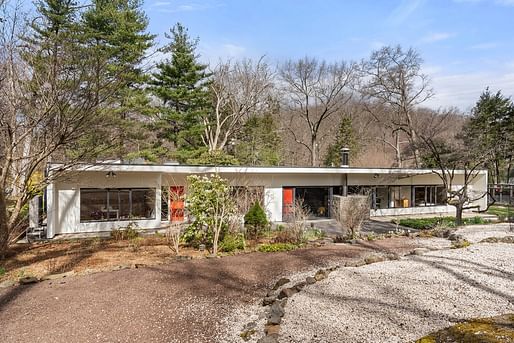
Marcel Breuer’s restored 1950 Marshad House in the Hudson Valley has been listed with an asking price of $1.8 million. The residence at 204 Cleveland Street in Croton-on-Hudson, New York, is a three-bedroom design with 1.5 bathrooms and has an interesting history from the original owner's... View full entry

The show is a gem. It focuses on domestic design from six countries (Colombia, Argentina, Brazil, Mexico, Chile and Venezuela), produced between 1940 and 1980. Latin America had entered a period of transformation, industrial expansion and creativity. Across the region, design was becoming institutionalized as a profession, opening up new avenues, especially for women. — The New York Times
Critic Michael Kimmelman has heaped praise on the 'Crafting Modernity: Design in Latin America, 1940–1980' MoMA exhibition in a new piece for The New York Times. As we reported in December of last year, the show looks at the growth of modernism through an industrial and entrepreneurial... View full entry
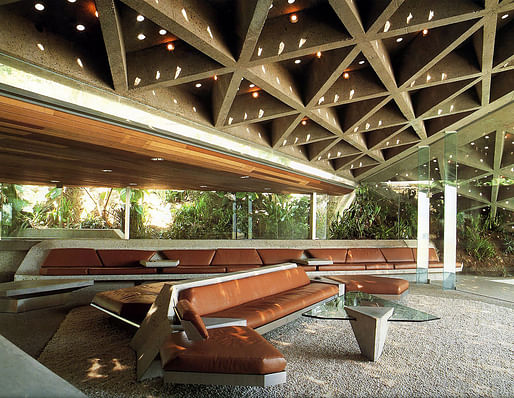
Goldstein and his team of architects, builders, engineers and landscape designers have been working on the Lautner house addition since 2003, and that’s just the tip of the iceberg when it comes to Goldstein’s property, which he has been tinkering with for more than 50 years. [...]
“The purpose of all of this was to make the inside feel like it was outside,” said Goldstein, who describes a very collaborative working relationship with Lautner until the architect’s death, at 83, in 1994.
— The New York Times
Sam Lubell examines half a century of renovations of and recent additions to James Goldstein's compound surrounding the famed John Lautner-designed Sheats-Goldstein Residence in Los Angeles. Big kudos to the Times for referencing Lautner’s 1960 (now-demolished) Concannon House with a link to our... View full entry
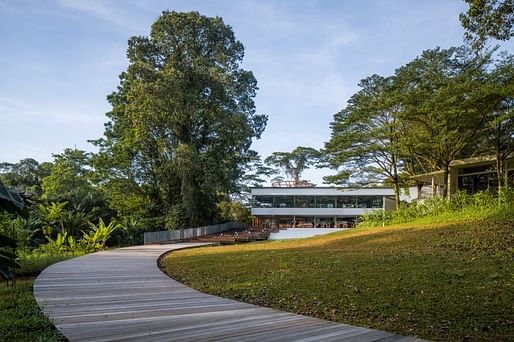
OMA has completed the AIR CIrcular Campus and Cooking Club in Dempsey Hill, Singapore. The scheme saw the overhaul of an existing modernist building and surrounding green space into what the team calls “a place for novel dining experiences, inviting broader thinking and discussions about food... View full entry
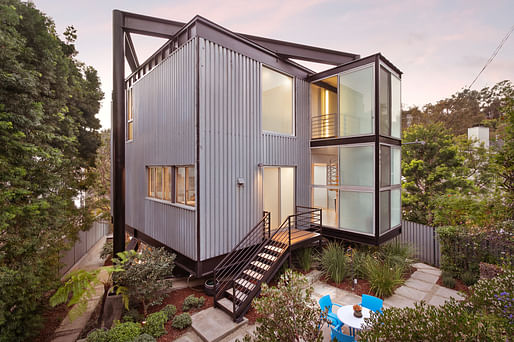
Pierre Koenig’s Schwartz House has been listed for sale in Rustic Canyon, Los Angeles. Built in 1994, the home is the last project Koenig completed, uniquely built on four structural steel beams. Image credit: Cameron Carothers Image credit: Cameron Carothers Externally, the home takes the form... View full entry
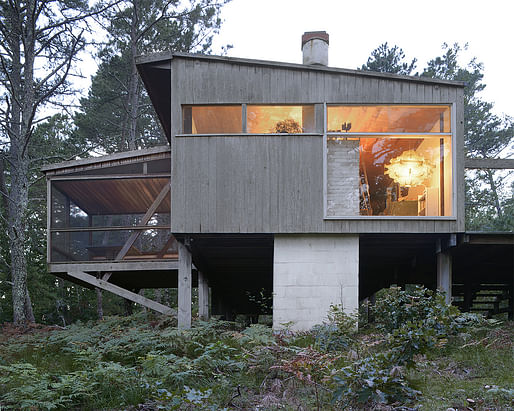
Campaigners seeking to save Marcel Breuer’s 1949 Wellfleet Cottage residence on Cape Cod have launched a $1.4 million fundraising effort aimed at saving the home from an expected demolition that’s likely to come in the next few years. The Cape Cod Modern House Trust is spearheading the effort... View full entry
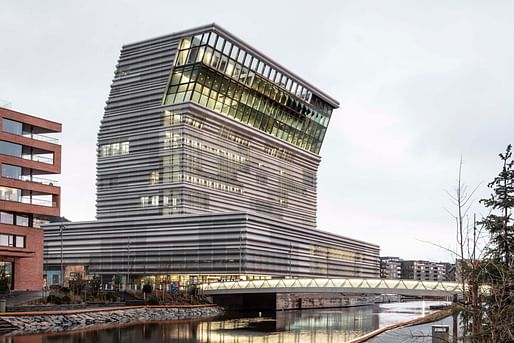
Founded in Sweden in 2014 as a public Facebook group, [Architectural Uprising] is a collective of citizen design critics who object to what organizers call the “continued uglification” of developments in Nordic cities, and push for a return to classically informed design. [...]
The movement’s size and persistence, however, has earned it a seat in the discourse. “When [historians] talk about architecture during these years, [the Architectural Uprising] will be part of that history”
— Bloomberg
A new report in Bloomberg tells of the staying power of social media-driven architectural criticism. Projects lambasted by the popular (mostly) Scandinavian group include Oslo’s new National Museum of Art, Architecture and Design by architect Klaus Schuwerk and estudio Herreros’ Munch... View full entry
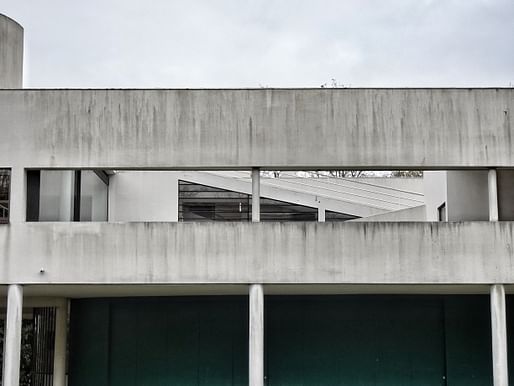
Le Corbusier was to architecture what Picasso was to painting, a towering and egomaniacal creative force who transformed his discipline for ever. His buildings have inspired admiration, sometimes devotion. He is an icon, granted the nickname “Corb” or “Corbu” by architects. He has also been vigorously attacked, as a mechanistic fanatic whose ideas inspired inhumane tower blocks and concrete jungles. — The Guardian
In his latest Guardian piece, critic Rowan Moore remembers the 100-year anniversary of the seminal modernist manifesto Toward an Architecture by one of the profession's most revered and controversial figures, Le Corbusier. Acknowledging that the book's thoughts about the future were now... View full entry

The National Trust for Historic Preservation’s African American Cultural Heritage Action Fund has announced $3.8 million in 2023 grant funding to protect and preserve 40 sites representing African American history. Established in 2017, the Action Fund, which has raised more than $95 million, is... View full entry

An important Kenzo Tange design is facing an uncertain future in Japan’s Kagawa Prefecture after reports that authorities there are moving forward with the demolition of his 1964 “Boat Gymnasium” over disrepair and an apparent inability to fund seismic structural upgrades. The Brutalist... View full entry


