

Follow this tag to curate your own personalized Activity Stream and email alerts.
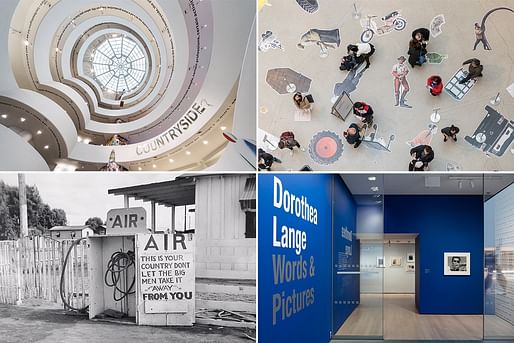
It is no exaggeration to say that our present is the future that Dorothea Lange’s images foretold. The crisis of agriculture in the face of toxic capitalism and climatic disaster that is at the center of her famous photographs might also have served to focus and sharpen "Countryside: The Future," where it is occasionally a subject but more often merely an unstated subtext. — Places Journal
In "Countryside: The Future and the Past," Deborah Gans reviews Countryside: The Future, at the Guggenheim Museum, the multimedia culmination of years of interdisciplinary, globe-spanning research led by OMA's Rem Koolhaas and Samir Bantal, director of its think tank, AMO... View full entry
This is the first installment of a narrative survey of educators around the globe on the challenges of the massive move to online teaching. Some challenges are practical and logistical; others are more conceptual, political, and even philosophical, involving the importance of campus community, the role of schools in providing for the wellbeing of students, and passionate convictions about the nature of learning and the transmission of knowledge. — Places Journal
Places Journal, which recently took a hiatus from its regular publishing schedule in response to the COVID-19 pandemic, has gathered perspectives from leading architectural educators offering their takes on what some of the challenges and concerns are for the period moving forward as design... View full entry
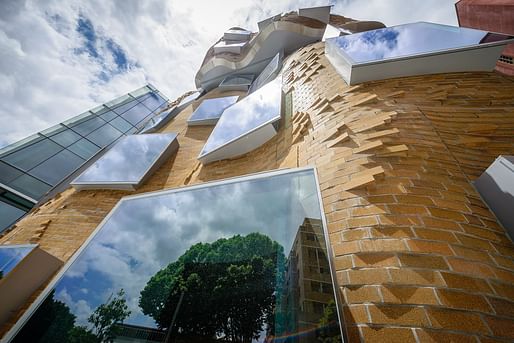
Texture is the condition of possibility through which our bodies meet environments; like gender in its relationality, texture is palpable only in becoming. So did the blue carpet in my childhood bedroom enmesh gender between my toes? And if we alter texture — including how we talk about it — might we transform gender in both minute and brash ways? — Places Journal
Whether or not they realize it, architecture critics generally build a body into their writings. And we must allow ourselves, and others, to write bodies other than cis, straight, white, able ones into the affect of our analyses. Changing words — say, crafting new architectural... View full entry
Fairy tales have transfixed readers for thousands of years, and for many reasons; one of the most compelling is the promise of a magical home. How many architects, young and old, have been inspired by a hero or heroine who must imagine new realms and new spaces — new ways of being in this strange world? Houses in fairy tales are never just houses; they always contain secrets and dreams. — Places Journal
"The Butterfly Dream" by Bernheimer Architecture is the third and final installment of this year's Fairy Tale Architecture series, curated by writer Kate Bernheimer and architect Andrew Bernheimer. ⠀ The team imagined the butterfly in Zhuangzi's famous parable as a drone, collecting data which... View full entry
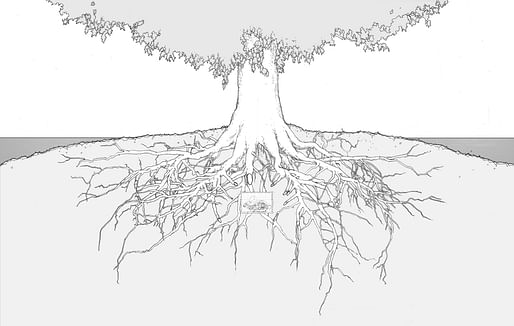
It was the theme of nesting that primarily fascinated us about the Koschei tale, as it corresponded with ideas of sectional nesting that we have exploited as an architectural technique for generating spatial intricacy - LTL Architects. — Places Journal
Our holiday series on fairy tale architecture returns this week with three new features, curated by writer Kate Bernheimer and architect Andrew Bernheimer. ⠀⠀First up: in "The Death of Koschei the Deathless," LTL Architects examine the strange habits of a fearful man who sought to escape his... View full entry
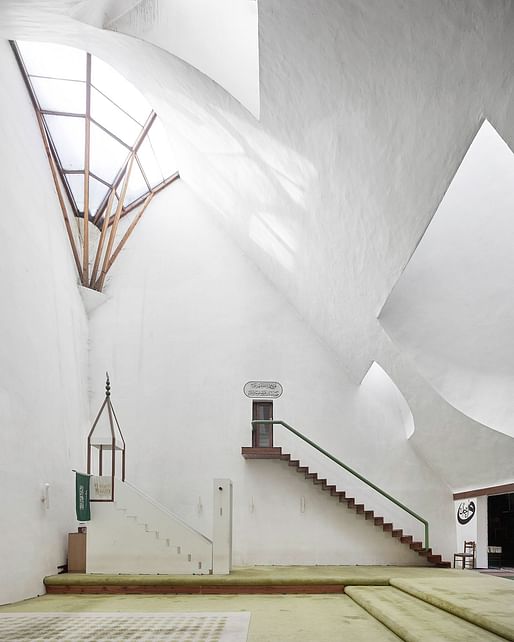
In the construction of the new Yugoslavia, modernist thinking and design were deployed to guide the country’s rapid urbanization and industrialization as well as to unify the ethnically, religiously, and culturally diverse population. — Places Journal
In columnist Belmont Freeman's latest article for Places, he examines the exhibition “Toward a Concrete Utopia: Architecture in Yugoslavia, 1948-1980,” now on view at the Museum of Modern Art in New York, and finds a rigorous and revealing survey of Yugoslavia’s extraordinary built... View full entry
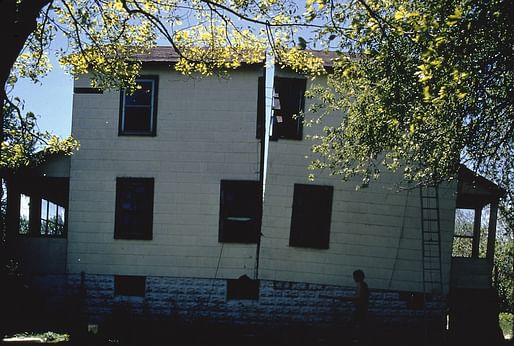
Gordon Matta-Clark’s inventive site-specific cuts into abandoned buildings demonstrated approaches to the concept of home and to the market system of real estate that were anarchistic, creatively destructive, and full of queer promise. — Places Journal
In "Unbuilding Gender," Jack Halberstam extends the ideas of unbuilding and creative destruction that characterize Gordon Matta-Clark's work to develop a queer concept of anarchitecture focused on the trans* body. Halberstam is the 2018 recipient of the Arcus/Places Prize for innovative public... View full entry
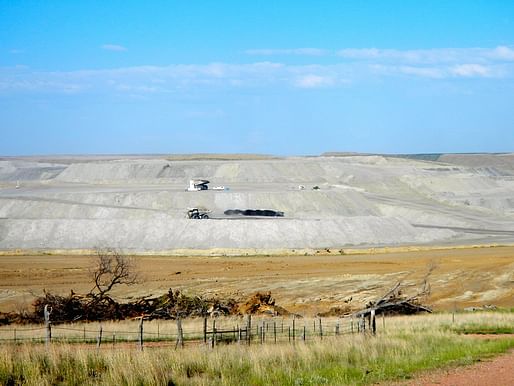
Follow the intricate supply chains of architecture and you’ll find not just product manufacturers but also environmental polluters. Keep going and you’ll find as well the elusive networks of political influence that are underwritten by the billion-dollar construction industry. — Places Journal
In "What You Don't See," Brent Sturlaugson examines the supply chains of architecture to make the case that designers must expand their frameworks of action and responsibility for thinking about sustainability. Unraveling the networks of materials, energy, power, and money that must be... View full entry
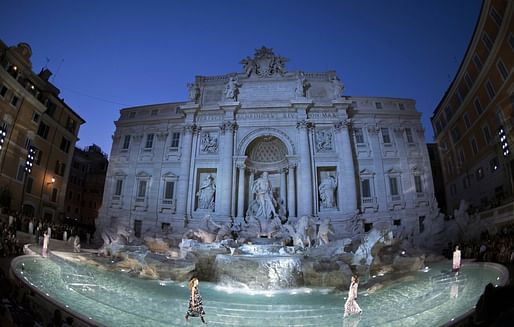
"Along with their monumental role in Rome's urban fabric, the architectural status of fountains has long been uncertain. It can be hard to determine when they ceased to be viewed as public water utilities, and came to be regarded as purely artistic objects." — Places Journal
In the same week in 2016, a group of tourists were denounced as trespassers for splashing around in one of Rome's historic fountains, while Fendi was praised for its tribute to Italy's artistic legacy by staging a fashion show across another. Anatole Tchikine is prompted by these contrasting... View full entry
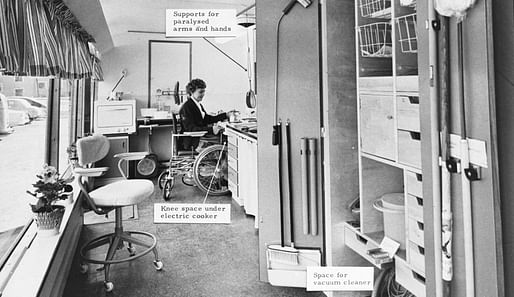
For too long, the issues of gender, disability, and user-centeredness have been relegated to the far margins of architectural history. — Places Journal
Places columnist Barbara Penner uncovers a parallel narrative to the rise of flexible home design — often attributed to a handful of progressive postwar designers — in the history of home economics. She explores the flexible domestic spaces created by designers such as Lillian Moller... View full entry
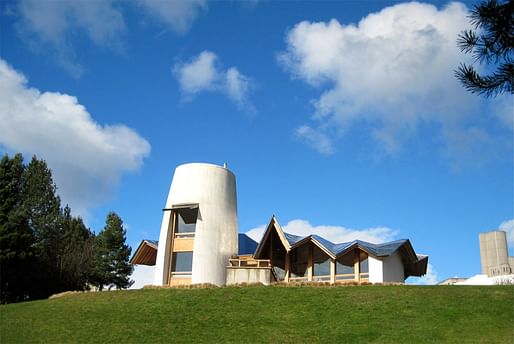
As hospice design becomes more formally ambitious — and standardized — we should remember there is no universal model for ‘dying well.’ — Places Journal
What is the ideal setting for the end of life? The dominant templates of the mid-century mega-hospital and the domestic hospice set the rational spaces of medical institutions against the familiarity of home. Yet, we are increasingly seeing hybrid forms that deviate from these two distinct... View full entry
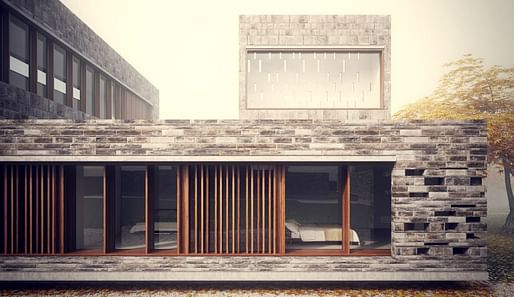
Architectural representations often embody the tension between familiar and unfamiliar. In an effective rendering, the new buildings or landscapes share the same illusionistic space with images of existing buildings or landscapes, producing an almost exquisite confusion between real and unreal. — Places Journal
Architectural renderings are not photographs; or are they? Susan Piedmont-Palladino examines the hyper-real imagined worlds of contemporary architectural drawings through theories of the uncanny, and considers the disconcerting effect that occurs when "we can't quite sort out the relationship of... View full entry
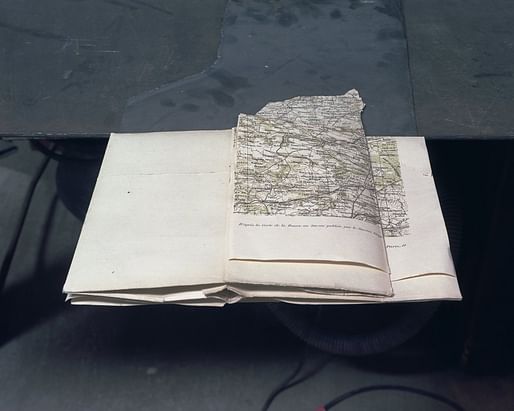
Geography is getting stranger: the map is breaking up. Now we need to attend to the unnatural places, the escape zones and gap spaces, the places that are sites of surprise but also of bewilderment and unease. — Places Journal
Negotiating the hostile architectures of the modern city — from the anti-pedestrian cobbles of a median strip to the unloved landscape of a traffic island — geographer Alistair Bonnett reflects on the increasingly disciplinarian nature of public space, and by crossing roads and planting... View full entry
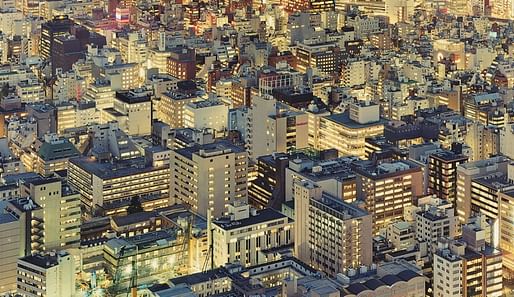
Taking a photograph of architecture by using a camera is tantamount to placing a small architecture against another large architecture and having the small one swallow the larger one. — Places Journal
The Japanese word for buildings, tatemono, means “things that are standing.” On the occasion of a major career retrospective at the Minneapolis Institute of Art, Naoya Hatakeyama considers the meaning and the practice of photographing the built environment, and the distinction between the... View full entry
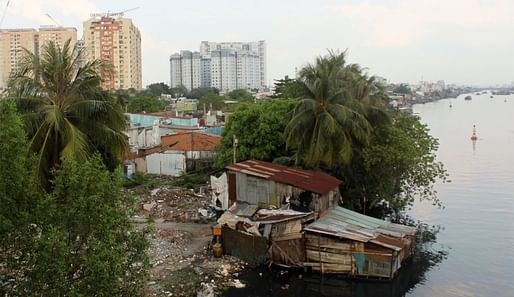
Concepts like “making room for the river,” which works well in the Netherlands, can mean mass evictions in the Global South. Too often, the rhetoric of climate adaptation is doublespeak for the displacement of poor communities, and an alibi for unsustainable growth. — Places Journal
As coastal megacities adapt to climate change, they often bring in outside planning experts who push highly engineered, technocratic resilience programs. Lizzie Yarina looks at how this trend is affecting local communities in Bangkok, Manila, Ho Chi Minh City, and Jakarta, and argues that... View full entry

