

Follow this tag to curate your own personalized Activity Stream and email alerts.
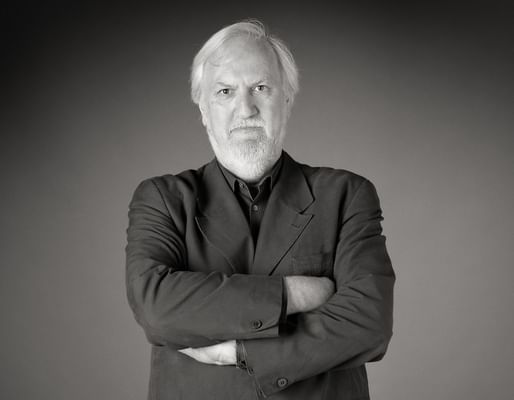
Princeton University has shared news of the passing of beloved longtime School of Architecture faculty member Anthony Vidler yesterday, October 20th, after a short battle with illness. He was 82. Vidler was known throughout academia as a formative mentor and thought leader who shaped the... View full entry
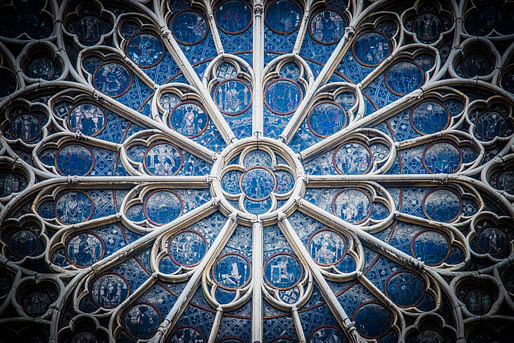
Research from a professor at the University of Aberdeen has advanced evidence that the art and practice of architectural drawing may have been invented by a 12th-century Scottish clergyman working in Paris around the time of the construction of Notre-Dame Cathedral and other important... View full entry
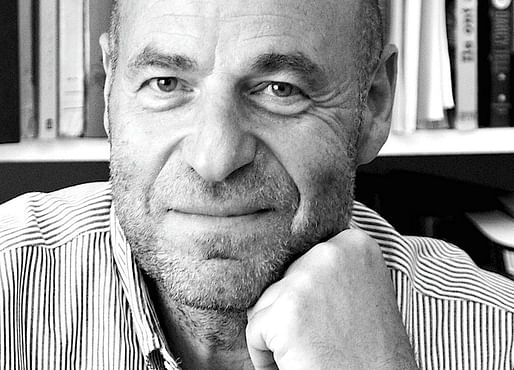
Jean-Louis Cohen, a renowned architectural historian, critic, educator, and curator, has sadly passed away in the Ardennes after suffering an allergic reaction from a bee sting, according to reports published this week in France and the United States. As the Sheldon H. Solow Chair of Architectural... View full entry
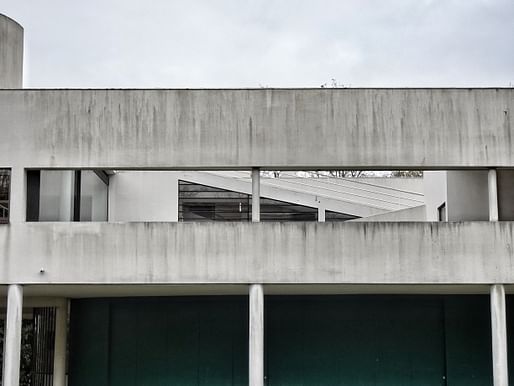
Le Corbusier was to architecture what Picasso was to painting, a towering and egomaniacal creative force who transformed his discipline for ever. His buildings have inspired admiration, sometimes devotion. He is an icon, granted the nickname “Corb” or “Corbu” by architects. He has also been vigorously attacked, as a mechanistic fanatic whose ideas inspired inhumane tower blocks and concrete jungles. — The Guardian
In his latest Guardian piece, critic Rowan Moore remembers the 100-year anniversary of the seminal modernist manifesto Toward an Architecture by one of the profession's most revered and controversial figures, Le Corbusier. Acknowledging that the book's thoughts about the future were now... View full entry
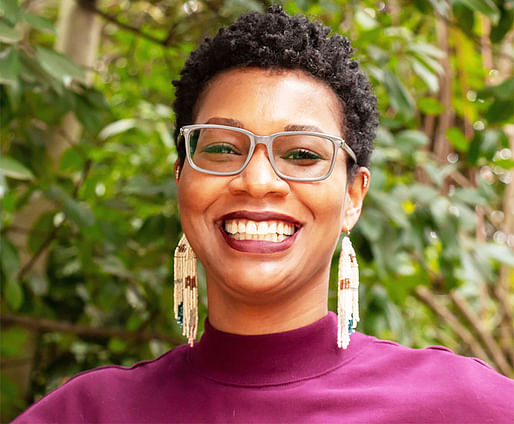
Award-winning architectural and urban historian Amber Wiley has been announced by the University of Pennsylvania’s Weitzman School of Design as the inaugural Matt and Erika Nord Director of the Center for the Preservation of Civil Rights Sites (CPCRS). The current Rutgers University assistant... View full entry

It may now be seen as a dystopian nightmare, the far-flung folly of an autocrat desperate for global approval, but the idea of building a self-contained linear city has preoccupied the imaginations of architects and planners for generations. The Line might bill itself as a “never-before-seen approach to urbanisation”, but the principles behind it have been proposed many times over – though never successfully realised. — The Guardian
The Guardian critic writes that the outlandish NEOM project structure resembled a “habitable supercomputer” and cites a recent Bloomberg report that names Marvel Comics designer Olivier Pron as one of its many non-architect digital designers before pinning the massive project’s “ominous... View full entry
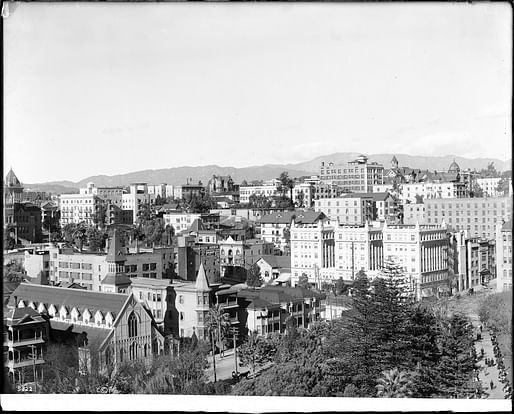
Seven decades after it was razed to do away with what the federal government deemed “urban blight,” the University of Southern California’s Ahmanson Lab, working with the Bunker Hill Refrain Collaboratory, has created an interactive 3D reconstruction of Downtown Los Angeles’ Bunker Hill... View full entry
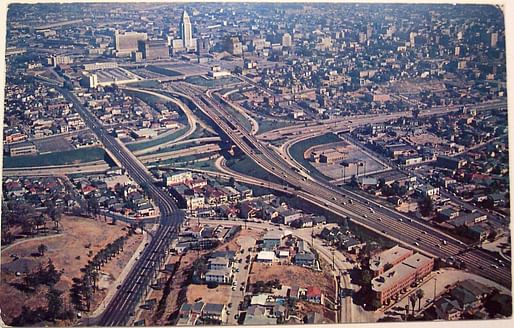
Can you imagine a version of Los Angeles with even more highway veins pursed throughout its (formerly) Bohemian coastline, super-industrial downtown core, and crisscrossing network of foothills? The reality of what could easily have been (save for the opposition of several big-name... View full entry

The single image published Dec. 8, 1922, resembles the industrial Carquinez Bridge, except at 20 times the scale. It’s the kind of bridge one designs when all they have to work with is Popsicle sticks and string. — The San Francisco Chronicle
An engineer turned newspaper editor named James Wilkins was the first to propose the bridge in a 1916 San Francisco Bulletin article. Joseph Strauss' early plans called for a cantilever-suspension hybrid but were later changed due to eight-figure cost concerns. Illustration of the... View full entry

With information available at our fingertips, discovering resources like a list of female architects, for example, should be a breeze. However, like most professions, these texts and resources were often written and curated by male writers. In 2021, female writers and curators continue to reclaim... View full entry

This week's list of featured online events from Archinect's Virtual Event Guide includes lectures, presentations, discussions, a conference, an award presentation, and a symposium. Are you hosting a virtual lecture? Presentation? Tour? Interview? Happy Hour? Submit... View full entry

Art Institute of Chicago names Irene Sunwoo the John H. Bryan Chair and Curator, Architecture and Design. Sunwoo's extensive background in architectural history, exhibition, and curatorial studies create an exciting chapter for the Institute and its leadership. Sunwoo served as Curator of... View full entry
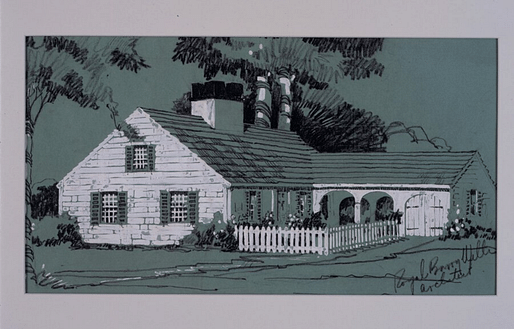
Historic New England, one of one of the oldest and largest regional architectural heritage organizations in the United States, has announced that the archives of Boston-based architecture firm Royal Barry Wills Associates will be made available to the public for the first time. Founded... View full entry

On this episode of Archinect Sessions Donna, Ken and I are joined by Paulette Singley. Paulette is a respected architectural historian, educator and author. Her writing and editing expands beyond the world of architecture, looking at connections within the culinary arts and film. In today's... View full entry

The Society of Architectural Historians (SAH) has launched the next phase of its ongoing SAH Data Project, a two-year study aimed at assessing the "status of the field of architectural history in higher education." The latest phase of the project, which is led by postdoctoral researcher Sarah M... View full entry


