

Follow this tag to curate your own personalized Activity Stream and email alerts.
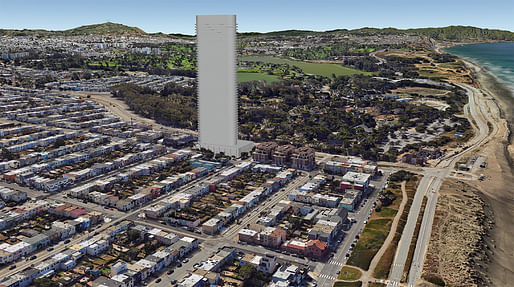
A proposed new high-rise development in San Francisco’s Outer Sunset district is standing out over its disputed manipulation of statewide density laws. The LA Times is reporting on CH Planning‘s unlikely new proposal, which could add a Solomon Cordwell Buenz-designed 50-story... View full entry
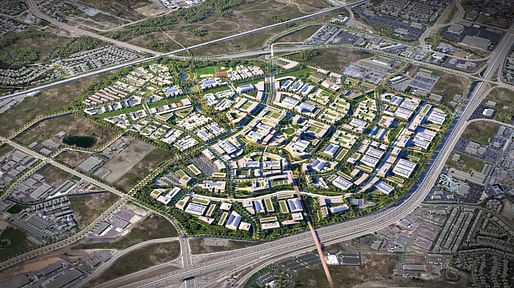
It could look like another round of flight from the city. Or what we may be witnessing is a “second draft” of the American suburbs.
Many communities that were once white, exclusionary, and car-dependent are today diverse and evolving places, still distinct from the big city but just as distinct from their own “first draft” more than a half-century ago.
— Vox
The American suburbs are continuing to diversify and gain millennials and increased numbers of immigrants, two groups that have traditionally been confined to cities. More mixed-use and affordable developments are being delivered in suburban areas where single-family constructions have long... View full entry
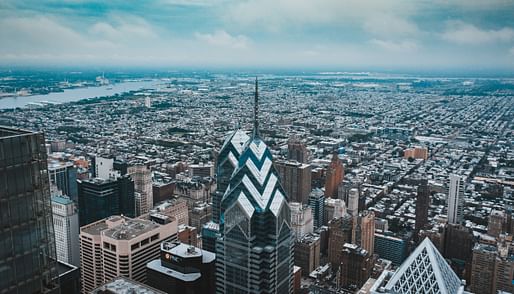
Not so long ago, density was promoted as a way to enliven underpopulated cities, particularly their downtowns. Then it became a tool for fighting climate change. Now, density is increasingly seen as an equity issue. [...]
Two notorious projects help us understand the difference between density that enhances a neighborhood and projects that big-foot their surroundings.
— The Philadelphia Inquirer
In her latest column for the Inquirer, architecture critic Inga Saffron dissects two new mid-rise apartment building projects at opposite ends of Philadelphia (the "poop building and the Scrooge building," as she nicknames them) and how their individual approaches toward urban densification can... View full entry
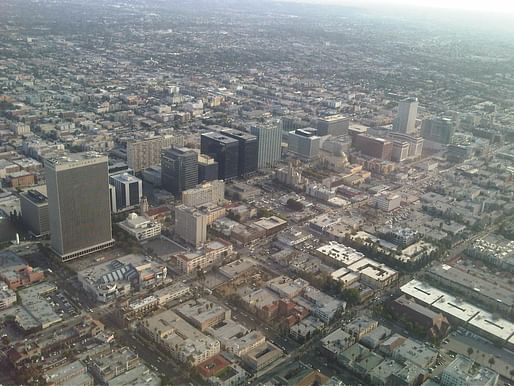
The further threat is that the pandemic becomes a rallying cry to maintain our sprawling fortress neighborhoods designed to foster exclusion rather than inclusion. We have an obligation to ignore the short-term reactionary impulse to blame density for the spread of the coronavirus and instead use this opportunity to rethink the policies that impede the construction of new housing, at more price levels, in the places where housing is most needed. — The New York Times
Writing in an Op-Ed published by The New York Times, Carol Galante, professor in affordable housing and urban policy and faculty director of the Terner Center for Housing Innovation at the University of California Berkeley, makes the case for reinvigorating American approaches to affordable... View full entry
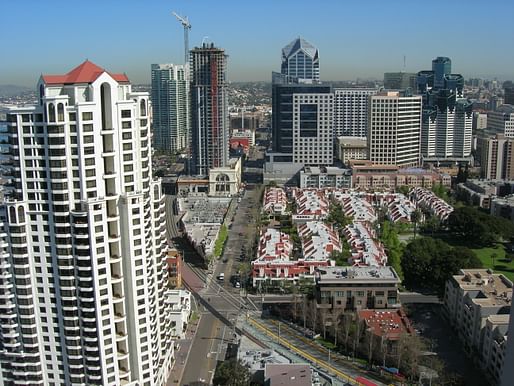
San Diego Mayor Kevin Faulconer is opening another salvo in his administration's efforts to address the city's housing affordability crisis by proposing the so-called "Complete Communities Housing Solutions Initiative," a scheme that looks beyond simply building new housing to embrace holistic... View full entry
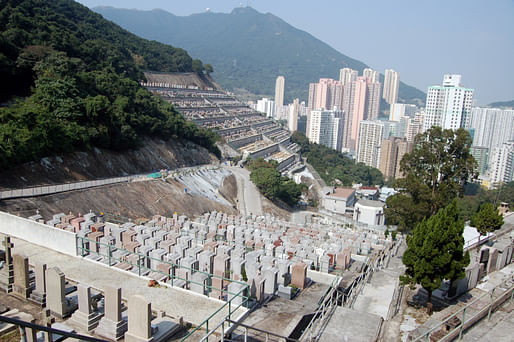
[Finbarr Fallon's] photo series Dead Space explores how these monuments are designed, and how their history contrasts with Hong Kong’s more modern developments. “I have always been intrigued by how city-specific cemetery design can be,” Fallon says via email. “While death is universal, its memorialization practices are not. I found it fascinating that extreme density and verticality continue to be a defining characteristic of Hong Kong’s dwellings for both the living and the dead.” — Fast Company
Hong Kong's towering high-rise cemeteries can reach up to 60-stories in height. Regarding the photo project, Fallon writes, “The images juxtapose residences for two diametrically opposed groups—the high-rises for the living, and graves for the dead." View full entry
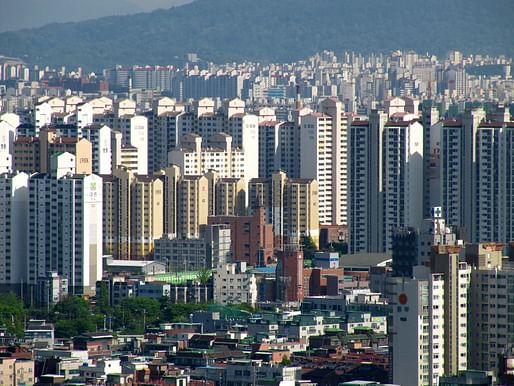
Which is the world's most vertical city?
You might think of Hong Kong, given its famous skyscraper skyline, but by different measures of verticality other cities come out on top
— The Guardian
"According to building data research company Emporis," writes Matthew Keegan for the Guardian Cities series, "Seoul in South Korea has more high-rise buildings, with 16,359. Emporis defines a high-rise as a building at least 35m, or 12 storeys tall. In second place is Moscow, Russia, with... View full entry
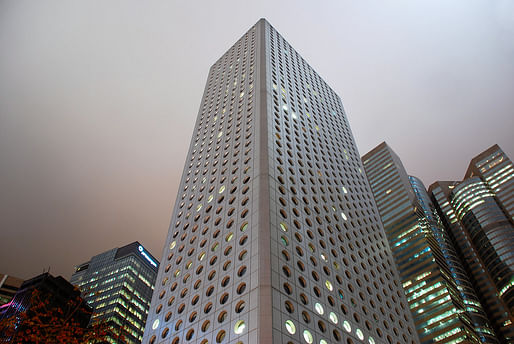
If there is any place in the world where the skyscraper reins supreme, it is Hong Kong. From a distance, these tall, towering structures fill Hong Kong's skyline with forms that touch the clouds. Hundreds of these towers reflect off of Victoria Harbor creating a sense of hyperrealism as people... View full entry
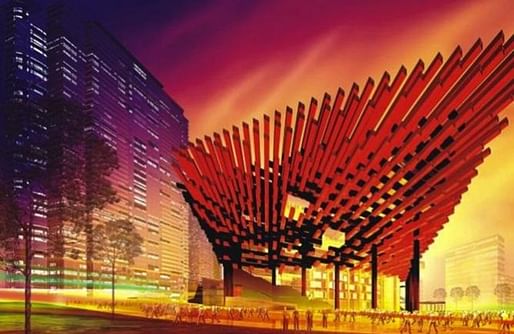
China’s State Council announced that “weird architecture that is not economical, functional, aesthetically pleasing or environmentally friendly will be forbidden.” Many architects and members of the public understood the frustration and bewilderment, even if they questioned the subjective nature of the official instruction. — The Economist
That was a close call, thankfully 'Weird Architecture' that is economical, functional, aesthetically pleasing and environmentally friendly is still completely accepted and encouraged. China may be forcing itself into a semantically and conceptually charge subjectivism that could potentially bring... View full entry
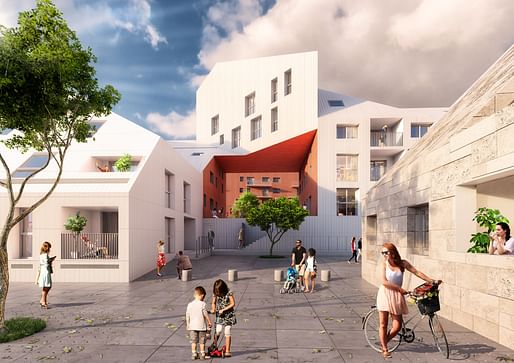
How can architects create livable, breathable spaces that not only honor the history of a region, but anticipate the global population increase? This is partly the mission of MVRDV's 300-unit residential apartment/mixed use Ilot Queyries, which is located adjacent to the ZAC Bastide-Niel... View full entry
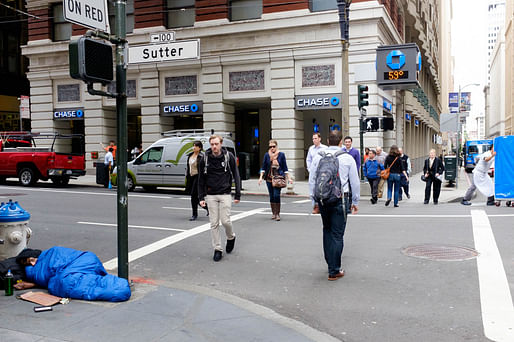
In this historically researched and nuanced piece for The New York Times, Daniel Duane examines the conflicted attitude of San Franciscans--and Californians in general--toward homelessness, immigration, and the problems of housing density. He notes that despite the state's fame for its... View full entry
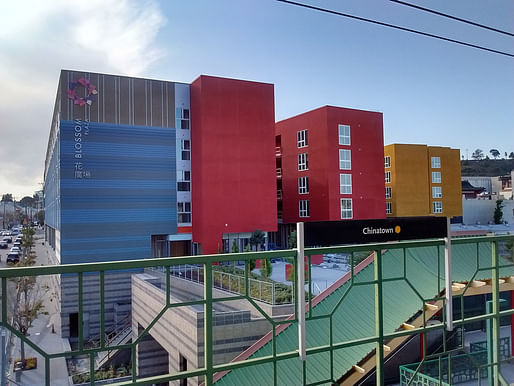
Once known as the city of single family homes, Los Angeles is now developing high-density housing complexes, not only in downtown, but according to this Urban Land article, on the traditionally reluctant-to-develop West Side.The developments mark a shift in how Los Angeles conceptualizes living... View full entry
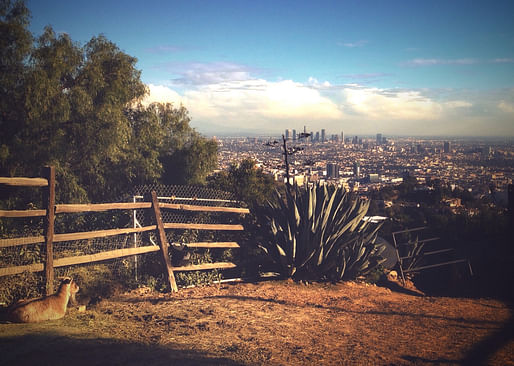
Could Los Angeles grow to become a “real city” like New York or London? Last year, LA gained at least 50,000 people, according to a recent report from the California Department of Finance, pushing the population to more than 4 million people for the first time in the city’s history. — Vice
Part of the appeal of Los Angeles has been its refusal to be like other cities. For years, its objective "center" was a forbidding cluster of office towers with near zero street life, while in outlying, low-density neighborhoods, people partied in back yards that ran up against wildlife preserves... View full entry
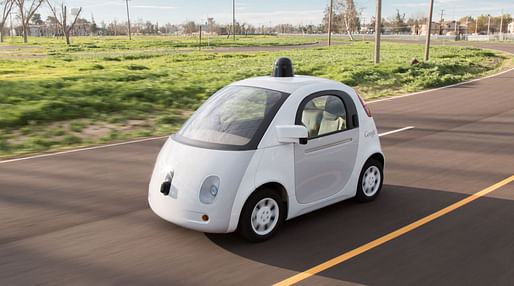
If Mr. Ratti’s projections are correct, and self-driving cars can radically reduce traffic without cannibalizing existing mass transit—the hypotheticals pile up—it is possible that self-driving cars will make many cities livable in a way they aren’t now. Imagine if every U.S. city had a hybrid public-private mass-transit system on par with those in New York City or Washington, D.C., comprised entirely of self-driving vehicles. — wsj.com
Related stories in the Archinect news:Would self-driving cars be useful to people living outside urban cores?The "algorithmic dreams" of driverless cars, and how they might affect real-world urban designHow prepared are American cities for the new reality of self-driving cars? View full entry
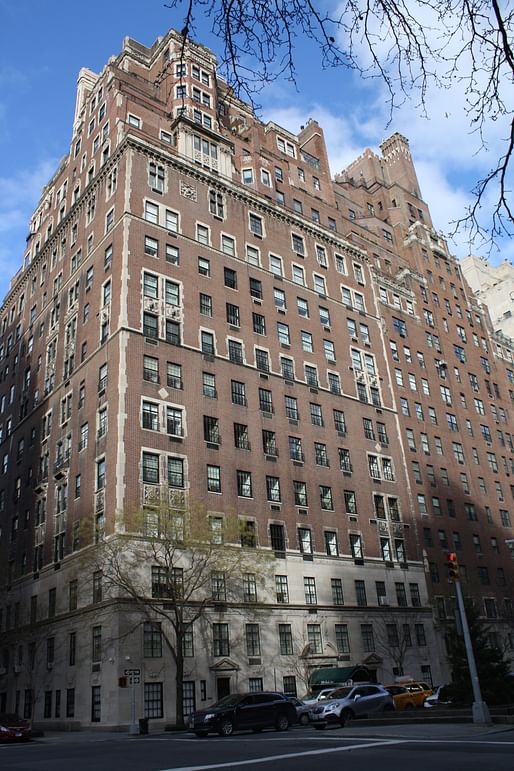
Many buildings in distinctive Manhattan neighborhoods like Chinatown, the Upper East Side and Washington Heights could not be erected now: Properties in those areas tend to cover too much of their lots (Washington Heights), have too much commercial space (Chinatown) or rise too high (the Upper East Side). [...]
“It’s ridiculous that we have these hundred-year-old buildings that everyone loves, and none of them ‘should’ be the way they are.”
— nytimes.com
Related on Archinect:Welcome to the Hudson Yards, c. 2019: the world's most ambitious "smart city" experimentNYC's hot new developer design trend: the 1902 Flatiron BuildingA guide for New Yorkers exploring the "Suburban Jungle"Sidewalks, New York's "most desirable real estate"Michael Kimmelman on... View full entry


