

Follow this tag to curate your own personalized Activity Stream and email alerts.
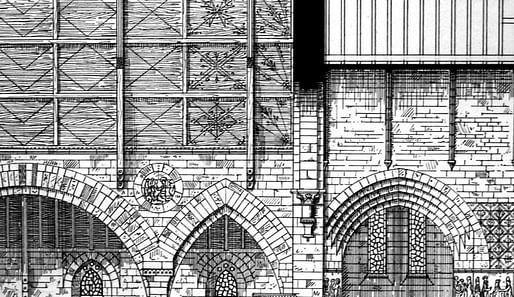
There is a good case for listing Thomas Hardy amongst the greatest of all conceptual architects — the prophet, well before the fact, of a particular type of speculative, imaginary architectural project which would boom a century later. — Places Journal
The 19th-century author Thomas Hardy has never been considered much of an architect. Yet as Kester Rattenbury shows, his creation of Wessex was an architectural project - one that drew on the ideas of his time, but also predicted some of the most inventive architectural work of our own age. Hardy... View full entry

“Away with universal styles,” wrote Josef Frank. “Away with the idea of equating art and industry, away with the whole system that has become popular under the name of functionalism. Modernism," he was fond of saying, "is that which gives us complete freedom." — Places Journal
More than an architect and designer, Josef Frank was an “intellectual, who built ideas.” Christopher Long introduces Frank's 1958 essay, "Accidentism" — a humanist manifesto denouncing the banality of orthodox modernism and calling for a new pluralism in design. As Long explains, "the essay... View full entry
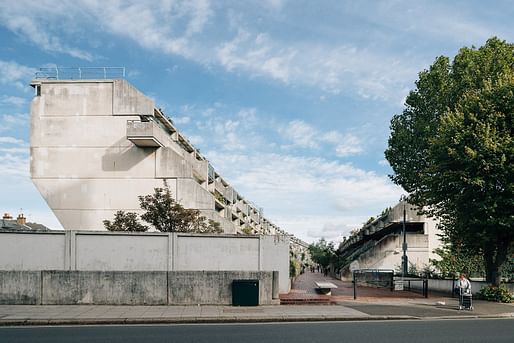
The council housing designed 50 years ago for a progressive London borough remains a potent symbol of the achievements of postwar social democracy. — Places Journal
Prompted by Mark Swenarton's recent book, Cook's Camden, Douglas Murphy looks at the radically experimental public housing estates built by the London borough from 1966 to 1975, and the reevaluation of these extraordinary projects currently underway in our own era of unaffordable cities and... View full entry

Cinema heightens the ambivalent but powerful pleasure we take in looking at property. The private property of the house is already a spectacle, of course, as the house is a medium for making visible the wealth of its owners and inhabitants. In a movie theater, this spectacular function is multiplied. — Places Journal
A history of the house in American cinema might well begin with Gone with the Wind, a film that is fascinated with the loss, acquisition, and consolidation of private property; and To Kill a Mockingbird, a putatively antiracist film whose production history is actually an archive of racist urban... View full entry
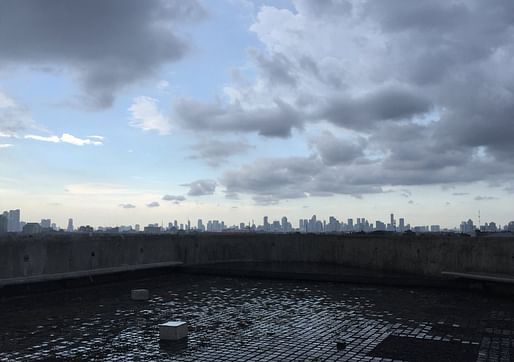
Jakarta is perhaps the truest realization of a post-colonial cosmopolis. Many former colonial capitals stage a rivalry between quaint traditional centers and desperation-driven peripheries. But Jakarta can be understood not as a dialogue with its former foreign overlords but rather as a fiercely insistent projection of Indonesian independence. — Places Journal
In his latest article for Places, Joe Day examines the contemporary architecture of Jakarta through the framework of the utopian terms of the Five Pancasilas, the founding principles of modern Indonesia. Day traces the development of Indonesian architecture from founding president Pak Sukarno's... View full entry
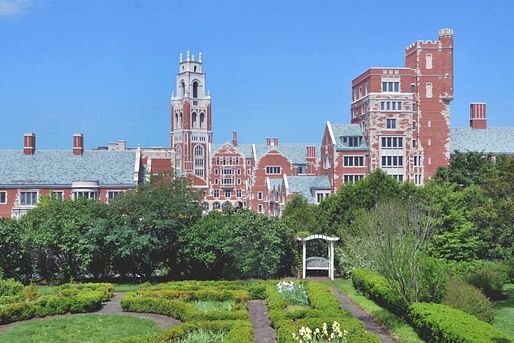
Yale has just completed two new residential colleges near the heart of campus: a superblock of neo-Gothic fantasy. This reversion to an archaic visual language exemplifies a troubling trend. With their new architecture, universities all too often abdicate leadership in promoting artistic innovation as they pander to plutocratic donors. — Places Journal
Columnist Belmont Freeman takes a critical look at Yale's RAMSA-designed Benjamin Franklin College and Pauli Murray College in his latest piece for Places. While Freeman marvels at their extraordinary evocation of tradition, he argues that their historicism represents a missed opportunity to... View full entry

I’m particularly interested in how sustainable buildings might affect the experience of landscape differently — actually better, differently — because, as a human being, I’m hoping for more sustainable architecture, and, as an academic (and as an architect), I’m thinking the consequences should be revolutionary to architecture. — Places Journal
Unlike earlier technological revolutions — the development of the steel frame, or the invention of concrete — sustainability in architecture has not yet had any significant, self-identifying formal consequences. Instead, the experience of sustainable space has to be hyper-mediated. In his... View full entry
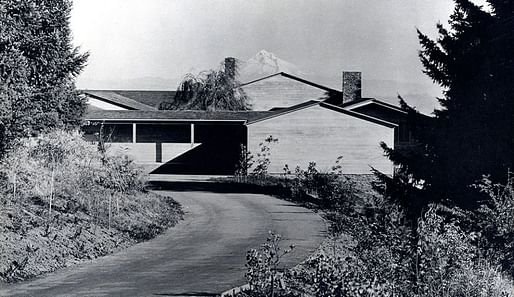
“Whether there is or is not a Northwest regional style of architecture is debatable,” said John Yeon in 1986, “but what is certain is that lot of people want to think there is.” — Places Journal
In "A Fortuitous Shadow," Keith Eggener is inspired by the Portland Art Museum's recent exhibition on John Yeon's life and legacy to explore the concept of regionalism in architecture, beginning with the doubts expressed by the architect long associated with Pacific Northwest regional modernism. View full entry
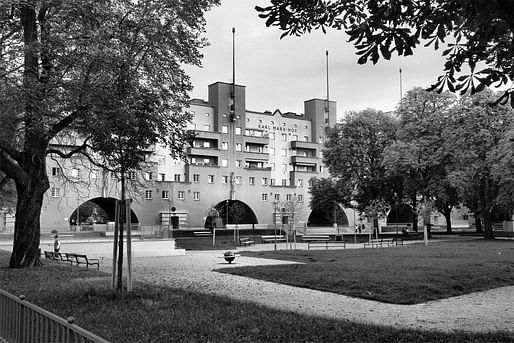
Both Vienna and Budapest can be viewed as battlefields in an unfolding European crisis of identity and confidence that threatens the continent’s political unity and raises fundamental questions about what exactly it means to be European, to be Europe. Can we read these crises at the level of architecture? — Places Journal
In light of contemporary political turmoil in the region, Owen Hatherley examines key moments in the architectural histories of two quintessentially European cities, from the development of Vienna's monumental public housing to Budapest's experimentation with an ethnonationalist style. View full entry
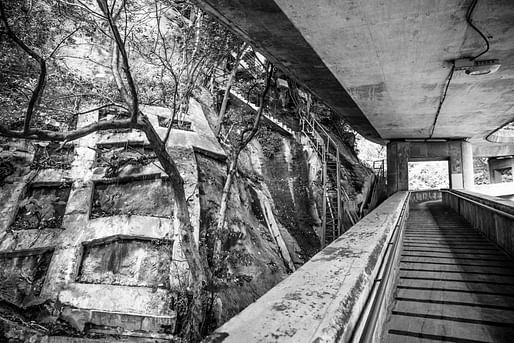
Even in this relentlessly vertical city, famous for walkways that feel like aerial labyrinths, you can’t levitate forever. Where the mountain rises up faster than the towers, you bump into a hillside and come back to earth. In Hong Kong, the ground is everywhere. — Places Journal
The terrain that weaves between streets, through public spaces, and beneath buildings in Hong Kong reminds observers of the tenuous relation between the city and its geology. Karl Kullmann photographs these zones of contact between the multilevel metropolis and the mountain, reflecting on the... View full entry
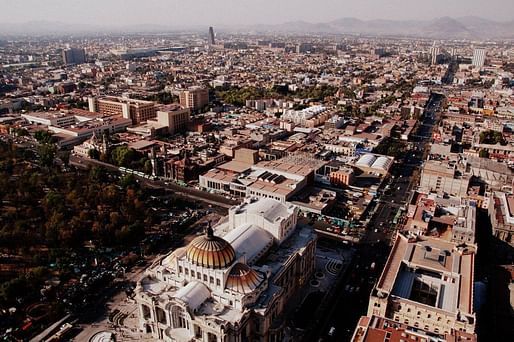
An unpopular president, a myth-making architect, and a multibillionaire tycoon are building an oversize airport in a nature preserve. Can they make Mexico great again? — Places Journal
The progressive capital of Mexico has a long history of massive infrastructure projects — megaproyectos — with egalitarian aims. Daniel Brook looks at the social, political, and environmental issues surrounding the latest — a $13bn new airport rising on a sinking lakebed. This article... View full entry

How many architects, young and old, have been inspired by a hero or heroine who must imagine new realms and new spaces — new ways of being in this strange world? This project presents a line of flight into architecture as a fantastic, literary realm of becoming. — Places Journal
This week, our series on Fairy Tale Architecture returns with four new designs by Snøhetta, Ultramoderne, Smiljan Radić, and Bernheimer Architecture. Each one explores the relationship between the domestic structures of fairy tales and the imaginative realm of architecture. But don’t expect... View full entry

The thousands of new old houses in New Orleans reveal the ethos of a people in a place nearly destroyed. New Orleanians have embraced their city’s architectural heritage as they’ve rebuilt for an uncertain future. — Places Journal
What does post-Katrina architecture look like in New Orleans? And what does it reveal about its society? In their survey in Places, Richard Campanella and Cassidy Rosen discover that historical styles are 14 times more popular than contemporary styles in the rebuilt city, despite the focus of... View full entry
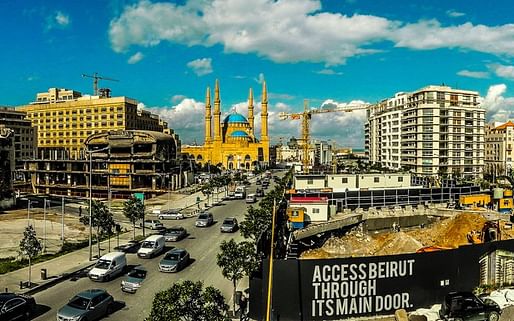
In a region at once feared and exoticized, we have been witnessing for more than a generation the devastation of old centers and the rise of new ones. Today there is no better context in which to investigate the complexities of global practice in architecture than that of the rapidly changing Arab city. — Places Journal
How does the deeply traditional meet the hypermodern in the older centers of Beirut, Damascus, and Cairo, and in the emerging new cities of Dubai, Doha, and Abu Dhabi? In Amale Andraos’ new article on Places, and in the new book, The Arab City: Architecture and Representation, she explores the... View full entry
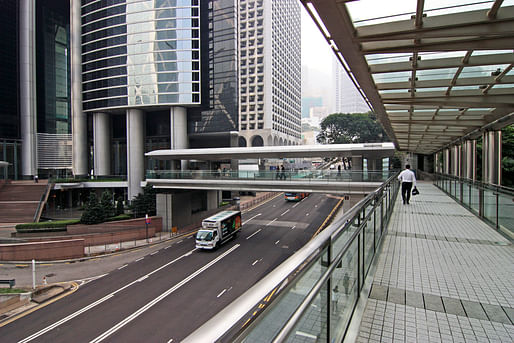
The grade-separated pedestrian systems built in the 20th century have a variety of names: skyways, skywalks, pedways, footbridges, the +15, and the Ville Souteraine. But they have one thing in common — they have radically altered the form and spatial logic of cities around the world. — Places Journal
Despite its fundamental role in the production of urban space, the skyway has received scant critical attention. In their article on Places, and new Walker Arts Center book Parallel Cities: The Multilevel Metropolis, Jennifer Yoos and Vincent James take a closer look at the history of urban... View full entry
