

Follow this tag to curate your own personalized Activity Stream and email alerts.
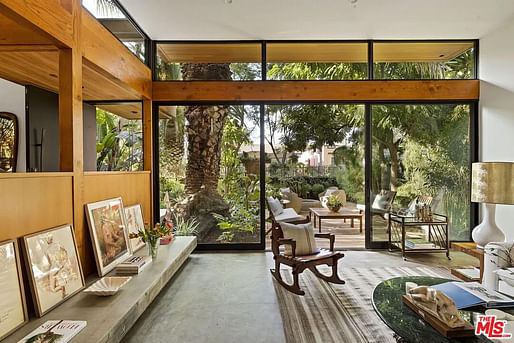
Late SCI-Arc founding director Ray Kappe’s final residential design has hit the market in Venice Beach, California, for a listed price of $4.2 million. The 2,482-square-foot home has three bedrooms and was originally built in 1947. Kappe began the commission in 2019 (the same year he passed... View full entry
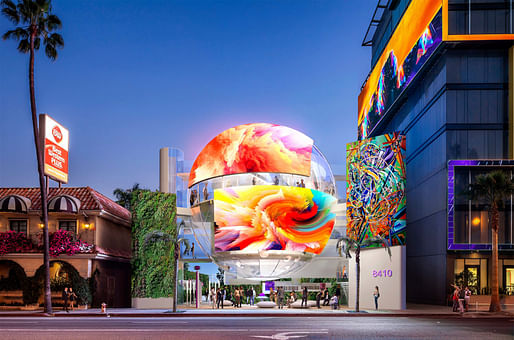
A new spherical LED billboard display appears ready to grace Los Angeles’ Sunset Boulevard as planners are preparing to review a developer proposal for "The Sphere on Sunset" entertainment venue in West Hollywood. Urbanize LA was first to report on the Las Vegas Sphere-like structure before it... View full entry
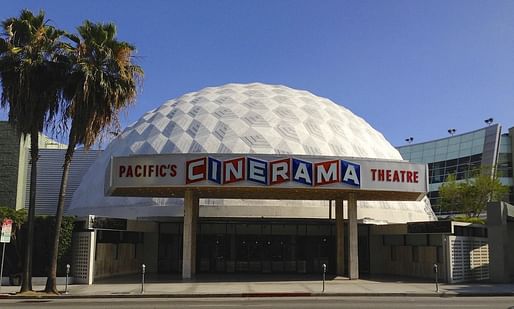
Preservation has really become more of a commonly held value. I think of my first years, when we were fighting to save the Herald Examiner building. Fighting to save the Ambassador Hotel. Fighting to save the May Company. The Herald Examiner was going to be torn down for a parking lot, which seems so strange now. But that’s how little value people placed on these buildings and their history. — The New York Times
Linda Dishman’s tenure at the helm of the Los Angeles Conservancy has seen major gains for the preservation of Paul Revere Williams’ nearly forgotten legacy, the LA Coliseum, and several important Welton Becket designs, among other newsworthy accomplishments. Adrian Scott Fine will... View full entry
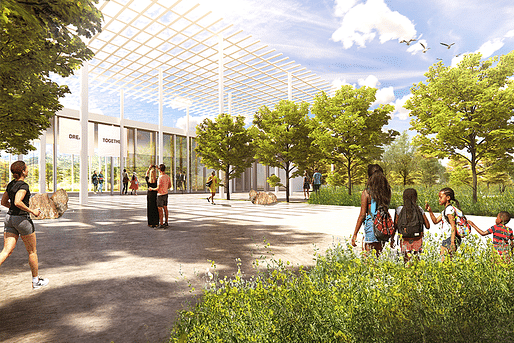
The City of Los Angeles Bureau of Engineering has announced plans for a new master plan of the San Fernando Valley’s Sepulveda Basin from OLIN, Agency Artifact, Geosyntec, and a team of collaborating consultants. The $4.8 billion Sepulveda Basin Vision Plan will unfold over 25 years... View full entry
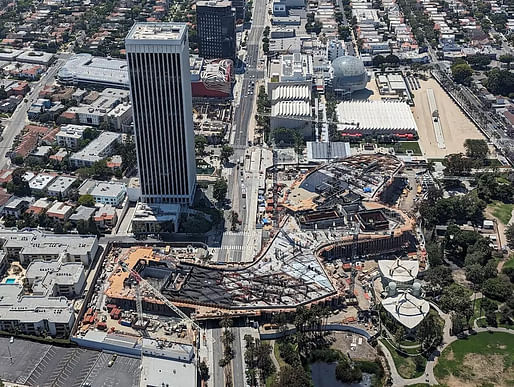
Zumthor describes the wing as “a concrete sculpture,” with floors, walls and ceilings of exposed concrete. There will be bronze surrounds on the window and door openings throughout the building. When I visited Haldenstein, he and his colleagues were weighing final choices for the color palette of the walls at the base of the new wing, inside the various legs. “Lively, not dark colors, to give identity to different spaces,” he said. “And then you come up into this world of concrete.” — The New York Times
Ahead of next year’s anticipated completion, Peter Zumthor says his sculptural new David Geffen Galleries at LACMA will be bereft of the most recognizable traces of his Pritzker-winning design signature — a claim the museum's director Michael Govan then refuted. The man who once said... View full entry

This fall’s anticipated debut of the Sankofa Park component of the new Destination Crenshaw public space redesign from Perkins&Will and Studio-MLA in Los Angeles has been pushed back to February of next year, according to an announcement made Wednesday by the group managing its construction in... View full entry
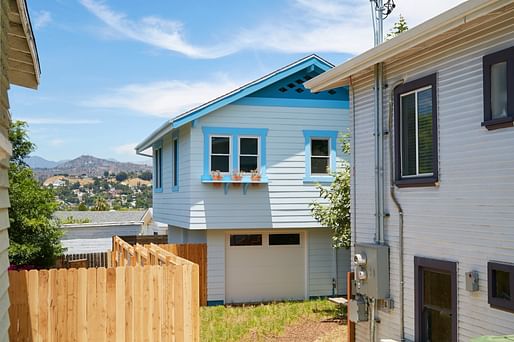
Following last week’s visit to New York City-based Field Operations, we are moving our Meet Your Next Employer series to Los Angeles this week, where we meet Office Of. Founded in 2021, the non-profit works nationally with a focus on supporting the Los Angeles... View full entry
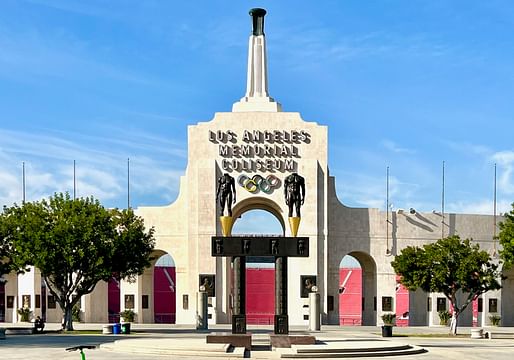
The American Institute of Architects Los Angeles (AIA|LA) has released an open letter sent to organizers of the 2028 Olympic and Paralympic Games on behalf of its members, encouraging their strategizing with the chapter toward outcomes they say will be a “big win” for multiple stakeholders in... View full entry
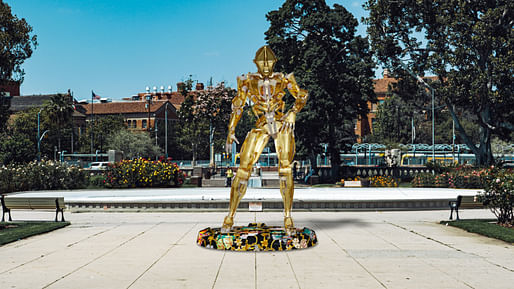
The third collection of the Los Angeles County Museum of Art (LACMA)’s ongoing Augmented Reality Monumental Perspectives series has been unveiled to the public, featuring works of five artists that offer insights into the histories of their own unique pockets of LA’s patchwork mosaic of... View full entry
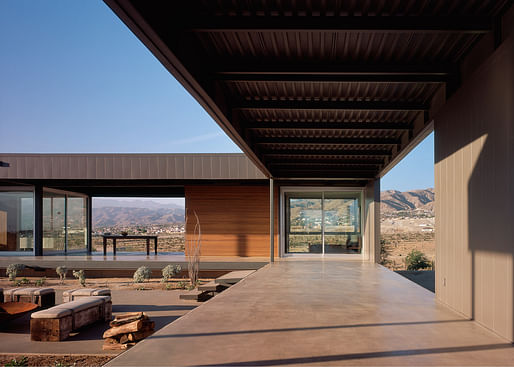
Following last week’s visit to New York-based Andrew Berman Architect, we are moving our Meet Your Next Employer series to Los Angeles this week to explore the work of Marmol Radziner. Founded in 1989, the firm has built a portfolio spanning architecture and interiors as well as furniture design... View full entry
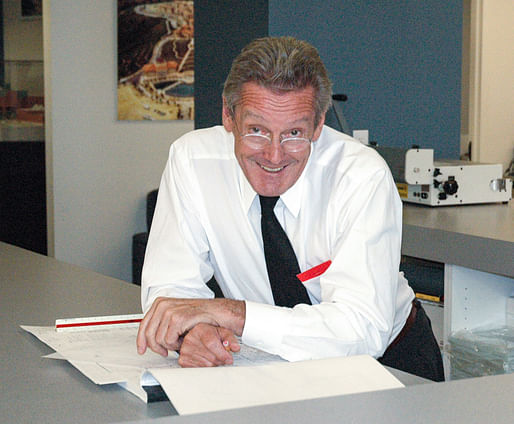
Norman Pfeiffer, an influential Southern California-based architect who founded the precursor to what is now Pfeiffer, a Perkins Eastman Studio, has passed away in Los Angeles after a short battle with illness. Known for his contributions to the cultural and higher-education sectors of the region... View full entry
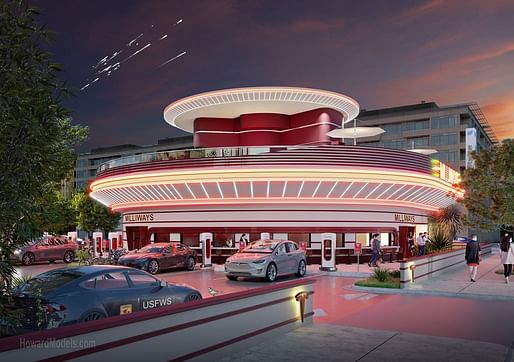
Tesla’s retro-inspired supercharging diner & drive-in movie theater concept will begin construction soon after the Los Angeles Department of Building and Safety recently approved a planning permit for the company’s first Stantec-led design at 7001 Santa Monica Boulevard in West Hollywood... View full entry
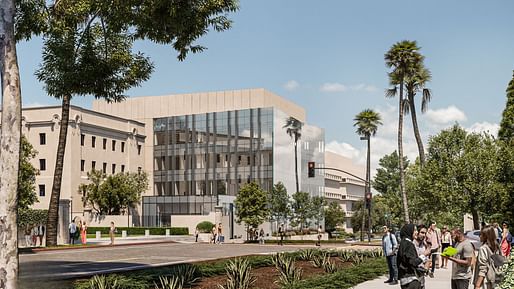
Caltech has held the groundbreaking ceremony for the HOK-designed Ginsburg Center for Quantum Precision Measurement in Pasadena, California. Upon its projected completion in 2025, the center is set to become “one of the world’s most advanced hubs for studying quantum science and technology.”... View full entry
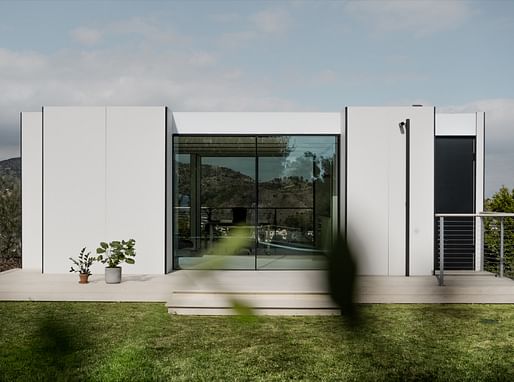
Following last week’s look at an opening for a Construction Manager at Skystone Foundation, we are using this week’s edition of our Job Highlights series to explore an opportunity on Archinect Jobs for a Junior Architectural Engineer at Cover. The role, based in Los Angeles, calls for an... View full entry
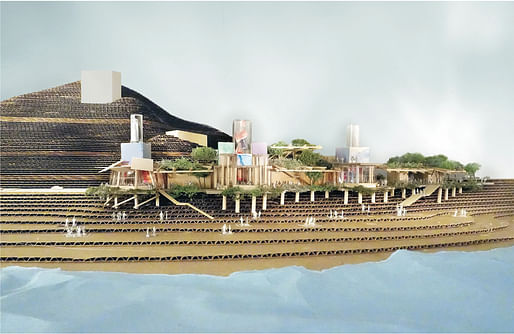
After more than 50 years in service, iconic oceanfront restaurant Gladstone’s is slated to close within the next year, making way for a long-anticipated restaurant from some of L.A.’s most recognizable names.
In 2024, celebrity chef Wolfgang Puck expects to break ground on a new, Frank Gehry-designed, two-pronged project that will rise in its place.
The new operators plan to break ground in early to mid 2024 and expect at least 18 months of construction before a 2025 debut.
— LA Times
The Pacific Palisades site sits on a total 2.8-acre parcel abutting the Pacific Coast Highway and Will Rogers State Beach approximately three miles north of Gehry's now underway Ocean Avenue project in Santa Monica. Puck promised to deliver an "approachable, high-quality cuisine in a... View full entry


