

Follow this tag to curate your own personalized Activity Stream and email alerts.

Its sale, for £275m, by BT to a hotel group, if it gives the tower a secure future, is welcome. I’m more troubled by the reports that the designer Thomas Heatherwick is to “repurpose” the building. His past work shows that he’s not one to leave well alone, but rather festoon structures with over-sized flower-pots and look-at-me swirling shapes. One can only hope that he discovers some restraint. The BT Tower is already an icon. It’s perfect. Let it be. — The Guardian
Readers will remember the critic's jabs at Heatherwick last fall after the publication of his new treatise on architecture and mental health, wherein Moore declared “an outbreak of shallow wannabe Gaudís” will follow in tow should the call-to-action be adopted. That provocation isn't... View full entry

Conceivably, as one architect speculates, The Line will be “a Noah’s Ark for the happy few”, a privileged AI-controlled citadel set in an inhospitable desert. Otherwise it will be clickbait visible from space, two vast and pointless lines of glass whose colossal construction cost would defeat the Vision 2030 plan to reduce dependency on oil revenues. What’s more likely is that it will never be completed. — The Guardian
The Observer architecture critic blasts The Line as nonsensical, poorly conceived, a youthful self-promotional tool of Crown Prince Mohammed bin Salman, and ultimately mocking the leader’s claims that it is “designed to protect and enhance nature” before predicting much of it will never be... View full entry

Zumthor describes the wing as “a concrete sculpture,” with floors, walls and ceilings of exposed concrete. There will be bronze surrounds on the window and door openings throughout the building. When I visited Haldenstein, he and his colleagues were weighing final choices for the color palette of the walls at the base of the new wing, inside the various legs. “Lively, not dark colors, to give identity to different spaces,” he said. “And then you come up into this world of concrete.” — The New York Times
Ahead of next year’s anticipated completion, Peter Zumthor says his sculptural new David Geffen Galleries at LACMA will be bereft of the most recognizable traces of his Pritzker-winning design signature — a claim the museum's director Michael Govan then refuted. The man who once said... View full entry
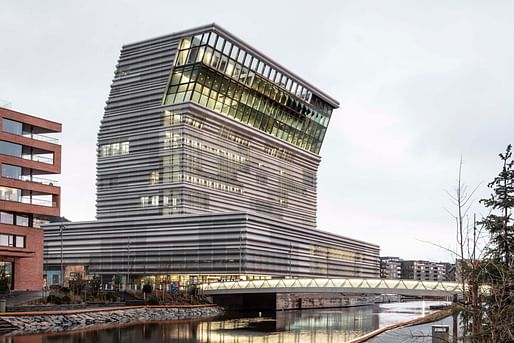
Founded in Sweden in 2014 as a public Facebook group, [Architectural Uprising] is a collective of citizen design critics who object to what organizers call the “continued uglification” of developments in Nordic cities, and push for a return to classically informed design. [...]
The movement’s size and persistence, however, has earned it a seat in the discourse. “When [historians] talk about architecture during these years, [the Architectural Uprising] will be part of that history”
— Bloomberg
A new report in Bloomberg tells of the staying power of social media-driven architectural criticism. Projects lambasted by the popular (mostly) Scandinavian group include Oslo’s new National Museum of Art, Architecture and Design by architect Klaus Schuwerk and estudio Herreros’ Munch... View full entry

The only thing everyone seems to know for certain is that nothing meaningful ever really happens to improve North America’s busiest and most miserable train hub, despite decades of demands and promises. Hope has long gone to die on the 6:50 to Secaucus.
But now may actually be different.
— The New York Times
Kimmelman complimented the new PAU/HOK/ASTM North America P3 plan as “the disruption needed to get Albany moving", and one that “lets daylight, dignity and circulatory logic replace the rat’s maze beneath Madison Square Garden.” “ASTM’s architecture at this early stage is a... View full entry
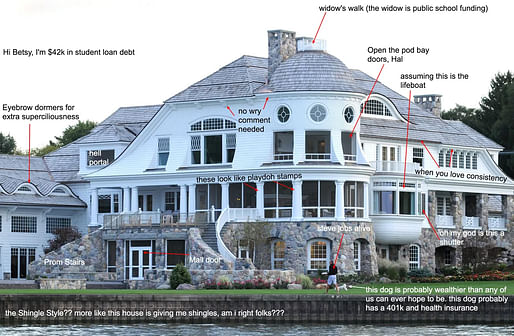
The Nation, America’s leading source of progressive politics and culture, today named Kate Wagner (@mcmansionhell) to its masthead as architecture correspondent. Best known as the brains behind the brilliant and satirical architecture blog, “”McMansion Hell,” and following a wildly successful stint as a Nation guest columnist earlier this year, Wagner will contribute monthly commentary on architecture and the built environment—but not as always conventionally understood. — The Nation
Wagner succeeds Michael Sorkin, who died in 2020. The new correspondent said the post is “an ideal perch for me to explain how everything we see and everything we build is political.” She is now one of a select coterie of dedicated critics writing for American publications, including Michael... View full entry

Reactions in the UK are pouring in after the opening week of Lina Ghotmeh's 2023 Serpentine Pavilion in London’s Kensington Gardens. The annual installation’s 22nd overall edition features the Lebanese-born Parisian designers palm leaf-shaped timber À table pavilion, which encases a... View full entry
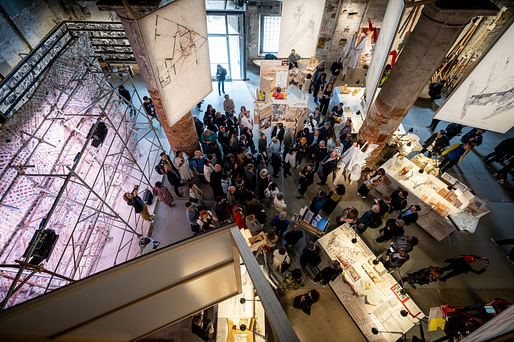
A new Facebook post from Patrik Schumacher critical of the newly-opened 2023 Venice Architecture Biennale is gaining traction after the Zaha Hadid Architects Principal expressed his concerns over the apparent lack of architectural content in the Lesley Lokko-curated exhibition, whose theme... View full entry
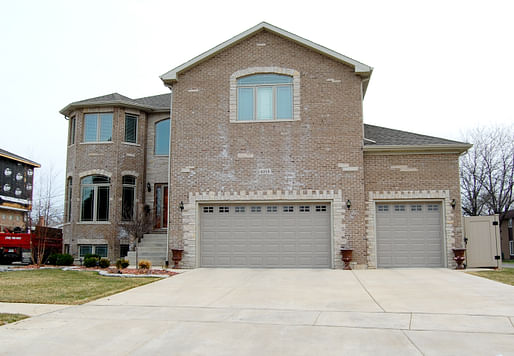
I started the blog McMansion Hell to document—and deride—the endless cosmetic variations of this uniquely American form of architectural blight. [...] I worry that I’ve actually reinforced the idea that McMansions are a relic of the recent past. In fact, there remains a certain allure to these seemingly soulless suburban developments [...] the McMansion is alive and well. Far from being a boom time fad, it has become a durable emblem of our American way of life. — The Baffler
Wagner says that, without noticing, the media’s focus on gentrification and the affordability of cities has meant that the rise of “modern farmhouses” and other forms of McMansions following the end of the great recession has gone largely unscrutinized. She claims these and other designs... View full entry

It is the centrepiece of the Central Vista Project, an ambitious plan to make over the city’s British-built administrative centre. Critics of the new building say that it is an unnecessary replacement of the existing parliament, that short cuts were taken with its procurement and the obtaining of permissions, and that there was minimal consultation with parliamentarians and the public. — The Guardian
The Prime Minister’s Bharatiya Janata Party has maintained the US$150M project is a “necessity” and expects its inauguration to take place soon after previously redying for a debut by the end of October. Modi appeared encouraged on a “surprise” hour-long site visit last Thursday... View full entry
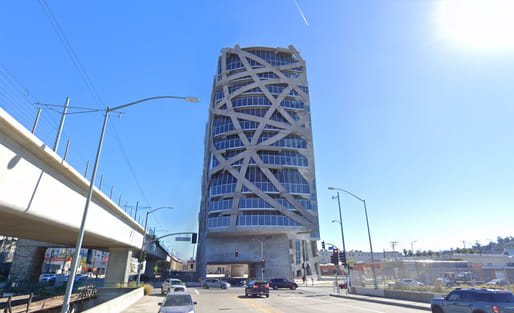
The result is a menacing thing, cranking up Moss’s cyberpunk tendencies to new high-octane levels. If ever Hollywood needs a villainous headquarters for a dystopian petrol-guzzling empire, this will be first in line – with a carbon footprint to match. — The Guardian
The Guardian’s Oliver Wainwright spies the limits of LA-brand deconstructivism on a visit to Eric Owen Moss’ (W)RAPPER project in Culver City's Hayden Tract, an “eccentric” assembly of low-rise office buildings the critic says he has helped turn into a warped “exhibition of... View full entry
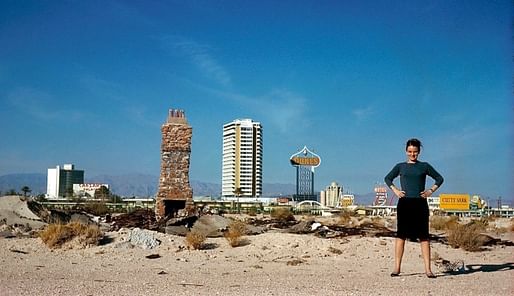
What struck me when I went back to reread the book is how deliberately it works to collapse the distance, and therefore the distinction, between enthusiasm and skepticism, and ultimately between documentation and critique. Above all, “Learning from Las Vegas” argues for a curious and open-minded anti-utopianism, for understanding cities as they are rather than how planners wish they might be—and then using that knowledge, systematically and patiently won, as the basis for new architecture. — The New Yorker
Yale’s new visiting critic Christopher Hawthorne considers the lasting inspirational qualities and history of Steven Izenour, Denise Scott Brown, and Robert Venturi's seminal 1972 text, whose origins can be traced to a studio the young newlyweds taught in New Haven in the fall of 1968. Hawthrone... View full entry
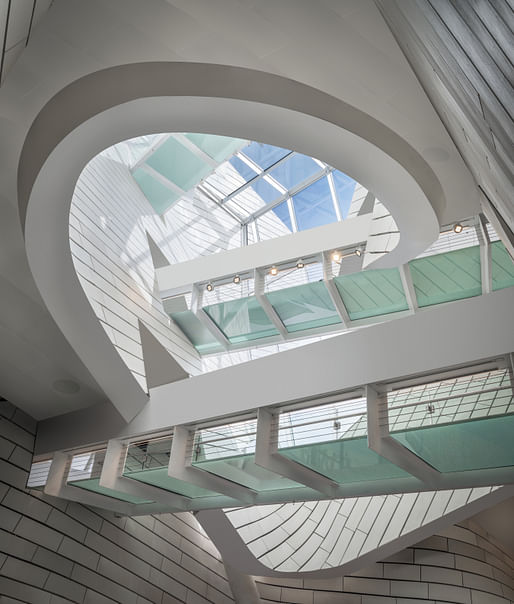
Nowhere is the gulf between digital promise and physical fact more spectacularly evident than at the new Orange County Museum of Art (OCMA) in California [...]
Almost a generation in the making, it feels like the final death rattle of a bygone age, the last gasp of an era preoccupied with novel form for form’s sake. Perhaps it is fitting that this flimsy, paper-thin architecture is held together with tape.
— The Guardian
The Guardian critic paid a visit to the new museum building to offer a thoroughly dejecting assessment based on what he observed to be a disorienting entrance, confounding wayfinding system, atrium configuration, and defective cladding panels made necessary by a “performative shell” that... View full entry
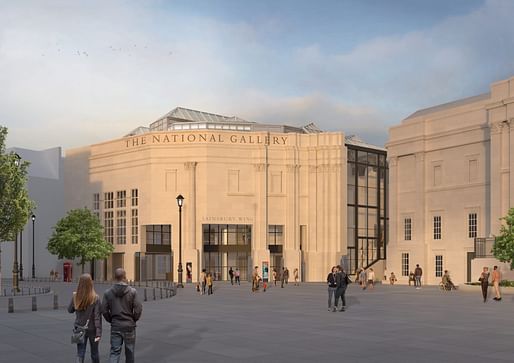
Selldorf Architects has released a revised plan for the controversial overhaul of the Sainsbury Wing at London’s National Gallery following a torrent of criticism that has grown online after their initial designs were unveiled this summer. The Architects’ Journal is reporting on the... View full entry
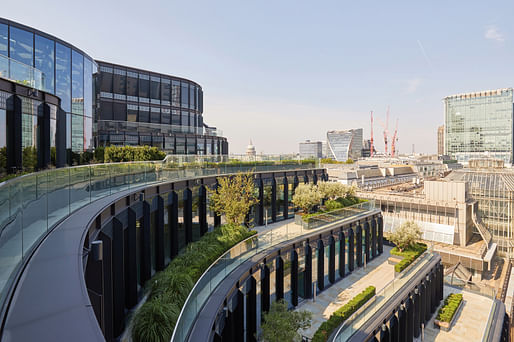
The debate surrounding sustainability and the Stirling Prize is heating up again in the lead-up to RIBA’s October 13th announcement of the coveted annual award. Just eight weeks after the Institute's new president Muyiwa Oki was swept into office on a platform of change, UK-based critic... View full entry

