

Follow this tag to curate your own personalized Activity Stream and email alerts.
Like other professions, such as law and medicine, architects rely on technical publications to do our jobs. Thus, we frequently turn to volumes such as Architectural Graphic Standards, which is authored by The American Institute of Architects (AIA). Promoted by its publisher, Wiley, as “the... View full entry

With school shootings becoming a point of concern for many across the country, K-12 design methodologies are beginning to address the issue as well. Fruitport High School in Fruitport, Michigan, for example, is undergoing a $48 million renovation project aimed at incorporating some of these... View full entry
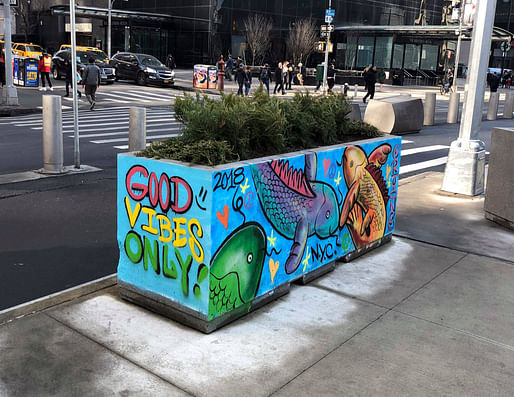
Urban designers are increasingly being tasked with an emergent ‘design challenge’ for public spaces: how best to deliver anti-terror infrastructure while generating a pleasant urban environment. By allowing themselves to be drawn into this challenge, and by dutifully working to respond with creative and constructive solutions, they are inadvertently helping to normalize a creeping ‘fortification’ of our cities that in turn contributes to a wider process of ‘bordering’ across the world. — Failed Architecture
Urbanist Alice Sweitzer and Failed Architecture editor Charlie Clemoes share their thoughts on a booming new design task, "making an increasingly aggressive urban situation more palatable to an ever more anxious citizenry." View full entry
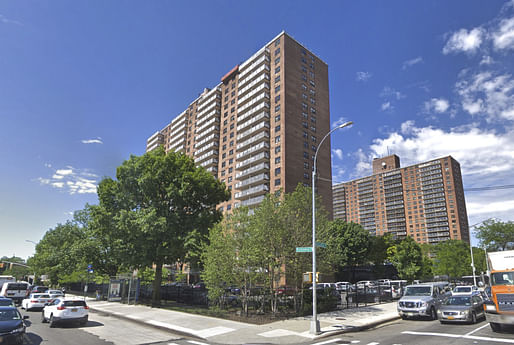
Last year, residents of Atlantic Plaza Towers, a rent-stabilized apartment building in Brooklyn, found out that their landlord was planning to replace the key fob entry system with facial recognition technology. [...]
But some residents were immediately alarmed by the prospect: They felt the landlord’s promise of added security was murky at best, and didn’t outweigh their concerns about having to surrender sensitive biometric information to enter their own homes.
— CityLab
"Housing complexes of low-income residents may be one early testing ground for residential applications of facial recognition technology," writes Tanvi Misra for CityLab. "But they’re not the only ones. Amazon’s doorbell company, Ring, is coming out with a video doorbell that incorporates... View full entry
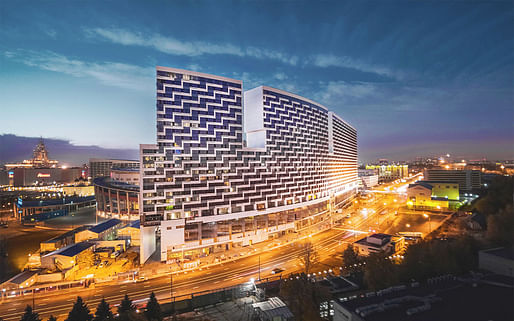
A new Moscow apartment building has unveiled a fully-functioning facial recognition system designed to replace residents’ keys. [...]
As well as allowing homeowners to enter the building without a key, the system automatically selects each resident’s floor when they enter the lift, and keeps tabs on cars and pedestrians leaving the complex.
— Calvert Journal
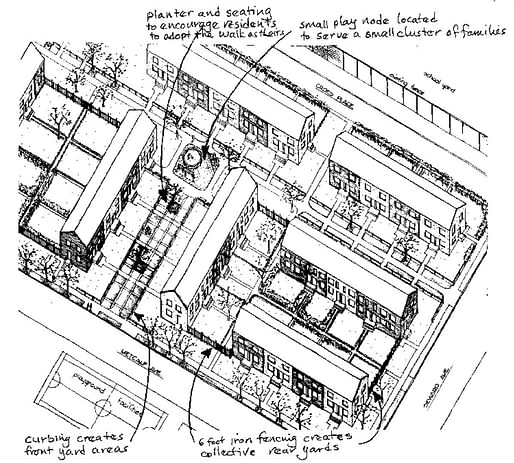
Can design keep you safe from crime? Architects and urbanists have been making that claim since urban crime — or the threat of it — reached crisis proportions in the 1960s. [...] But with scant evidence to support those claims, at what cost do we build “defensible space”? Architectural historian Joy Knoblauch looks back at sixty years of attempts to secure space and asks whether safety lies in the design of the built environment, in our social structures, or in our heads. — Urban Omnibus
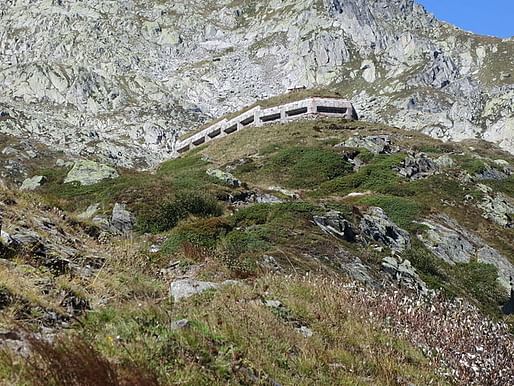
A bitcoin vault doesn’t store actual bitcoin units. Technically, what’s being stored are private, cryptographic keys. It’s odd to think of a virtual currency needing physical storage, but just like your most precious photos, even a cryptocurrency needs some kind of material container. — Quartz
The company Xapo is using a decommissioned military bunker to safeguard its customers bitcoins. In this article from Quartz, Joon lan Wong describes his way into the vault storing millions of dollars worth of bitcoins and the numerous portals and gates he had to cross. View full entry
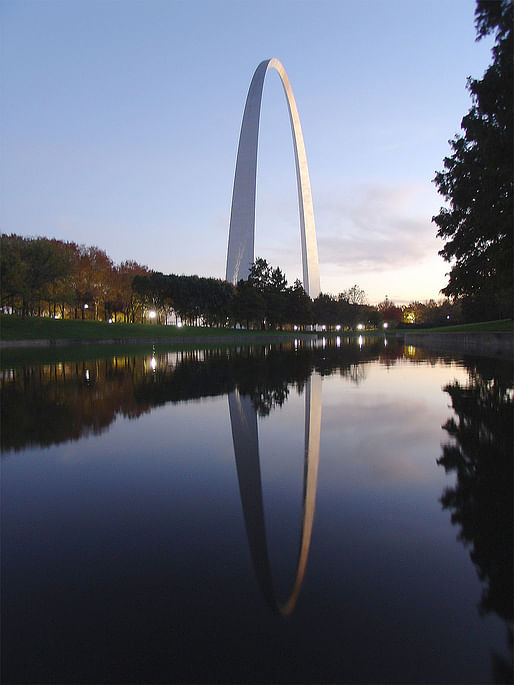
The Federal Aviation Administration has issued a new regulation restricting unauthorized drone operations over 10 Department of Interior sites, including the Statue of Liberty and Mount Rushmore. [...]
The announcement says the action comes at "the request of U.S. national security and law enforcement agencies."
— NPR
These new FAA restrictions will be effective as of October 5 so make sure to keep your drones at least 400 feet away from these ten National Landmarks: Statue of Liberty National Monument, New York, NYBoston National Historical Park (U.S.S. Constitution), Boston, MAIndependence National Historical... View full entry

Essey is an engineer at Uber and an early adopter of the Internet of things. He can control his lights with his Amazon Echo or an array of touchpad sensors he has installed throughout the home. Sensors tell him when there's water in the basement or a leak under the sink.
While Essey's setup might sound a little like science fiction, it's a prototype of the future. Some critics are worried these devices won't be secure and that companies will use them to spy on us to make money.
— NPR
As the Internet of things becomes more ingrained in our daily lives, some people are turning ordinary homes into smart homes. One way of doing that is by integrating smart appliances (dishwasher, fridges, microwaves, toasters, etc). That strategy, however, can be expensive and not very... View full entry

Congress may not have agreed to President Trump's $2.6 billion budget proposal for his much-touted border wall, but that has not stopped Customs and Border Protection from preparing for the first stage of the project; testing prototypes for the border protection. — Daily Mail
According to Ronald Vitiello, Customs and Border Protection’s acting deputy commissioner, $20 million, allocated from other programs, have been used to pay four to eight companies that will be contracted to produce prototypes for the border wall with Mexico. To be completed within 30 days... View full entry

In the summer of 2014, Anthony McGinty and Michelle Sosa were hired by Los Angeles World Airports to lead a unique, new classified intelligence unit on the West Coast. After only two years, their global scope and analytic capabilities promise to rival the agencies of a small nation-state. Their roles suggest an intriguing new direction for infrastructure protection in an era when threats are as internationally networked as they are hard to predict. — The Atlantic
Being the world's fifth-busiest airport (74,937,004 travelers passed through LAX in 2015) makes this infrastructure megaproject one of the top-ranked terrorist and aviation targets in the country. With billions of dollars spent on the usual airport expansion and modernization projects in recent... View full entry
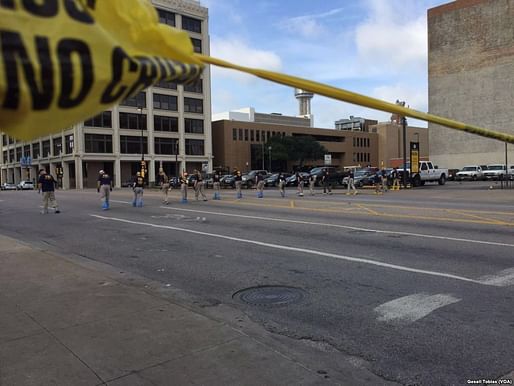
A mass shooting scenario changes the function of every object in the built environment. [...]
The buildings themselves, the fabric of the city, ends up not mattering so much. In fact, sometimes it becomes a kind of enemy. [...]
Americans aren’t going to rebuild their cities to accommodate the possibility of violence. The people who protect the people in those cities will just have to learn to see them differently.
— wired.com
Related on Archinect:Guns in the Studio: Texas' new campus carry law prompted Architecture Dean Fritz Steiner to resign. He joins us to discuss the law's effect on architecture education, on Archinect Sessions #55The Architecture of Loss: How to Redesign After a School ShootingHow Jeanne Gang... View full entry
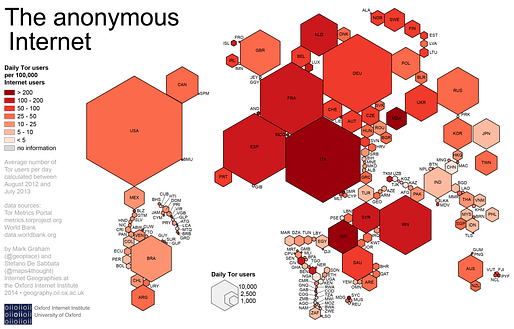
According to leaked documents France's Ministry of Interior is considering two new proposals: a ban on free and shared Wi-Fi connections during a state of emergency, and measures to block Tor being used inside France.
The documents were seen by the French newspaper Le Monde. According to the paper, new bills could be presented to parliament as soon as January 2016. These proposals are presumably in response to the attacks in Paris last month where 130 people were murdered.
— Ars Technica
According to the report published by Le Monde, the French Ministry of Interior has developed two frightening new security proposals that may be presented to parliament early next years.The first, as reported by Ars Technica, would block free, public WiFi during a state of emergency. On November... View full entry
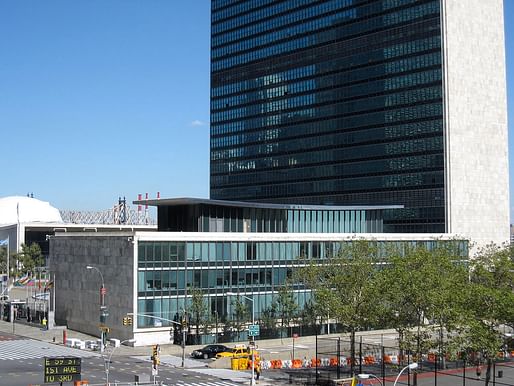
When the 70th regular session of the General Assembly convenes on Sept. 15, it will do so in a complex of buildings that hasn’t looked so good or felt so secure in generations.
“We now have a very safe compound,” said Michael Adlerstein, [...] executive director of a seven-year, $2.15 billion renovation, known as the capital master plan, that is nearing completion. More visible than anything else is the robust yet crystalline new glass facade of the 39-story Secretariat building.
— nytimes.com
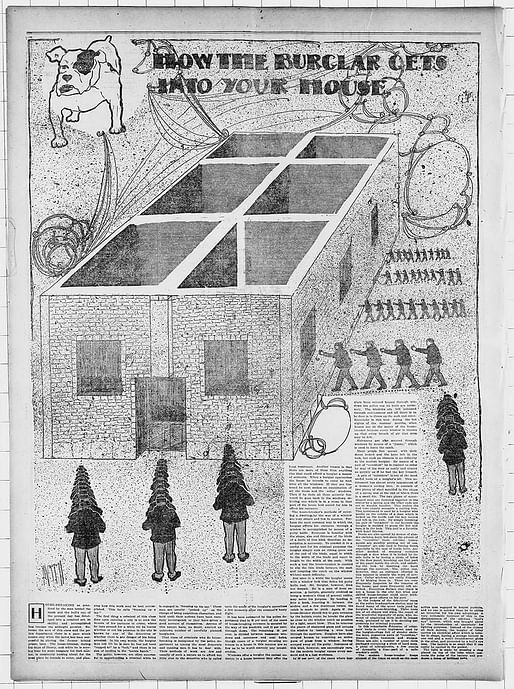
Burglary is a spatial crime: its very definition requires architecture...Indeed, burglary's architectural interest comes not from its ubiquity, but from its unexpected, often surprisingly subtle misuse of the built environment. Burglars approach buildings differently, often seeking modes of entry other than doors and approaching buildings—whole cites—as if they're puzzles waiting to be solved or beaten. — BLDGBLOG
More on Archinect:The Secret Service wants to build a fake White HouseArchitecture of paranoiaCurbing violence through better architectureSingapore's Sterile Authoritarianism View full entry


