

Follow this tag to curate your own personalized Activity Stream and email alerts.

Inside the edifice, which resembles the monolithic housing blocks seen across China and stands as tall as the London tower that houses Big Ben, the pigs are monitored on high-definition cameras by uniformed technicians in a NASA-like command center. Each floor operates like a self-contained farm for the different stages of a young pig’s life: an area for pregnant pigs, a room for farrowing piglets, spots for nursing and space for fattening the hogs. — The New York Times
A 26-story structure is, of course, the world’s tallest free-standing pig farm, according to the Times. It will be joined by a twin hog-raising center in October. The draconian forms are evocative of the measures required by China’s status as the world’s largest consumer of pork products and... View full entry
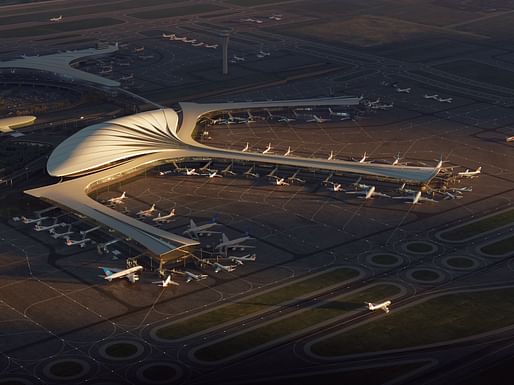
MAD Architects has been named the winner of an international competition for the design of the Changchun “Longjia” International Airport Terminal 3 in Jilin Province, China. The 2.9 million square foot terminal will contain 54 aircraft gates and is expected to accommodate 22 million annual... View full entry
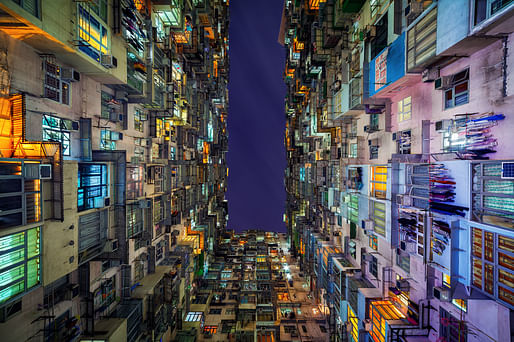
Following last week’s look at an opening for a Senior Designer at Extell Development Company, we are using this week’s edition of our Job Highlights series to explore an open position on Archinect Jobs for a Tenure-Track Assistant Professor in Architectural Design at the University of Hong... View full entry
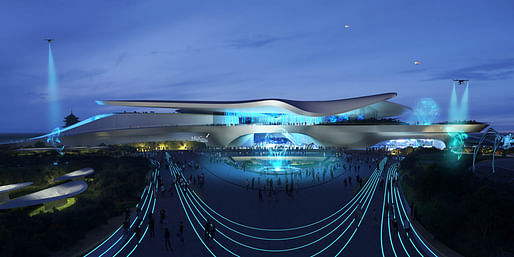
The next major cultural project from Zaha Hadid Architects has been revealed after the firm published the first images of its under-construction Chengdu Science Fiction Museum to coincide with the announcement that it will play host to the Hugo Awards later this year. In the form of a solar... View full entry
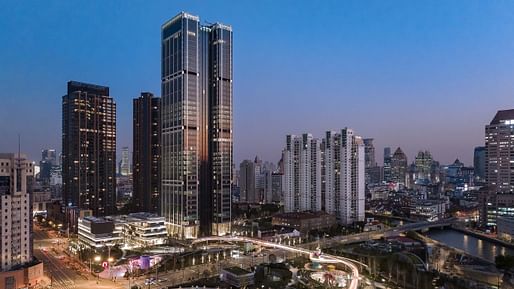
Foster + Partners has completed a 42-story office tower in the regenerated Suhewan area of Shanghai. Named the 'Suhe Centre for China Resources Land,' the 656-foot-tall tower is described by Foster + Partners as “a landmark building that offers truly modern workspaces which prioritize city and... View full entry
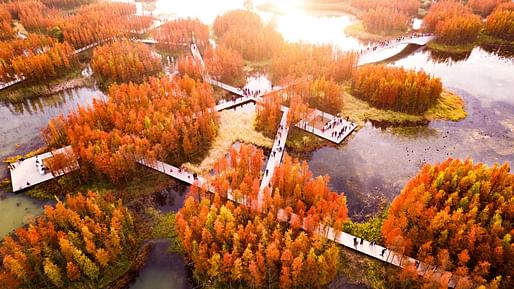
Beijing-based landscape architecture firm Turenscape has completed the transformation of a former 126-acre dumping ground into a “dreamlike floating forest” in the eastern Chinese city of Nanchang. The new Fish Tail Park operates a triple function as a habitat for wildlife, a... View full entry
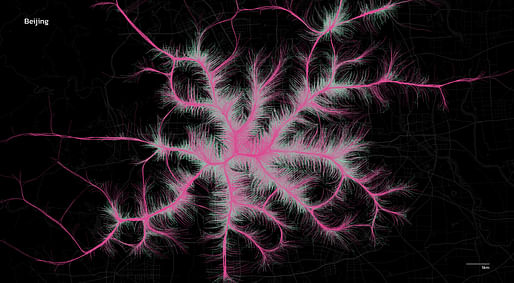
Researchers from the MIT Senseable City Lab have produced a series of maps visualizing commuting habits across Chinese cities. Titled Potato Project, the study used mobile phone location data from 50 million individuals across 234 cities to understand commuting patterns between a person’s home... View full entry
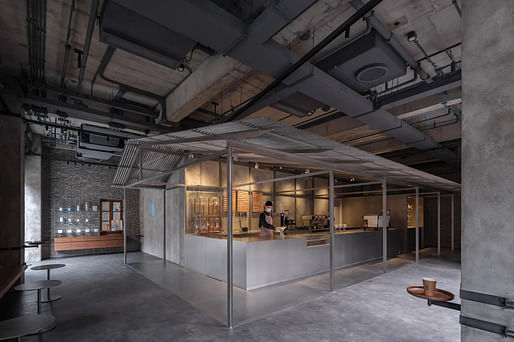
Shanghai-based firm Neri&Hu has completed a café within a historic, 19th-century public garden noted for its Shikumen typology residences. Named Zhang Yuan, the site has recently reopened after a complete rehabilitation of its historic buildings. As part of the revamp, coffee roaster... View full entry
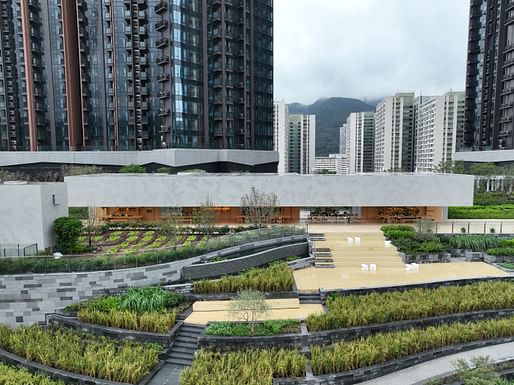
Snøhetta is nearing completion on a trio of clubhouse designs set in the densely populated center of Hong Kong’s Pavilia Farm residential development in Tai Wai. As a space for social interaction and shared experiences, the project serves residents of Pavilia with a vital piece of communal... View full entry
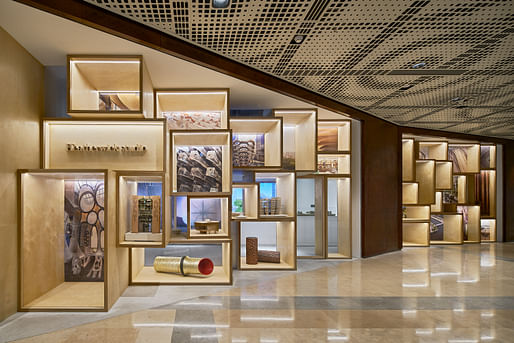
Heatherwick Studio has offered a first look inside their new Shanghai studio, the first overseas office to be opened by the London design firm. The office is located within 1000 Trees, a building designed by Heatherwick which opened in 2021. Image credit: Qingyan Zhu for Heatherwick Studio Located... View full entry
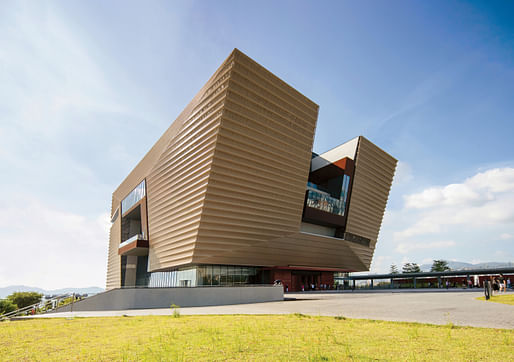
A new civic landmark in Hong Kong’s West Kowloon Cultural District is being celebrated after Rocco Design Architects Associates (RDA)’s Hong Kong Palace Museum (HKPM) officially opened its doors to the public. The 30,000-square-meter (323,000-square-foot) museum’s design pays homage to the... View full entry
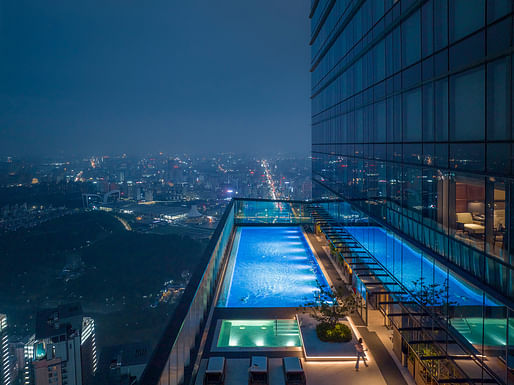
Goettsch Partners has completed work on a new 1,322-foot-tall tower in Nanning, China, topped by a special feature they say sets the record for the world’s highest outdoor swimming pool. The new Guangxi China Resources Tower is a mixed-use design that incorporates a 336-room hotel, office... View full entry
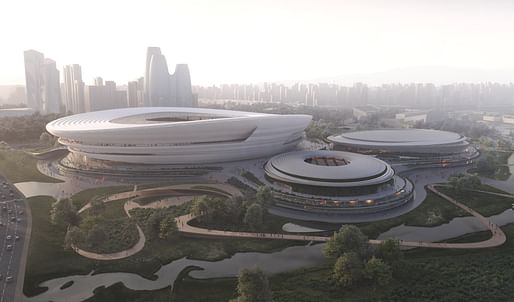
Zaha Hadid Architects has unveiled their competition-winning design for the Hangzhou International Sports Center in China. The complex will be anchored by a 60,000-seat football stadium, while also holding a 19,000-seat indoor arena, an aquatics center with two 164-foot-long pools, and... View full entry
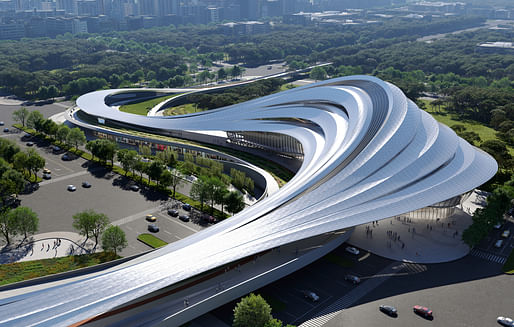
Construction has commenced on the Zaha Hadid Architects-designed Jinghe New City Culture & Art Center in China, following a ground-breaking ceremony on September 16th, 2022. Zaha Hadid Architects won the international competition to design and deliver the scheme in June, which will serve as a new... View full entry
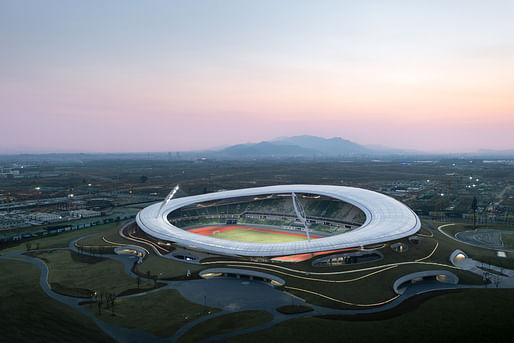
MAD Architects has shared photos of their newly-completed signature stadium that’s part of the Quzhou Sports Park in Zhejiang, China. In our April 2020 coverage of the project, construction of the mega development was underway. At that time, image renders showcased a massive urban park promising... View full entry


