

Follow this tag to curate your own personalized Activity Stream and email alerts.
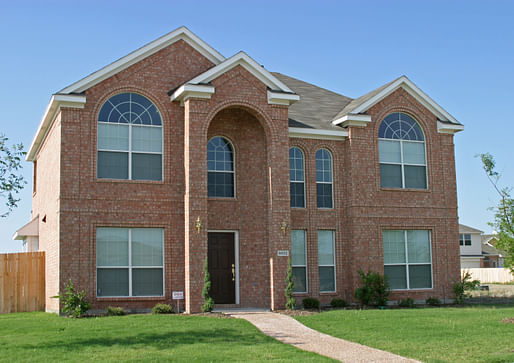
American homes are extravagant, having swelled from about 1,500 square feet on average in 1973 to more than 2,400 in 2018. After the pandemic, memory of the novel utility of all that space could justify even more of it. Some companies have already declared their intention to let workers telecommute forever, and real-estate analysts anticipate more companies eliminating or curtailing expensive commercial leases to save money. — The Atlantic
The new article from The Atlantic expands on the premise, "Suburbia was never as bad as anyone said it was. Now it’s looking even better."The incoming changes to built environment due to COVID-19 pandemic, might well be viewed as going back to suburban communities and escape from the density of... View full entry

The four-person California Renters Legal Advocacy and Education Fund, or CaRLA, has one reason for being — to sue cities that reject housing projects without a valid reason. The litigious nonprofit with YIMBY roots struck again last month, suing Los Altos after the city rejected a developer’s bid to streamline a project of 15 apartments plus ground-floor office space. — The Mercury News
CaRLA continues its aggressive efforts to get San Francisco Bay Area cities to stop denying by-right housing developments. “Something, by hook or by crook, has to make these cities actually build housing,” Sonja Trauss, co-executive director of CaRLA, told The... View full entry
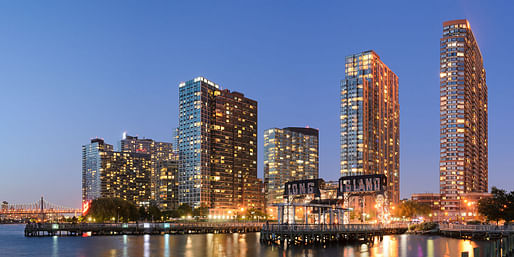
For years, suburbia has offered these companies acres of disposable, cheap, anonymous office parks: mostly one- or two-story concrete structures surrounded by loads of surface parking. These sites minimized costs, maximized security and allowed companies to scale up, contract or split into different units quickly — at the same time they promoted sprawl and traffic jams and transformed once-quaint bedroom communities south of San Francisco into phenomenally expensive places to live. — The New York Times
Even though Amazon's search for its new headquarters' locations has ended all the talks and negotiations about the company's potential impact on the cities it will settle in — New York and Crystal City, Virginia—have only begun. In ways, the choice comes as no surprise as tech platforms... View full entry
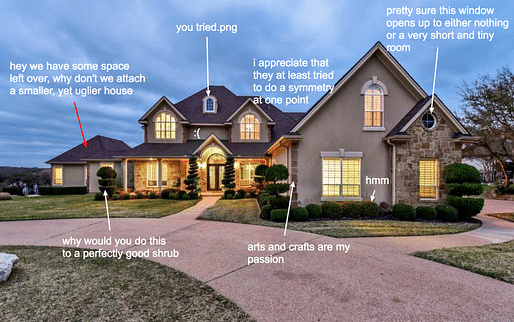
I’ve been poisoning my brain the last couple of weeks narrowing down 2000 prospective McMansions to 16. Please give me a round of applause for this immense personal sacrifice. Instead of ranking them myself like I usually do, I will be doing a bracket at the end of the next post where you can vote for the Most Terrible in Texas! (After all, everything’s bigger in Texas!) — mcmansionhell.com
McMansion Hell, a bi-weekly blog delighting in architectural education through ridicule, now brings us a Texas bracket. The top 8 worst McMansions of Texas suburbia have been chosen and properly mocked. Now it's your turn to choose which belongs at the innermost circle of hell. Here are a few of... View full entry
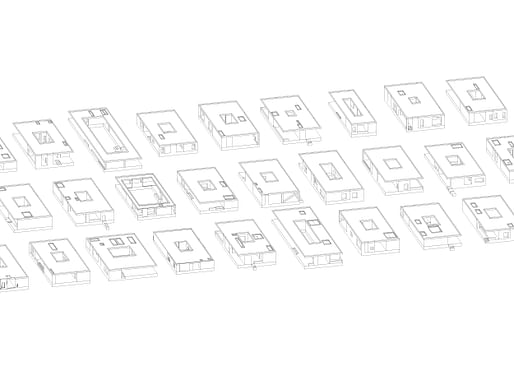
The first in a series of shows spotlighting research by Pratt Undergraduate Architecture Faculty on the future of Domestic Architecture in 21st Century. This exhibition, featuring the work of John Szot is entitled MASS MARKET ALTERNATIVES."Industrialization has had a profound effect on the... View full entry
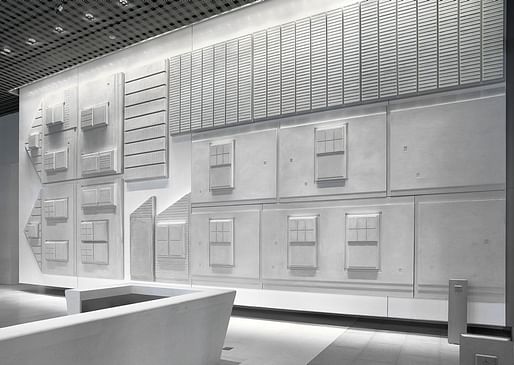
A major new public art work by Rachel Whiteread modelled on a suburban US house will be unveiled next week at the new US Embassy in Nine Elms, south London. The wall sculpture, titled US Embassy (Flat pack house; 2013-1015), will greet embassy visitors as they enter into the lobby through the consular court. The work was commissioned by Art in Embassies, a US governmental body. — The Art Newspaper
Artist Rachel Whiteread's name has become synonymous with the production of architectural interventions, invention and material playfulness through her large-scale artist sculptures, specifically her casts of the interiors of buildings. Her newest addition, installed in the US Embassy titled, US... View full entry
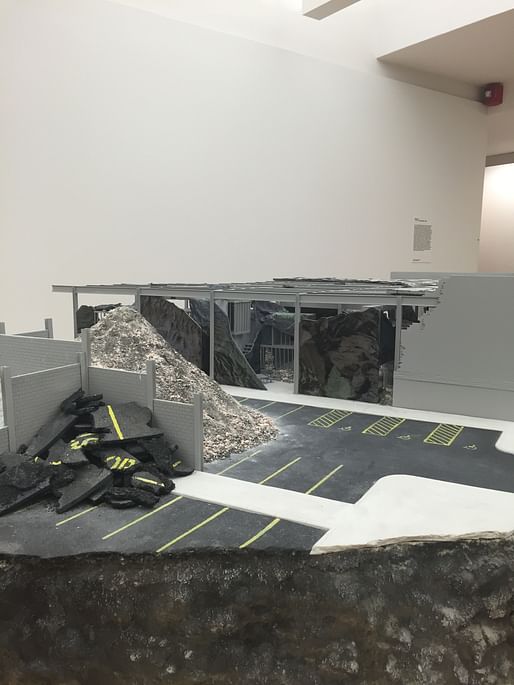
By now, it’s a relatively familiar narrative: over the course of the last few decades, there's been a mass return to urban centers from their outskirts, resulting in a field of abandoned strip malls and big box stores. What to do with these contemporary “ruins,” however, remains an open... View full entry
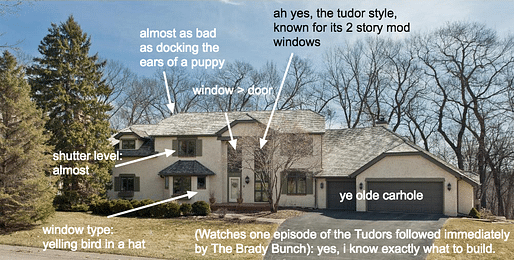
McMansion Hell, which besides satire, also regularly features educational posts on the history and significance of vernacular architecture in the US, was threatened with a lawsuit this week for using photos obtained from Zillow for parody. Image courtesy of McMansionHell.comAfter Electronic... View full entry
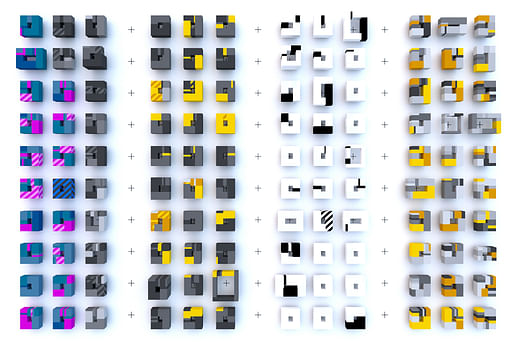
Starting Wednesday, March 8, the Pinkcomma Gallery in Boston will be showing a collection of drawings, models, and videos documenting a collection of algorithmically-generated suburban homes by John Szot.conceptual statement:Industrialization has had a profound effect on the American suburb. Only... View full entry
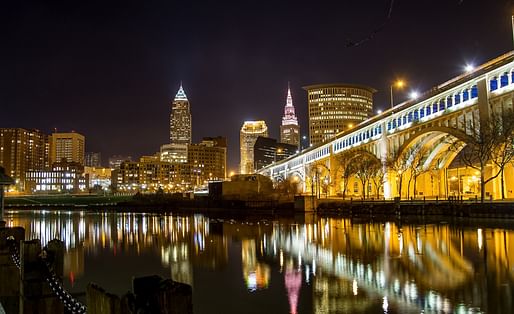
Although Cleveland often serves more as a punchline than a solution (the Cuyahoga River caught fire in 1969 due to pollution), a climate change conference convened by the United Nations and currently being held in Quito, Ecuador sees new potential in the city. As StreetsBlog reports, if Cleveland... View full entry
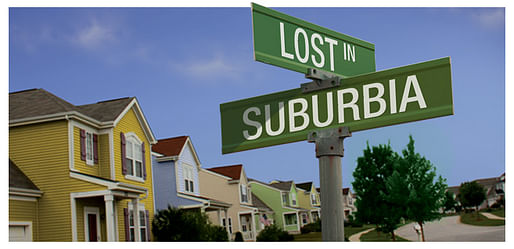
Some New York City real estate agents have teamed up with their counterparts outside the five boroughs for organized seminars and “immersive tours” of the suburbs. The city agents get a cut of the commission if their clients decide to buy a house in the suburbs. The services, which reside somewhere between shrink session and sales pitch, intend to address the concerns of families unsure about leaving the city and guide them to suburbia, step by step. — nytimes.com
Related news from the 'burbs on Archinect:The strength of Chinese suburbiaHow one urban planner is helping revamp a Miami suburb "without gentrification"In Chicago, forming economically integrated suburbs is more complex than it looksRenzo Piano: the future of European architecture lies in the... View full entry
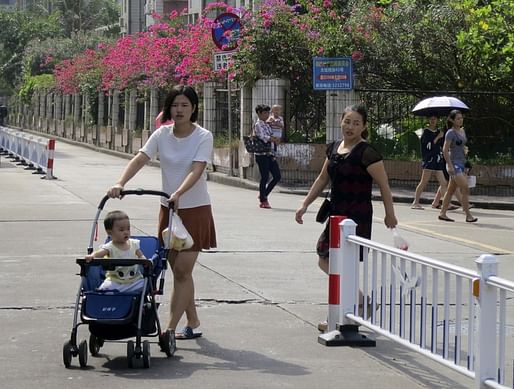
As of the 2010 census, the vast majority of Shanghai’s population lived in suburban areas. Between 2000 and 2010, suburban areas grew by 50 percent or more, compared to the city’s central districts, which grew slower or in some cases even shrank [...]
The villagers who join the urban economy, then, don’t go downtown, but to the settlements that dot the fringes of the city. The industries that really help China to grow are here, too
— citylab.com
More related news:China to sustainably build 10 New York City's worth of space in the next decadeIn weaker market, architecture firms in China are cutting backChina hopes to improve its cities with newly released urban planning visionStudent Works: "Townization", a new Chinese urbanization... View full entry

This year, Chinese families represented for the first time the largest group of overseas home buyers in the United States. Big spenders on new homes are helping prop up local economies in the Midwest...The interest from Chinese buyers is reshaping demographics in Texas. — NYT
As Part II of a series of articles exploring how China's financial heft and economic clout influence the world, Dionne Searcy and Keith Bradsher illuminate how Chinese real-estate investors are driving prices and development not just for "luxury condos in Manhattan and McMansions in Silicon... View full entry
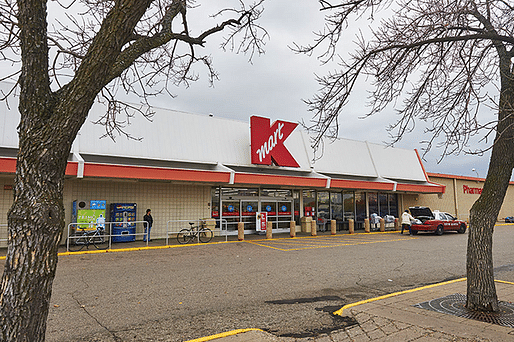
In suburbs, cities and rural areas, [big-box stores] can present a reuse and rehab conundrum, particularly as retailers become more sophisticated about controlling leases and redevelopment. [...]
With the big-box model, stores are rarely remodeled. [...]
A kind of “retail cannibalism” emerges, where companies compete for market share with ever-shinier facades that leave aging stores behind as the asphalt fades.
— minnpost.com
More on the fading development of big-box stores:A supermall grows in fracking countryFor in that death of malls, what dreams may come? Archinect Sessions #32, featuring special guest co-host, Nam Henderson!Dead Malls and Shopping DinosaursDead-malls and the return of Main Street View full entry
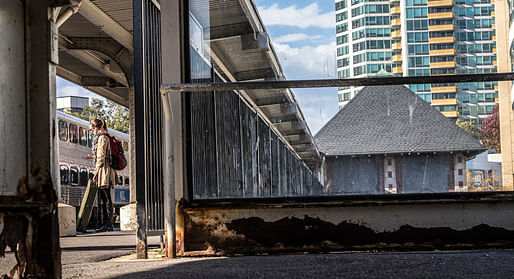
What if a suburban downtown became a place where pedestrians ruled and cars were actively discouraged? As it turns out, what looks like normal urban gentrification actually marks the success of one of the most revolutionary suburbs in America. And its approach to development is fast becoming a model across the region—a model even embraced by [Evanston's] urban neighbor to the south, Chicago Mayor Rahm Emanuel. — politico.com


