

Follow this tag to curate your own personalized Activity Stream and email alerts.
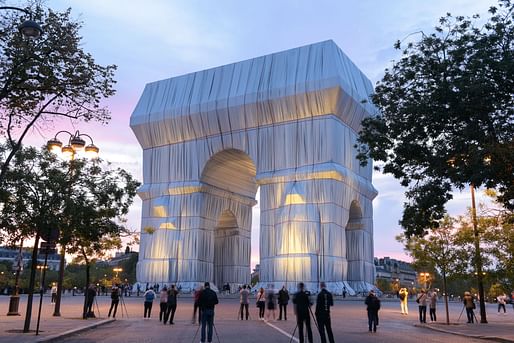
The Mayor of Paris has announced that Christo and Jeanne Claude’s Arc de Triomphe, Wrapped installation is to be recycled for use in the city’s upcoming Olympic and Paralympic Games. As reported by ARTnews, the effort will be led by the environmental organization Parley for the Oceans. Under... View full entry
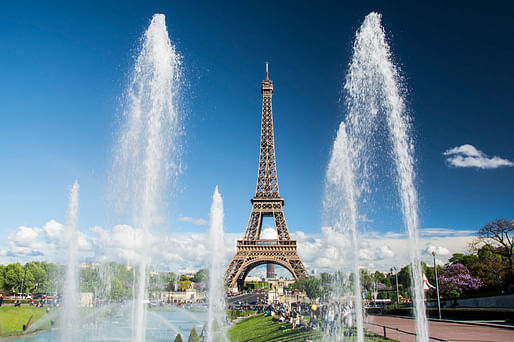
Paris 2024 organisers have been planning to install the Olympic flame on the Eiffel Tower, a source with direct knowledge of the matter told Reuters on Monday.
The source added that the flame would not be put at the top of the Eiffel Tower, for technical reasons, and it was not clear whether it would stay on the monument throughout the Games but the combination of two such iconic images would be a dramatic backdrop to the July 26-Aug. 11 event.
— Reuters
The new antenna array on top of the tower is the only thing preventing the flame from alighting (pun) on its freshly-painted pinnacle. The flame traditionally symbolizes the continuity of the ancient into modernity. Notre-Dame Cathedral, meanwhile, will not have its own makeover readied... View full entry
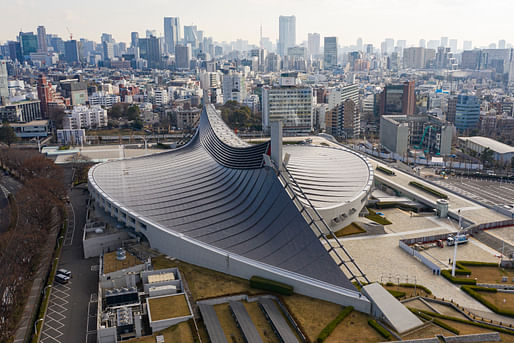
The coronavirus pandemic has forced the Olympics’s first postponement: Tokyo 2020, its name unchanged, will now take place in July 2021 if it takes place at all. Yet all around the Japanese capital is the legacy of another Olympics: the 1964 Summer Games, which crowned Tokyo’s 20-year transformation from a firebombed ruin to an ultramodern megalopolis. — The New York Times
NYT art critic Jason Farago takes a look back at the now iconic architectural and visual design — and its transformative power — of the 1964 Olympic Summer Games in the Japanese capital, 19 years after WWII had ended. "Those first Tokyo Olympics served as a debutante ball for... View full entry
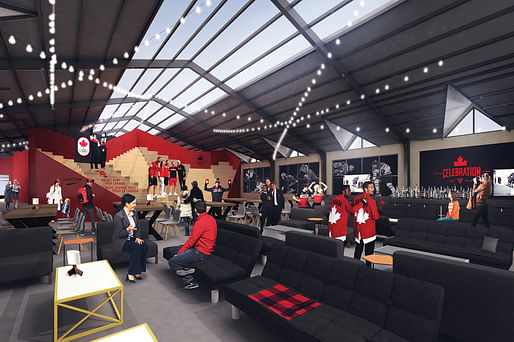
With only one month to go until the 2018 Winter Olympics officially kick off on February 9 in PyeongChang, South Korea, athletic teams from around the world prepare to represent their nations in front of an international audience. Canada isn't limiting itself to sporting competitions alone to... View full entry
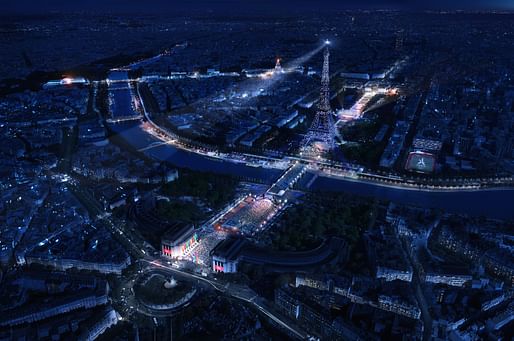
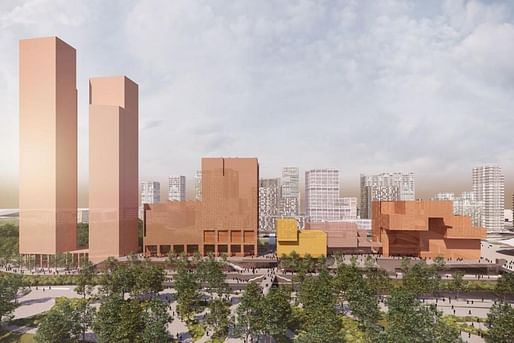
According to the team, the designs for both the new and temporary venues and facilities ‘will seek to shape and integrate sporting spectacles in the city’s urban landscape while supporting Paris 2024’s commitment to be the most sustainable games ever’. — The Architects' Journal
As seen in Rio 2016 to London 2012, sustainability is an ongoing issue for cities hosting the Olympic Games. Recently, Populous and consultancy group Egis unveiled the first rendering of their design for the Paris 2024 Olympics, stating that their concept will help create “the most... View full entry
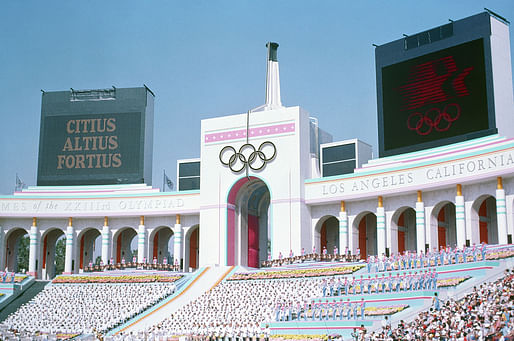
After weeks of negotiations with the International Olympic Committee, Los Angeles officials have reached a deal to host the 2028 Summer Games under terms they hope will generate hundreds of millions in savings and additional revenues.
The agreement will bring the Olympics back to Southern California for a third time, after Los Angeles hosted in 1984 and 1932. It also opens the door for the 2024 Games to be held in Paris.
— latimes.com
Spiraling costs and notorious budget overruns have discouraged other cities from pushing towards being a host to the 2024/28 Summer Olympics, but Los Angeles Mayor Eric Garcetti thinks otherwise and hopes to avoid unpredictable spending by reusing existing venues and infrastructure. As the Los... View full entry
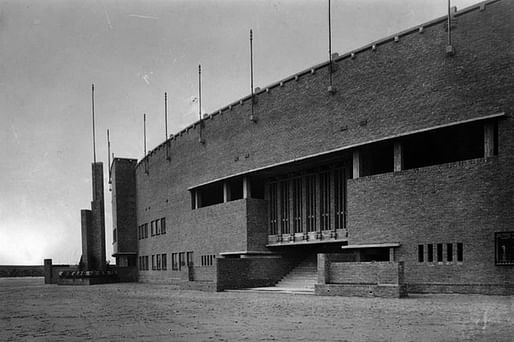
It may be a part of the Olympics the world forgot, but from 1912 to 1948, the International Olympic Committee (IOC) handed out medals across five creative arts categories including architecture...Following the 1948 games, the IOC abandoned the Olympic art competition due to the significantly high number of professionals entering, which went against the spirit of the games being an amateur competition. — architectureau.com
More on Archinect:Climate change will make finding a host city for the 2088 Olympics incredibly difficultNow that the Olympics have ended, what's in store for Rio's stadiums?How are London's Olympic grounds being used 4 years later?On decentralizing the Olympics View full entry
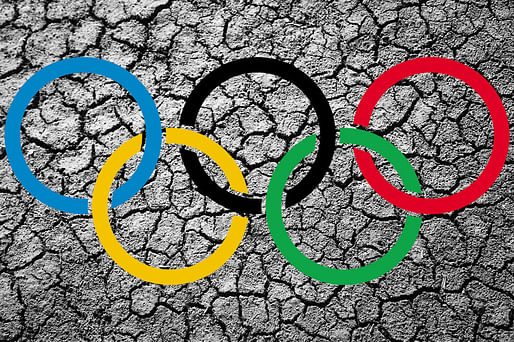
As our planet grows warmer over our lifetimes, the number of cities that will be cool enough to reasonably host the summer games is going to rapidly dwindle. And that doesn’t just mean Atlanta or L.A. According to an analysis published in The Lancet last week...only three plausible host cities in the entire continent of North America may still be low risk by 2085 (or the summer games of 2088): San Francisco, Calgary, and Vancouver. — FastCo.Design
There may be zero in Africa or Latin America, and only two in Asia (Bishkek, in Kyrgyzstan, and Ulaanbaatar, in Mongolia).As the article notes, the really disturbing implication of this research is less about athletics and more about day-to-day work. Half the world's population works outside... View full entry
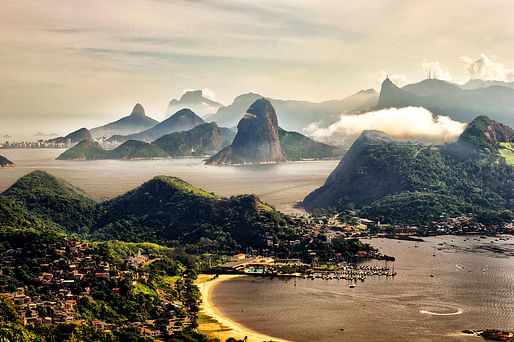
Despite reports of dangerous levels of pollution in Rio's Guanabara Bay and concerns that floating garbage could damage or slow competitors' boats, sailors at the 2016 Olympics are showing little or no fear of getting into the water [...]
Many said the dangers of sailing in Rio have been overblown and worried that the water concerns are overshadowing some of the most exciting and challenging sailing of their lives.
— Reuters
So far, the Rio Olympics seem to be going pretty well. But before they opened, a series of issues plagued the preparations. For some background, check out these links:Athletes refuse to move into Rio's Olympic Village, citing “blocked toilets, leaking pipes and exposed wiring”Rio... View full entry
he collapsed sailing ramp has been hauled out of the water, a Russian diplomat has heroically killed a carjacker (or maybe not), and 450,000 condoms await action in the leaky athletes village. Beset by construction problems and delays and with preparations decreed the “worst ever” by the International Olympic Committee, how is the architecture and design of the XXXI Olympiad shaping up so far? — Oliver Wainwright | the Guardian
The Olympics are in full swing. Here's how to watch them. Interest in more Olympics architecture? Check out 10 notable projects from past Olympic Games here.This month, Archinect's coverage includes a special focus on all things related to games. Check out some related articles here. View full entry
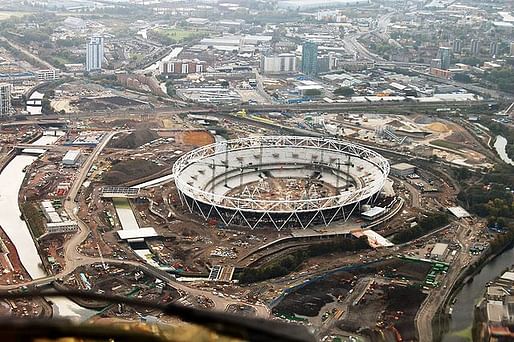
Just in time for Friday's Rio Olympics, it's time to take a look back at former Olympic villages: specifically, what good are they post-games? In London, the 560 acres of the East End that was transformed into the grounds for the 2012 Olympics have undergone the Olly Wainwright examination in his... View full entry

It's rare that spectacle and nuance combine effortlessly, but an exception can be made for the lithe sculptural form of the San Shan Bridge. The bridge, which translated into English means "three mountains," will serve as a shapely conduit between Beijing and the river valleys of Zhangjiakou... View full entry
More broadly, this reconfiguration would make the games, for the first time, a truly global event. Dozens of countries that could never afford to host the Olympics in their current form – Kenya, Thailand, Chile, to name a few – might easily host a single Olympic sport. Rather than being an occasion for nationalistic displays by a single, powerful host country, the Olympics would become a celebration of human diversity. — Paul Christesen
With overwhelming evidence that hosting the Olympics is a huge burden for several cities, Paul Christesen, a Professor of Classics at Dartmouth, makes a case for the possible advantages of having Olympic sports competitions take place in different cities throughout the globe. He also makes... View full entry
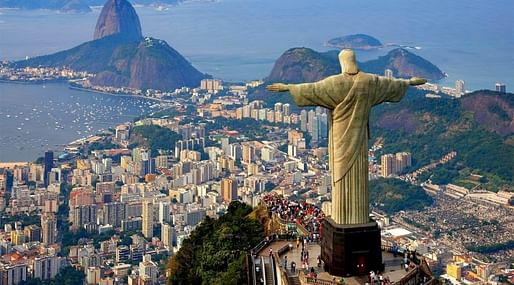
“This is a missed opportunity,” Paes acknowledged. “We are not showcasing ourselves. With all these economic and political crises, with all these scandals, it is not the best moment to be in the eyes of the world. This is bad.”
But he also believes the problems are exaggerated by the press in a way that unfairly portrays Rio to the outside world...“There has never been so much transformation for poor people [in Rio]...The Olympic Games are a great inspiration to get things done.”
— The Guardian
More on Archinect:The rapid gentrification of Rio's favelas in advance of the OlympicsRio Olympics "must be postponed, moved, or both" due to Zika threat11 workers have died so far during Rio Olympic construction, audit findsWith the Rio Olympics opening in less than four months, sports federation... View full entry
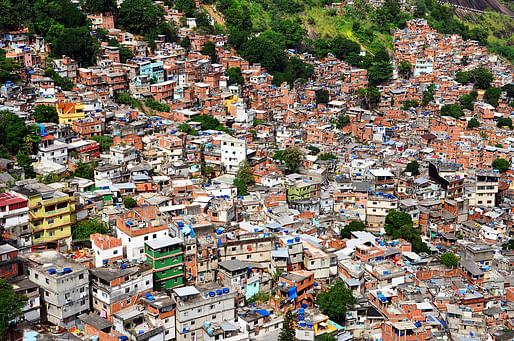
For decades, state neglect forced a pace of progress that was slow and painful in Rio’s favelas, which – unlike many other informal settlements around the world – have a largely stable population. While some residents express satisfaction that state involvement has brought new income streams and improved security, there is anger that changes are imposed from outside, without consultation with residents. — the Guardian
For more on the upcoming Rio Olympic Games, check out these links:11 workers have died so far during Rio Olympic construction, audit findsWith the Rio Olympics opening in less than four months, sports federation concerned over problem with venuesRio cancels construction contract for unfinished... View full entry


