

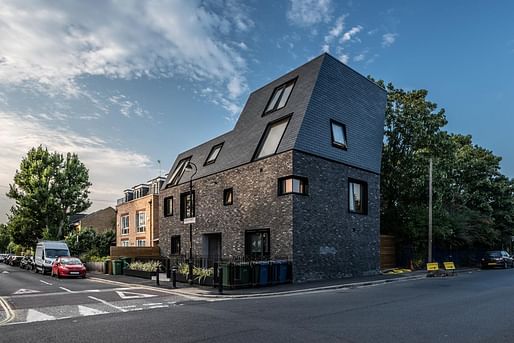
This post is brought to you by CupaPizarras. CupaClad, a leading provider of innovative and sustainable building solutions, has launched a new product that promises to improve the world of architectural cladding with its Natural Slate Rainscreen Cladding System. A system that offers provides... View full entry
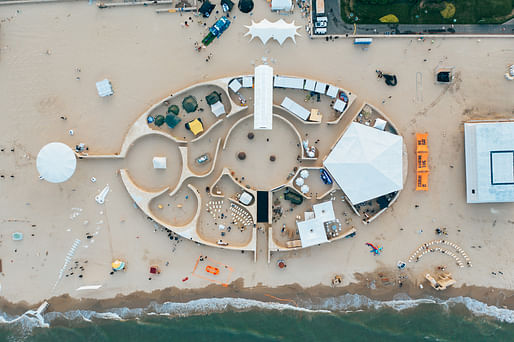
MAD Architects has shared new images of its recently completed temporary The City of Time installation for the Aranya Theater Festival in China. The project, which ran from June 12th to June 25th in the seaside resort community, brought together 300 artists and 131 group works under one maze-like... View full entry
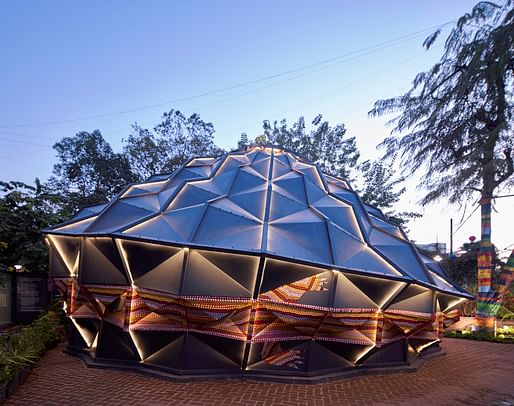
Kanika and Jwalant Mahadevwala, architects and founding partners of andblack design studio, have created a multifunctional black box theater design that uses parametric models to "allow customization of several variables to achieve the specified volume." Their design prototype, Darwin Bucky, is a... View full entry
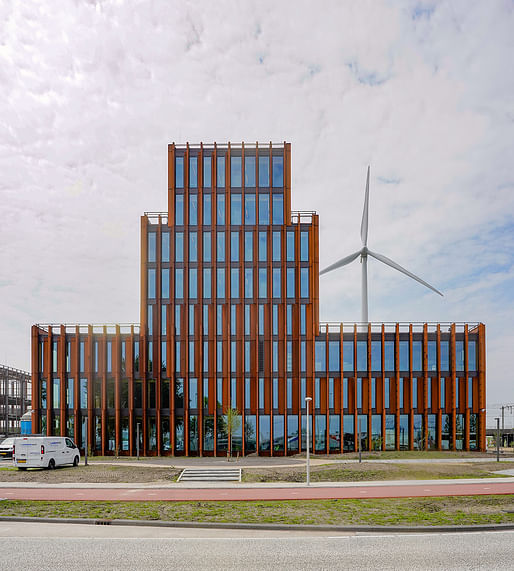
De Zwarte Hond has designed a timber office building for Dutch energy company Alliander. Located on the Noordzeeweg in Amsterdam Westpoort, the new offices are described as circular and flexible, consisting of workshops, warehouses, test facilities, and educational and park buildings. Image... View full entry
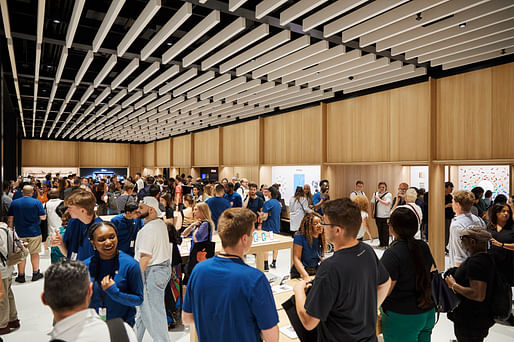
Apple has officially opened the doors to its newest store in the UK, located at London’s iconic Battersea Power Station, which has undergone an extensive overhaul to convert the building from a former coal-fired power station to a high-end shopping, commercial and residential development. — The Apple Post
The Foster + Partners-designed storefront is located on the first floor of the Battersea Power Station, which opened last fall, and marks Apple’s 40th store in the United Kingdom. The Station is also the site of the tech company’s new UK headquarters, which will house 3,000 employees in... View full entry
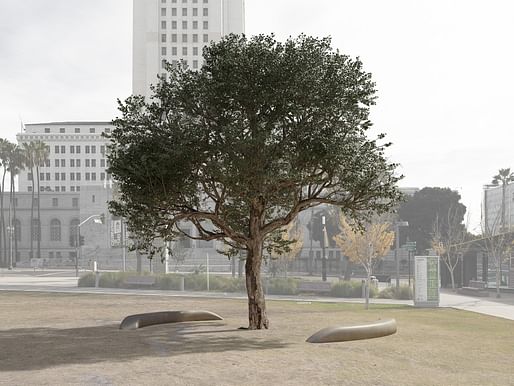
A total of nine local municipalities have received funding in the amount of $25 million from the Mellon Foundation as part of its ongoing Monuments Project, which to date has provided $151.9 million worth of grants since its inception in 2020. The latest round of funding includes projects such as... View full entry
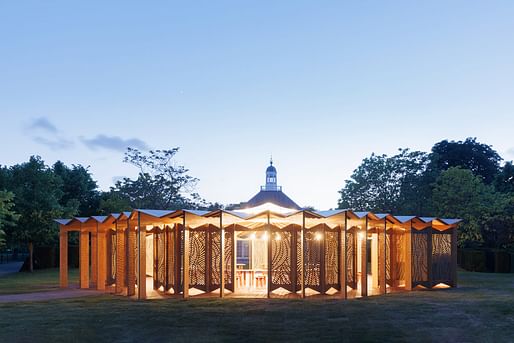
Reactions in the UK are pouring in after the opening week of Lina Ghotmeh's 2023 Serpentine Pavilion in London’s Kensington Gardens. The annual installation’s 22nd overall edition features the Lebanese-born Parisian designers palm leaf-shaped timber À table pavilion, which encases a... View full entry
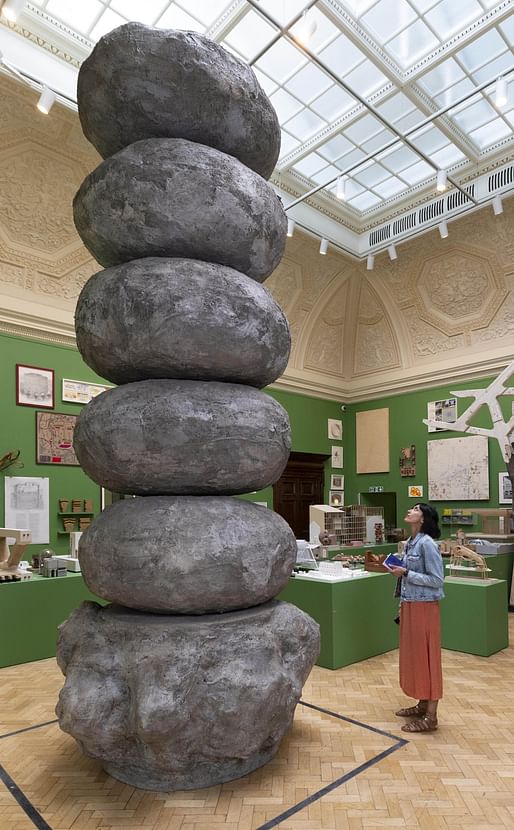
The Peter Barber-curated Royal Academy of Arts summer Architecture Room has opened in London, featuring an exhibition focusing on the role of craftsmanship in architecture. The room plays into the 2023 Summer Exhibition's greater theme put forth by academician and curator... View full entry
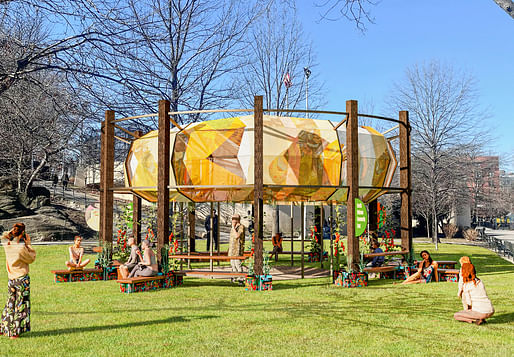
A new public art installation will kick off the Mellon Foundation-funded Culture, Creativity, & Care Initiative in Harlem this summer with an engaging reflection of the history of Marcus Garvey Park and the cultural craft traditions of the various communities which surround it. Friday... View full entry

Summer is here, and schools like UCLA School of Architecture and Urban Design are preparing for their Summer '23 lecture series. To accompany its AUD summer programming (JumpStart and TeenArch Summer Institute), UCLA's upcoming lecture series "offers programming and conversation... View full entry
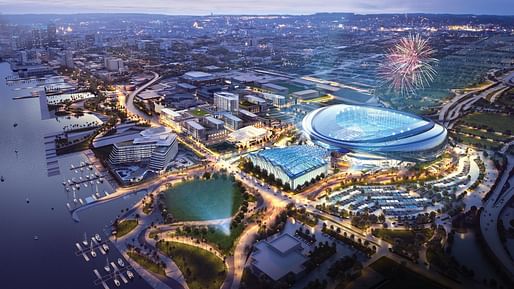
HOK has announced that it is partnering with the Jacksonville Jaguars to undertake the renovation of TIAA Bank Field into the “Stadium of the Future.” The transformation seeks to invigorate the Jaguars franchise and spur the development of the city of Jacksonville. Rendering courtesy of... View full entry
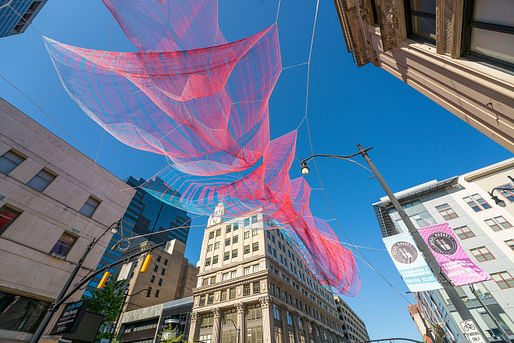
Artist Janet Echelman’s soft-fiber Current installation premiered over the weekend in Columbus, Ohio, adding the city to a list of others to have showcased her experiments with site-specific sculptures and computational design since 2009. Stretching to a total of 126 feet at its zenith, the... View full entry
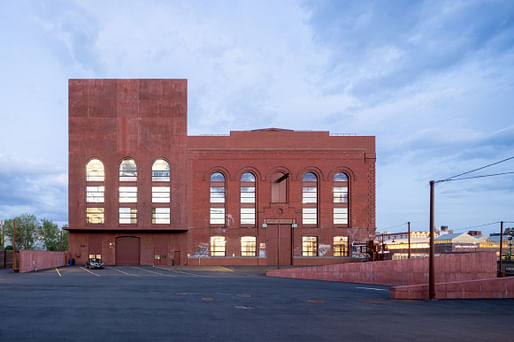
A crossover arts and manufacturing project from Herzog & de Meuron opened on May 19 following several years of construction that remade a former brownfield site into the new home of the non-profit Powerhouse Arts in Red Hook, Brooklyn. Coinciding with the ongoing cleanup of the Gowanus Canal... View full entry
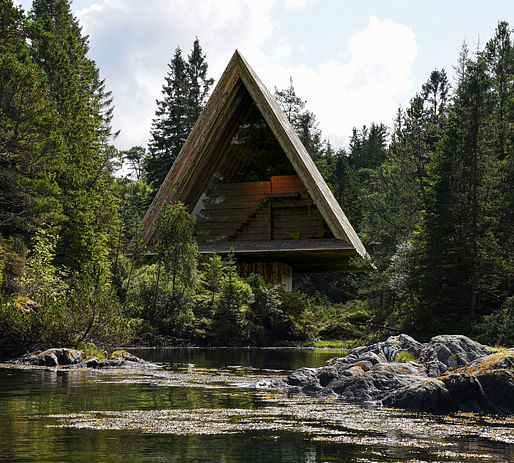
BIG has shared details about their latest collaboration with British clothing company Vollebak to design a self-sufficient, off-grid island off the coast of Nova Scotia, Canada. Named after the brand, the 11-acre Vollebak Island is intended to be fully powered by carbon-neutral energy. ... View full entry
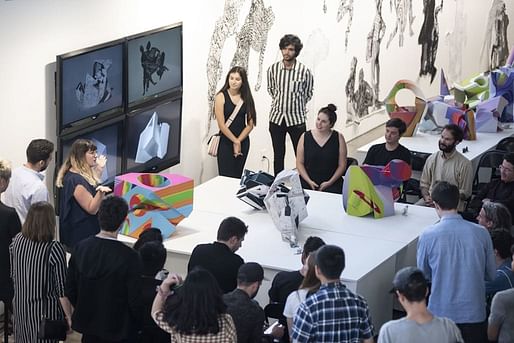
Interested in exploring a career in architecture and design but want to develop foundational skills and grow your design portfolio? Below are featured architecture summer programs from our Archinect Partner Schools that are still accepting applications! These nine summer programs are offered... View full entry


