


The Spanish NGO Heritage for Peace has published a report on the impact of recent Israeli airstrikes on Gaza’s cultural heritage. The report, released on November 7th, claims that over 100 cultural heritage landmarks have been damaged or destroyed as of publishing. Reports of subsequent damage... View full entry
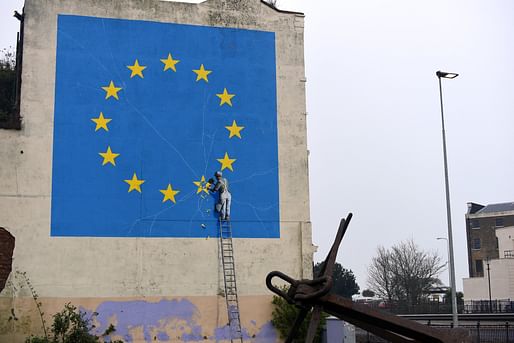
A mural painted by Banksy which first appeared not long after Britain voted to leave the European Union (EU) has been destroyed after the building it was painted on was knocked down. The artwork, said to have been valued at around £1m, first appeared in the coastal town of Dover in 2017, the year after Britain voted to leave the union in a controversial referendum. — CNN
The mural, located on the side of the Castle Amusements building, depicted a worker chipping away at one the 12 stars on the EU flag. In 2019, the mural vanished after it was whitewashed. And, now, despite efforts to potentially restore the work, the building it was painted on has been demolished... View full entry
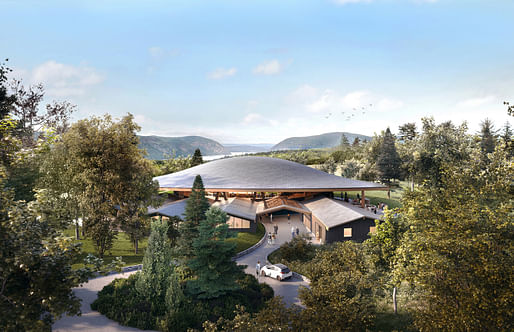
Studio Gang has revealed plans for the new home of the Hudson Valley Shakespeare Festival in Upstate New York. Located in the town of Garrison, the 13,850-square-foot performing arts space is set to become the first-ever LEED Platinum theater design in the United States when it is completed. ... View full entry
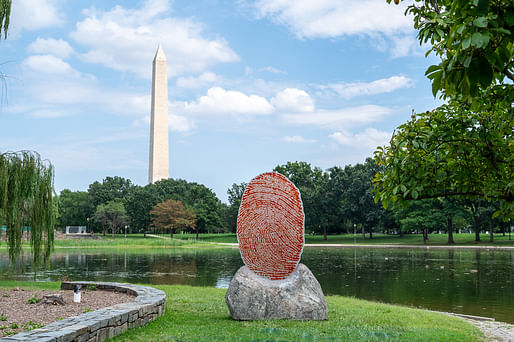
The Andrew W. Mellon Foundation’s influential Monuments Project is about to expand its reach thanks to a newly-announced commitment of $500 million to the now three-year-old initiative that has to date provided 80 projects worth a total of $170 million nationwide. The amount effectively doubles... View full entry

The differences between “City” and the Sphere are deep, true, yet narrower than you might suppose—the works are trying for the same things but in opposite ways. Both are big, expensive, geometric structures in the desert that offer visitors a vivid encounter with the natural world—one with exquisite footage of jellyfish and the like, the other with deftly roughened rock and concrete. — The New Yorker
The New Yorker’s art critic Jackson Arn takes on two of the most recent (and spectacular) cultural offerings of the Silver State — "One with a deluge of images and the other with a tantalizing lack of them," as he writes. Related on Archinect: Take a look at photos of Michael Heizer's... View full entry
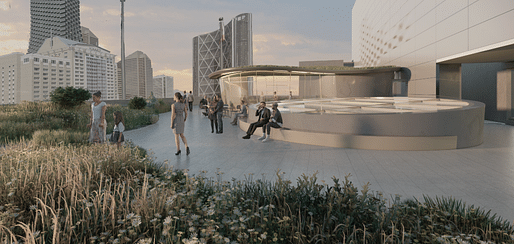
Maya Lin Studio has been attached to a new rooftop garden terrace project at the Glenbow Museum in Calgary, Alberta. The 13,000-square-foot design will complement the new $120 million renovation and expansion scheme from DIALOG that was announced in September of 2021. It will include an... View full entry

Robert Irwin, a pioneering conceptual artist and leading figure of the Light and Space movement whose work had significant influences in architecture, passed away last night in San Diego. He was 95. Irwin helped push the boundaries of American post-war art with his understanding of the principles... View full entry
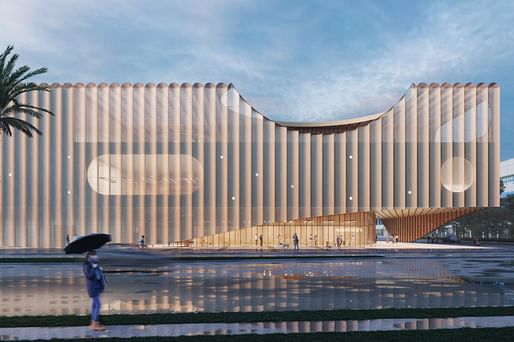
EskewDumezRipple has unveiled its design for the Louisiana Music and Heritage Experience Museum in New Orleans. The 120,000-square-foot project is intended as a “venue to showcase and highlight the contributions that the city of New Orleans has made to the music industry.” Image credit... View full entry
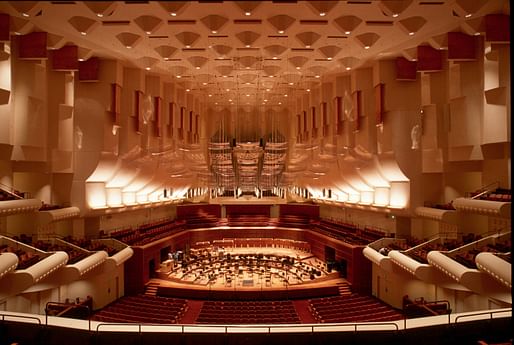
A plan from Gehry Partners, LLP. and Mark Cavagnero Associates to renovate the San Francisco Symphony Orchestra’s 43-year-old Louise M. Davies Symphony Hall building is moving forward after a proposal was made public for the first time. In September, the client submitted a proposal to... View full entry
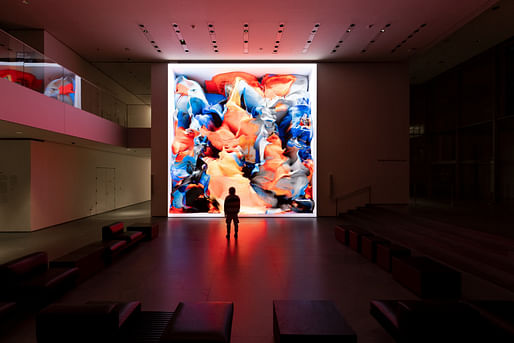
Refik Anadol has made history as one of two prominent digital artists to have their works acquired into the permanent collection of the 94-year-old Museum of Modern Art (MoMA) in New York City. The museum announced its acquisition of Anadol’s 2022 Generative AI piece Unsupervised – Machine... View full entry
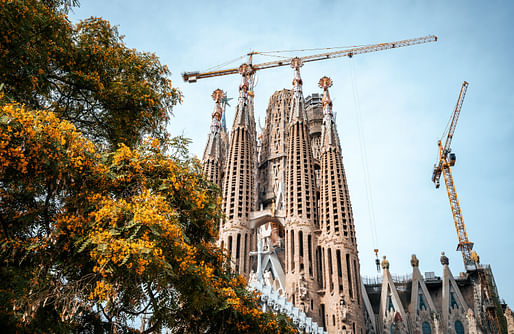
More than 140 years after a Spanish bishop laid the cornerstone of Barcelona’s Sagrada Familia basilica, the famously incomplete church is inching toward the finish line, with five of its six central towers now finally fully built as of last week. — The New York Times
The four completed towers symbolize the Evangelist authors of the Bible’s canonical Gospels. The tallest tower, which represents Christ, will follow in 2026. Some doubts remain as to whether or not the construction timeline can stick to its scheduled completion by the end of that year, which... View full entry

Following last week’s visit to New York City-based Field Operations, we are moving our Meet Your Next Employer series to Los Angeles this week, where we meet Office Of. Founded in 2021, the non-profit works nationally with a focus on supporting the Los Angeles... View full entry
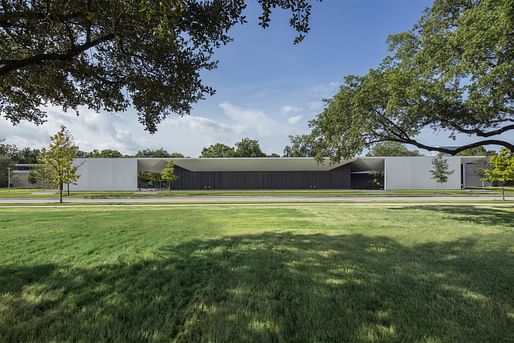
Following last week’s look at an opening for a Landscape Designer at Balmori Associates, we are using this week’s edition of our Job Highlights series to explore an opportunity on Archinect Jobs for a Senior Project Manager at The Menil Collection. The role, based at the Menil campus in... View full entry

It's been a little over three years since we last surveyed the architecture community about our collective mental health. In preparation for World Mental Health Day on October 10, the Archinect team seeks to check in with our audience and learn more about how our community is doing. For this... View full entry
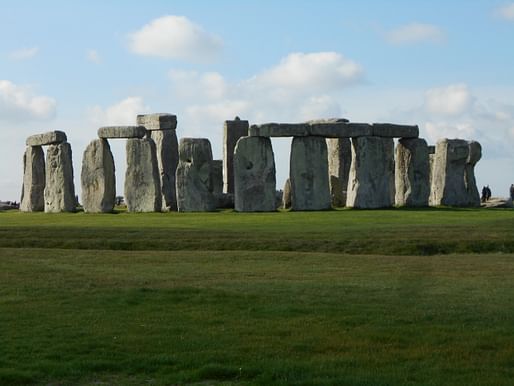
The A303 redevelopment proposal had originally garnered the attention of preservation advocates beginning in 2017 and eventually yielded a favorable ruling from the UK High Court in 2021, the same year UNESCO first threatened to add the site to its list of World Heritage in Danger. ... View full entry


