

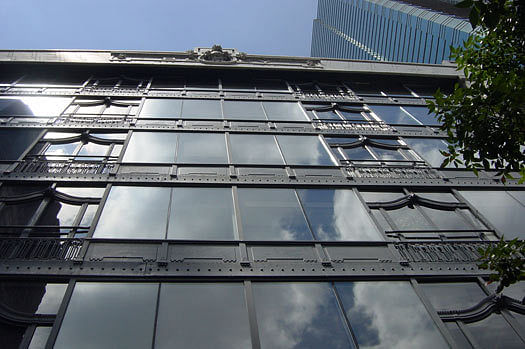
For retailers, daylight offered one additional advantage the advertisements did not mention: the implication of moral virtue. Large department stores were described as cesspools of fraud, filth, poor working conditions, child labor, anti-competitiveness, potential press censorship (because of their advertising clout), disease, drunkenness, savagery, prostitution, suicide and darkness. A well-lit interior, it was said, could do much to counter such negative associations. — Places Journal
Earlier this year on Places, Keith Eggener assessed the career of the now forgotten early 20th-century Kansas City architect Louis Curtiss, and argued that Curtiss's obscurity has less to do with intrinsic merit than with the politics of professional reputation. In a new article examining the Boley Building — a department store which featured one of the first glass curtain walls in America — he makes good on his claim that Curtiss's legacy deserves new attention.


No Comments
Block this user
Are you sure you want to block this user and hide all related comments throughout the site?
Archinect
This is your first comment on Archinect. Your comment will be visible once approved.