

Follow this tag to curate your own personalized Activity Stream and email alerts.
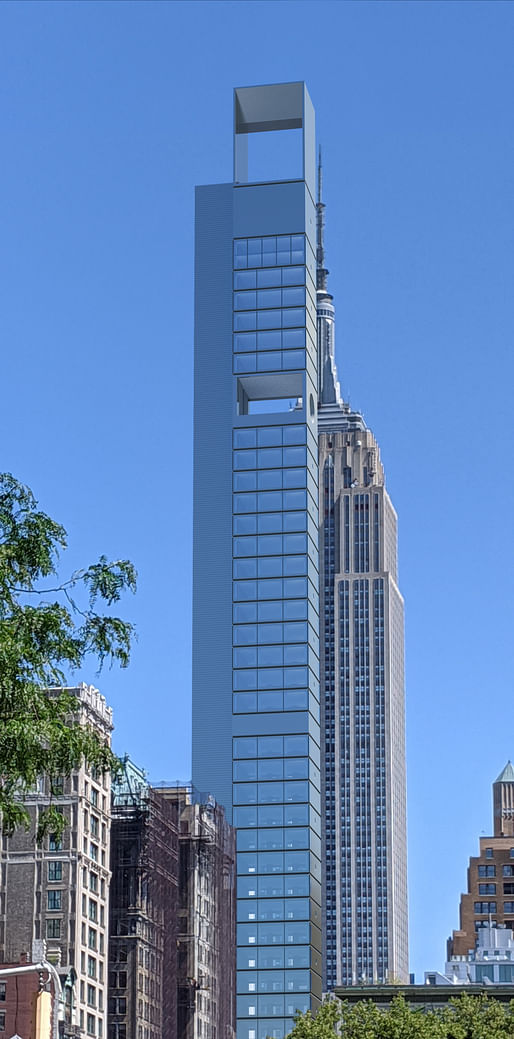
“It really pisses me off,” Clark said while standing in the plaza in front of the Flatiron Building on Fifth Avenue, a few blocks south of the dueling skyscrapers. “The whole New York skyline has been destroyed. When I moved here I was thrilled with it, and now it’s just getting disgusting. These new buildings have no identity, no design to them. We’ve lost the character of New York, and it breaks my heart.” — The Guardian
The Guardian goes inside some locals' struggle against the new 262 Fifth Avenue condo tower by Meganom and SLCE Architects. The East Siders protesting their obstructed view sheds are also not in favor of its appearance or the design for 432 Park Avenue, including several inspired teen critics on... View full entry
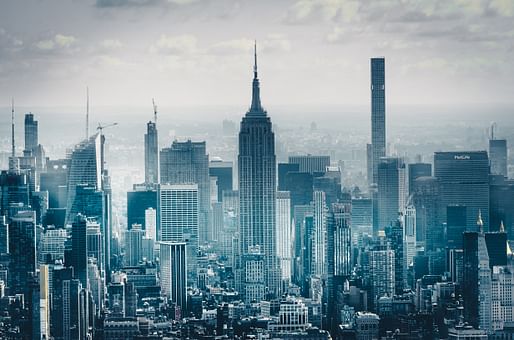
A generation ago, the New York skyline was a global icon, shaped more or less like a suspension bridge stretched between the Empire State and the Twin Towers, making it possible to, say, pop out of some unfamiliar subway station, gaze up toward the clouds and orient oneself along the skyline’s north-south axis. Today, the skyline is vastly more complex, far-flung and difficult to picture, and it’s common to hear complaints that the city has lost its bearings. — The New York Times
The addition of Meganom and SLCE’s 860-foot 262 Fifth Avenue tower to New York’s accidental skyline also raises questions about legislating ‘view sheds’ and historic sightlines around the city, Michael Kimmelman writes. The city currently only has one protected vista overlooking the... View full entry
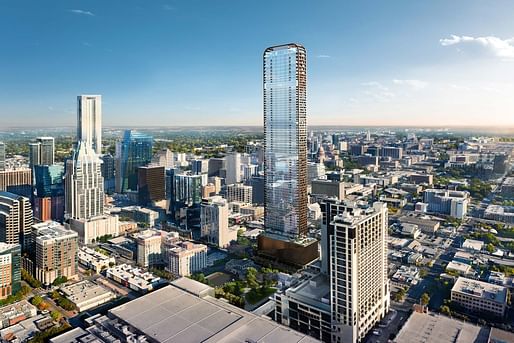
But joining the fraternity of cities with supertalls can also be a dubious distinction: Real estate is a lagging indicator, and skyscrapers often arrive after the boom is over, looming half-empty as monuments to a bust. Others, however, are convinced that Austin’s high-rise stampede is just getting started.
Given the city’s emerging significance as a next-gen manufacturing hub this building boom could defy the skyscraper effect.
— Bloomberg
With a slate of high-rises and supertalls, including KPF’s Waterline design and the record-setting Wilson Tower from HKS in the works, Bloomberg asks if the pace of development can be sustained amidst tech’s downturn and the annals of urban economic history. The salvation apparently lies... View full entry

Inspired by the area's natural landscapes and environment, Studio Gang reveals the latest visuals for their most recent mix-used project Populus. Located in Denver, along the city's historic Civic Center Park, the project pulls reference from the aspen tree by using its highly recognizable... View full entry
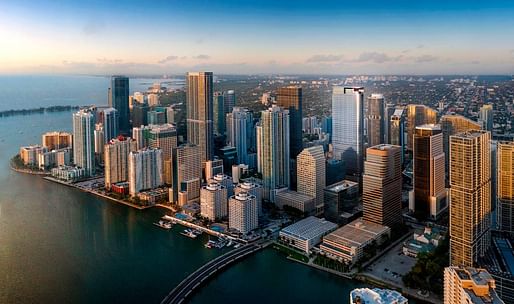
Over the years, the Miami has become synonymous with its collection of ultra-luxe residential towers and its constantly evolving skyline. In fact, with over 300 skyscrapers situated across its various business, residential, and commercial districts, the city offers the "third-largest skyline" in... View full entry
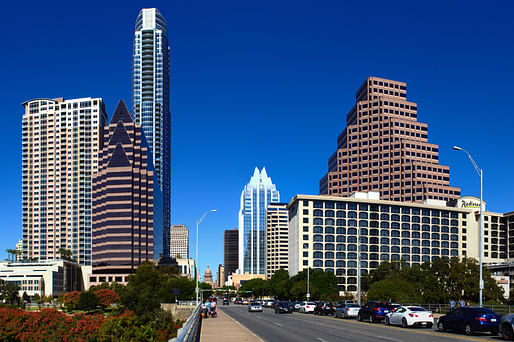
Was Postmodernism ever popular? In 1986, at the height of the Po-Mo era, Newsweek's art and architecture critic Douglas Davis wrote a scathing review of Austin's newly built-up skyline, pinpointing his "disgust" towards the “riot of wretched excess” symbolized by the new Postmodern style... View full entry
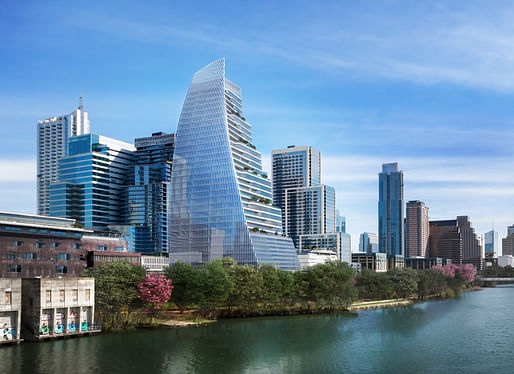
We’ve got downtown Austin condos, apartments, offices, and hotels rising all around us in shiny new tower form these days, to the point where it’s kinda hard to keep the projects around the city straight even if you’re paying attention. — Towers
Forthcoming projects include a 35-story office building designed by Pelli Clarke Pelli for developers Trammell Crow Company that will serve as a regional headquarters for Google, as well as Gensler's 6 X Guadalupe tower, a 66-story, 848-foot residential and office tower that would become the... View full entry
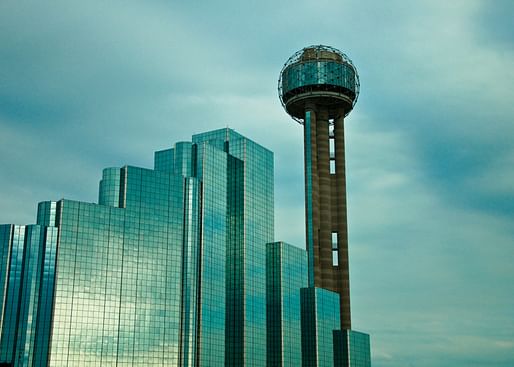
With a certain bulb-shaped observation tower in the news again, perhaps now is a good time to revisit another seminal observation tower project: The Welton Becket and Associates-designed Reunion Tower in Dallas, Texas. Crafted as a three-story, lightbulb-studded geodesic dome hoisted atop a... View full entry
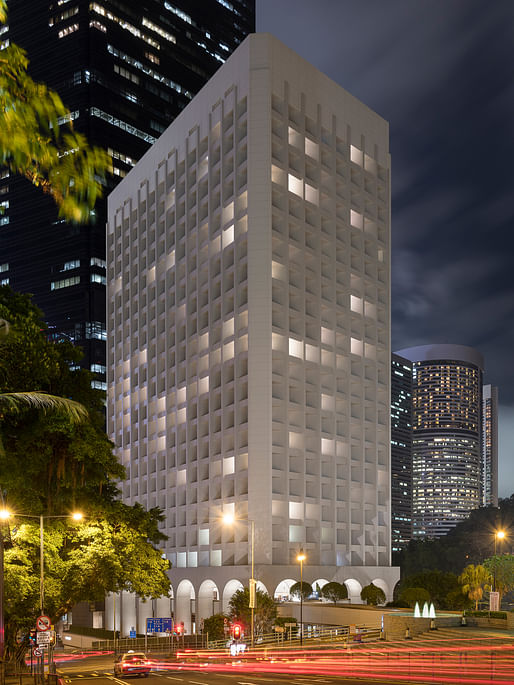
Foster + Partners' new Hong Kong luxury hotel, The Murray, is now fully open to the public. Formerly a 1970's government office building, the firm has transformed these 25 stories into a unique urban experience for visitors. Reception area of the Murray Building, renovated by Foster + Partners... View full entry
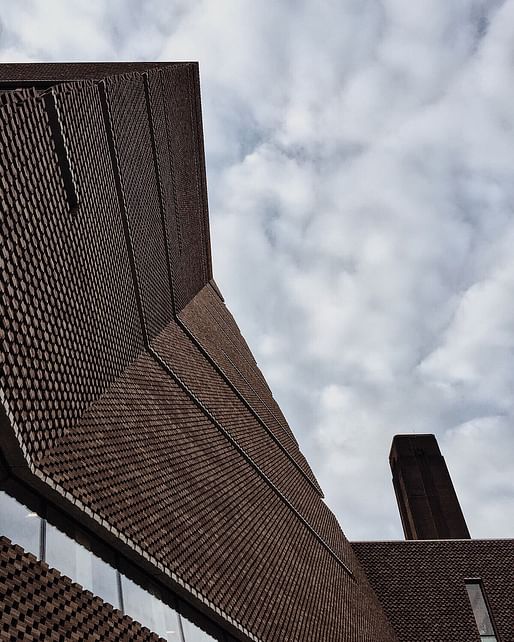
The original Tate Modern redevelopment was started in 1995 and since opening in 2000 has become the most popular gallery in the world. It made sense then for Herzog and De Meuron to return and finish the job. Their architectural evolution and legacy is now embedded in the London skyline, as is... View full entry
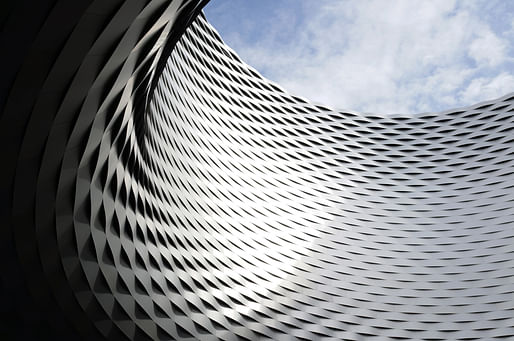
In London, though the Tate is now finished, there is other work to be done...
"We can’t sneer at developers," says Herzog. "They are the ones who will increasingly dominate the shaping of our cities. But we should try to convince them to add accessibility for everyone. To ask, can we do it better?"
— Telegraph UK
Now that they've completed the Tate Modern extension, what's next for Herzog & de Meuron? In this piece, trilingual biking-afocidionado Jacques Herzog speculates on the architectural future of London, and his firm's potential (developer-positive) role in it. Herzog & de Meuron, in the... View full entry
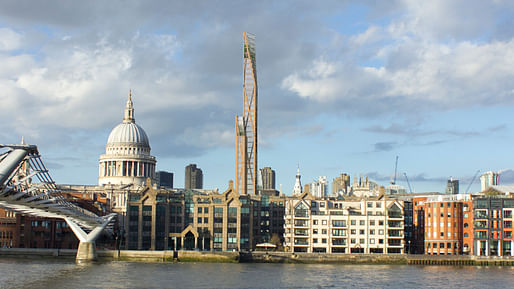
Plans for London’s first timber skyscraper were presented to the Mayor of London Boris Johnson this week with researchers saying natural materials were “vastly underused”.
The design is for an 80-storey, 300m-high wooden building integrated into the Barbican complex. The tower would create 1,000 new residences. Architects’ Journal described the concept scheme as “toothpick-like”.
— independent.co.uk
Read relating articles on Archinect here:A guide to London mayoral candidates and their housing policiesIs London experiencing a brick boom?Design revealed for 1 Undershaft, London's tallest skyscraper by the "thinking developer’s architect" View full entry

The biggest names impacting New York’s skyline come together to discuss the projects that now epitomize the city, the ever-evolving real estate market and what’s next for New York’s neighborhoods. — 92Y

How do building shapes vary from one city to the next, in particular with city size? And could this lead to a more general understanding of how energy consumption changes as cities grow or shrink? [...]
They conclude that on average, the shapes of buildings in North American cities converge on a cube-like shape as cities get bigger—that’s the most energy efficient shape.
That should have important implications for energy use in future megacities.
— technologyreview.com

Evidently, the Big Apple is packed with big buildings, and several more are on the way. National Geographic created a spiffy interactive infographic called "The New New York Skyline" that envisions which towers are sprouting up along the Manhattan skyline in the next few years. Scroll sideways and... View full entry


