

Follow this tag to curate your own personalized Activity Stream and email alerts.
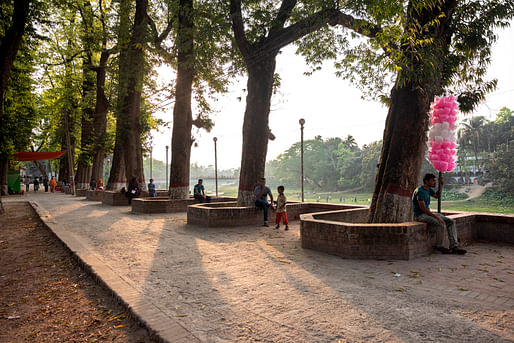
We’re not there yet. In an industry where the gender pay gap has widened in recent years, where all-male panels at conferences are not unusual, and where macho culture still prevails on building sites, a book like this, sadly, still has a place. — The Guardian
Writing for The Guardian, critic Oliver Wainwright says he hopes RIBA’s new publication 100 Women: Architects in Practice, which we previewed in December, will encourage competition judges, academic panels, awards juries, exhibitions organizers, and rebuke “the headhunters who claim women... View full entry
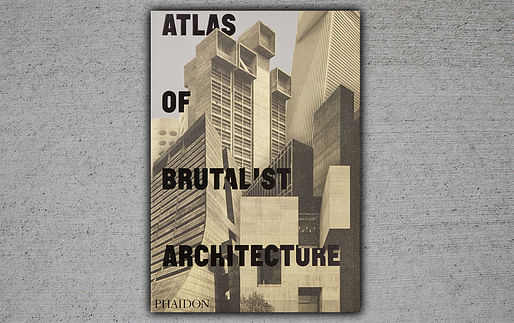
"If there was any lingering doubt that Brutalism — the architectural style derided for everything the name implies — was back in fashion, the “Atlas of Brutalist Architecture” quashes it with a monumental thump. At 560 pages representing some 878 works of architecture in over 100 countries, the outsize volume is part reference tool, part coffee table book, and certainly part of an ongoing design trend favoring big, big books." — Los Angeles Times
It has been remarkable to see the dramatic change in public opinion towards brutalist architecture in the last few years. Not only has the style shed its identity as a blight on the majority of modern cities, but dozens of products have recently entered the market in honor of these monumental... View full entry
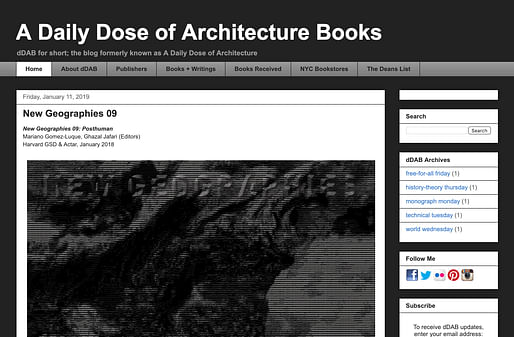
John Hill started blogging about buildings back in 1999, providing a regularly-updated single-author architecture blog for longer than anyone else I'm aware of, and I've been around the block a few times since starting Archinect in 1997. As 2019 kicks off, it looks like John is pivoting from... View full entry
Clearly, Goldhagen is not a writer who approaches her subject with a sense of tentativeness. But once you get a little deeper into this book, it becomes clear that her hubris (if we can call it that) coexists with a sense of earnestness and civilizing intentions. Goldhagen is an engaging and generous writer, alert to the subtleties of human experience, and she has written Welcome to Your World with a desire to genuinely reveal something new to us about how cities, buildings, and places affect us — The Nation
Paul Goldberger dissects Sarah Williams Goldhagen's book, Welcome to Your World: How the Built Environment Shapes Our Lives, itself a dissection of the human mind and how neuroscience can explain our ability to detect when architecture is merely good — and when it is awe-inspiring. Click here... View full entry
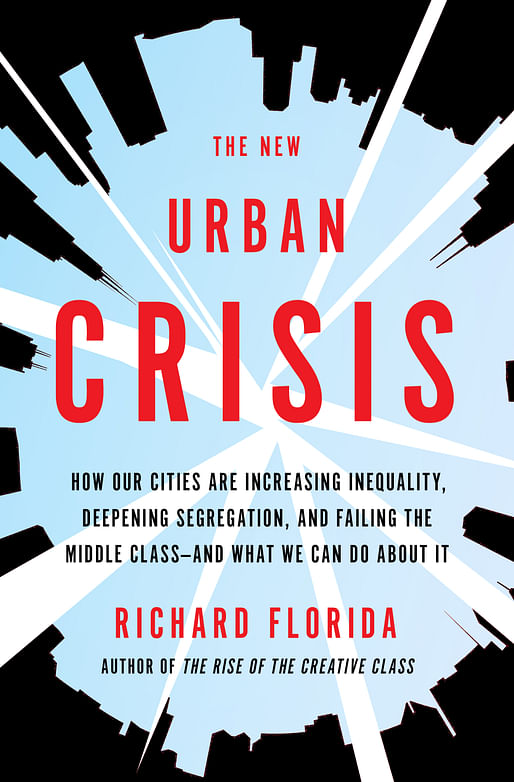
After fifteen years of development plans tailored to the creative classes, Florida surveys an urban landscape in ruins. The story of London is the story of Austin, the Bay Area, Chicago, New York, Toronto, and Sydney. When the rich, the young, and the (mostly) white rediscovered the city, they created rampant property speculation, soaring home prices, and mass displacement. The “creative class” were just the rich all along, or at least the college-educated children of the rich. — Jacobin Magazine
Richard Frorida's latest book, The New Urban Crisis, represents the culmination of this long mea culpa. Though he stops just short of saying it, he all but admits that he was wrong. He argues that the creative classes have grabbed hold of many of the world’s great cities and choked them to... View full entry

In You Say to Brick, her subtle interpretations of conversational remarks by Kahn’s intimates, and especially of of Kahn’s written ephemera—a dream journal entry on the back of an airline receipt, an unsent postcard—are luminous and deep. It is difficult to develop, in prose, an architectural equivalent for this kind of close reading or close listening. — n+1
Over at n+1, Thomas de Monchaux reviews Wendy Lesser's newly published 'You Say to Brick: The Life of Louis Kahn'. While everyone knows the story of Kahn's gothic and ignominious death, did you also know that "When Kahn died, his firm...owed its creditors $464,423.83. In 1974 dollars"? View full entry
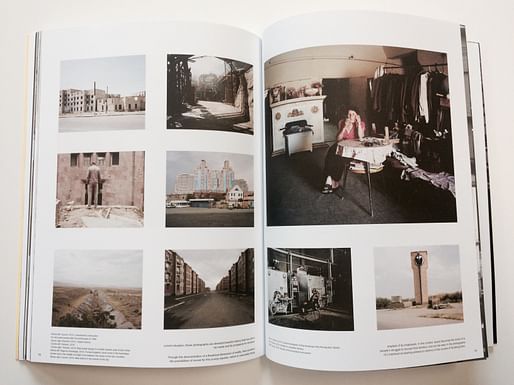
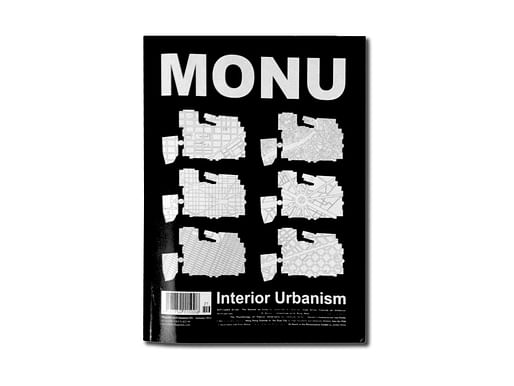
I came across MONU during my early doctoral investigations on critical, non-academic publications looking into this arguably poorly unknown, plural and contested entity that is the city. MONU, does not actually qualify as a non-academic outlet, for the breadth and depth of the analysis it offers... View full entry

No matter how prepared I think I am, December is always a frenzy. Between wrapping up end-of-the-year projects and remembering to buy wrapping paper, the days disappear faster than my coworker’s toffee. If you’re anything like me, the holidays are heralded by a panicky visit to the mall and a... View full entry

Although jaded art critics might argue that there is nothing new under the sun, they are overlooking the fact that there is important work that has been shaded by time. Concrete poetry, an art form that emphasizes the physical arrangement and visual presentation of poetry as much as its literary... View full entry

Amid the seemingly endless barrage of new writings about the imminent arrival of the technologically mediated “smart city,” a slim volume published by the University of Minnesota Press suggests that so-called intelligent urbanism might not be so new after all. In Deep Mapping the Media City... View full entry

On September 2, 1666, a fire began in a bakery on Pudding Lane in London. By the next day, the flames had fanned out north and west, engulfing much of the city’s medieval center. The fire, later knowns as the Great Fire of London, destroyed much of the old cathedral of St. Paul as well as the... View full entry

Understanding the nuances of city stories, and tracing those tensions, requires immersion and patience. Whether we are writing about police work, protests, squatting, free parties, banking or parkour, the best socially engaged journalism – like the best university research – is rooted in participation, spiked with empathy, and resists being reduced to spectacle fodder.
As any war correspondent will tell you, immersion can also be dangerous...
— the Guardian
Bradley Garrett recounts his own infiltration into urbex (urban exploration) communities, and provides a list of the "five most influential 'gonzo' ethnographies." If you aren't familiar with Garrett's work, be sure to check it out. In particular, Explore Everything: Place-Hacking the City is a... View full entry
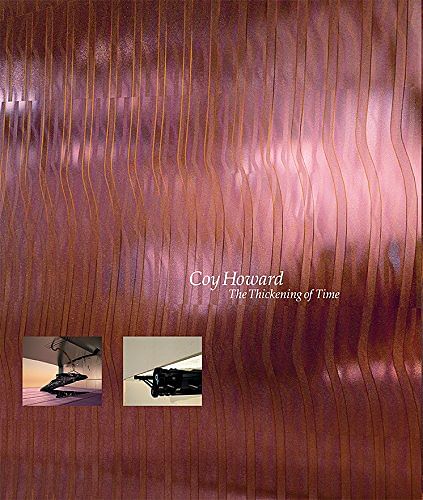
Those images, wrought by a wicked mash-up of the hand, the eye, and the mouse, defy any effort to reverse-engineer their creation. Dot for dot and pixel for pixel they proclaim their origin as documentary evidence. Yet by their implausible point of view, their visceral texture, and their mini-Wagnerian scale, they are more painterly than Maya-ish, far more lavish than Rhino. — archpaper
A long time colleague Craig Hodgetts reviews Coy Howard's newly printed book 'The Thickening of Time' for Architect's Newspaper. Being familiar with Coy Howard's work, Hodgett's words describe the essence of the enigmatic images and the persona well. I'd just say poetry of the images is verbatim... View full entry
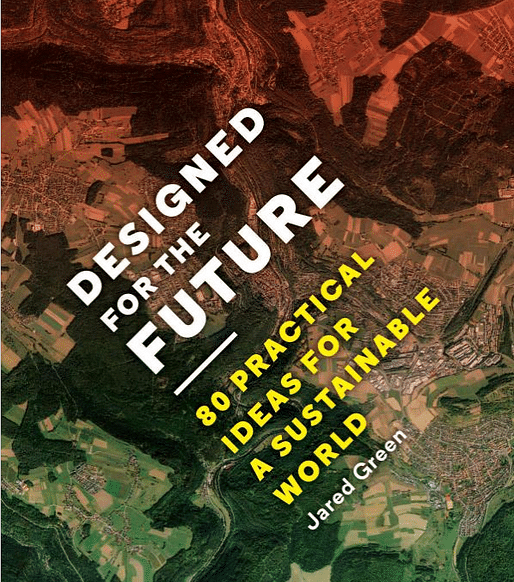
I have to admit to a degree of wariness when I first opened Designed for the Future: 80 Practical Ideas for a Sustainable World, a new book edited by Jared Green and published by Princeton Architectural Press. The introduction makes some bold claims for a rather slim book with little text. “We... View full entry
In 1969 Reyner Banham in his book The Architecture of the Well-tempered Environment marked the shift between the concept of interior to that of an artificial environment. Technology and new human needs in fact had become an integral part of architecture, defining a new paradigm to describe indoor... View full entry


