

to Rule the Sea is to Ruin the World — The Forgotten Space
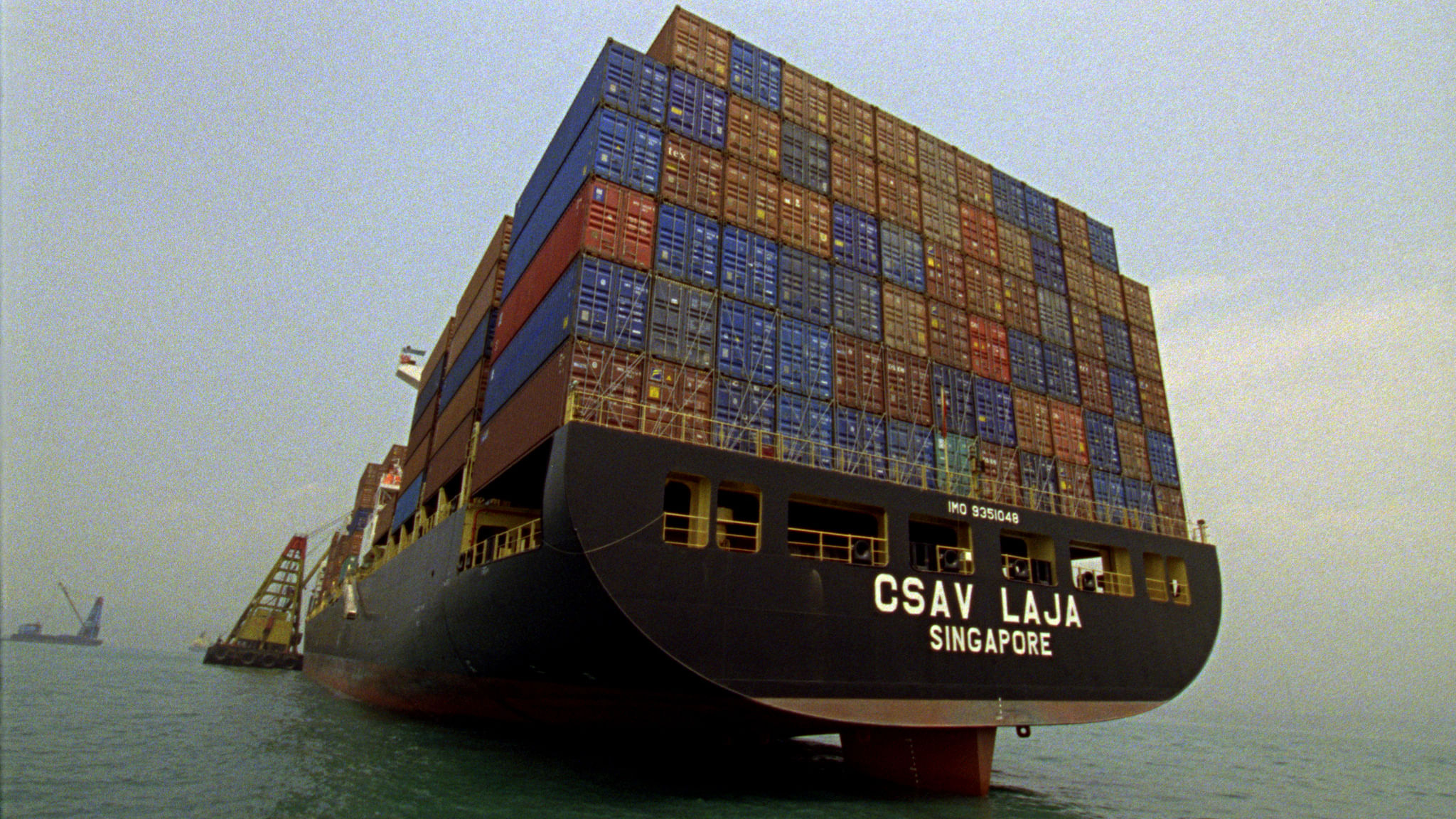
A film by Allan Sekula & Noël Burch, the Forgotten Space explores the global movement of trade and labor. All the while mapping the shape of things to come in this age of no boundaries for the anything exploitative.
"The factory system is no longer concentrated in the developed world but has become mobile and dispersed. As ships become more like buildings, the giant floating warehouses of the “just-in-time” system of distribution, factories begin to resemble ships, stealing away stealthily in the night, restlessly searching for ever cheaper labor. A garment factory in Los Angeles or Hong Kong closes, the work benches and sewing machines reappear in the suburbs of Guangzhou or Dacca. In the automobile industry, for example, the function of the ship is akin to that of conveyor systems within the old integrated car factory: parts span the world on their journey to the final assembly line."
Also in Artforum, "Seafarers All" a review of the film by Benjamin Young.
"Through visits to four port cities, viewers learn that nine-tenths of the world’s freight is moved by 100,000 ships and 1.5 million seafarers. Rotterdam, Los Angeles, and Hong Kong are each expansive megaports that handle huge amounts of containerized cargo. Surveying their environs reveals some of the costs of ever expanding trade, from pollution to standardization to the automation that increases productivity but keeps wages low and eliminates jobs. In the formerly industrial town of Bilbao, the Guggenheim museum exemplifies the replacement of the working port by a tourist economy that floats on a forgetting of industry and nostalgia for the sea. Its emblem is Gehry’s sinuous, piscine building, whose titanium scales never rust—“a lighthouse that shines only when the sun is out” and blinds viewers both to industrial history and the realist and modernist sculptures by native Basque and Spaniards at the city center. When ocean waves overwhelm the soundtrack as museum visitors wind their way through rusting, rolled steel sculptures by Richard Serra (himself a former shipyard worker), it amounts to a return of the repressed."
Previously in Archinect News: "Salty Dog Bites the Hand"


No Comments
"Imagine a ship carrying goods in containers that, if lined up, would stretch around 11,000 miles long, or nearly halfway around the planet. Rose George spent several weeks aboard one such ship as research for her new book, Ninety Percent of Everything: Inside Shipping, the Invisible Industry That Puts Clothes on Your Back, Gas in Your Car and Food on Your Plate."
Terry Gross interviews Rose George on shipping industry, its backstory and its impact on our lives.
"it wasn't really worth your while financially to transport something when most of your costs were eaten up just getting it to a port. So then in the late 1960s, an American shipper named Malcom McLean had this idea that he could create a lockable unit that could be stacked on top of each other ... and it was called 'multi-modal,' meaning it could be transported from ship to a truck to a train. His idea was that this would create extreme efficiency, and he was right."
npr
Block this user
Are you sure you want to block this user and hide all related comments throughout the site?
Archinect
This is your first comment on Archinect. Your comment will be visible once approved.