

Follow this tag to curate your own personalized Activity Stream and email alerts.
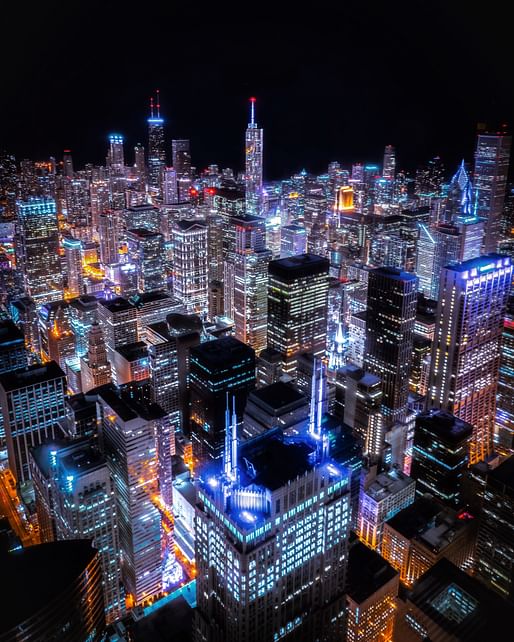
To coincide with the recent Earth Day celebrations, the Chicago Architecture Center has opened up its archives for a look inside the revolution that could restore the city, traditionally thought to be a mecca for the seminal works of 19th- and 20th-century architectural pioneers, to the top... View full entry
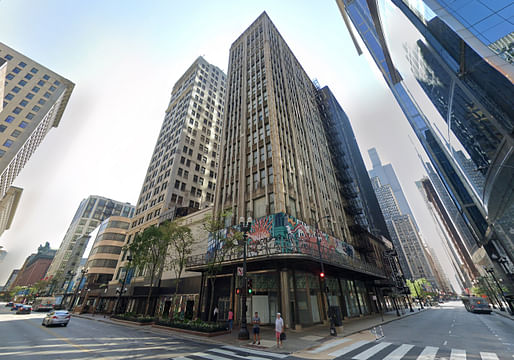
Why would the U.S. General Services Administration now raise a hind leg to this legacy by wrecking the Century and Consumers buildings, two early 20th Century skyscrapers at 202 and 220 S. State Street?
The buildings’ demolition would create an economic and pedestrian dead zone on State Street, something neither the street nor the city can afford. And it would be a shameful waste of some really good Chicago architecture.
— The Chicago Sun-Times
A $141 million adaptive reuse plan was initially approved in 2017 by then-Mayor Rahm Emanuel, but the city decided to change direction only a few months later after an FBI security assessment determined that the two buildings’ continued existence creates too much risk for the iconic adjacent... View full entry
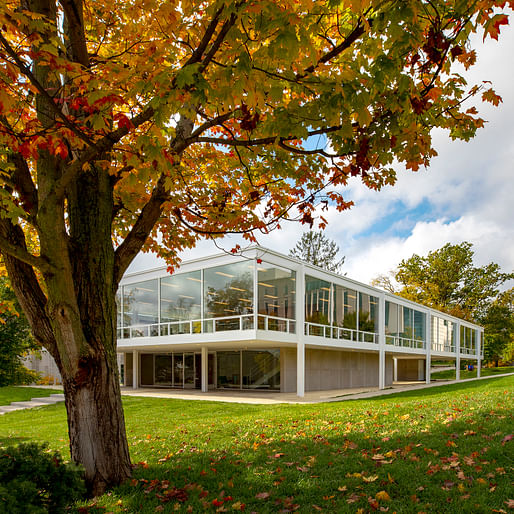
A rediscovered 70-year-old Mies van der Rohe design that was reimagined for the Eskenazi School of Art, Architecture + Design at Indiana University has been inaugurated after the six-year-old institution announced the official opening of one of the most interesting pieces of academic... View full entry
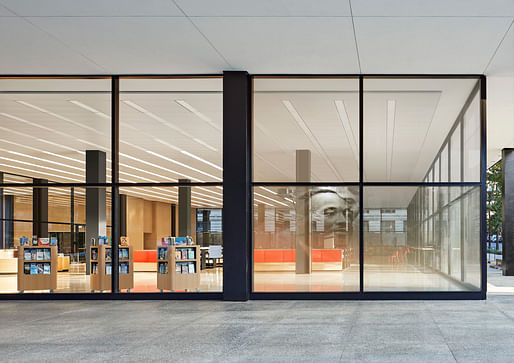
Mecanoo has shared updated imagery of the Martin Luther King Jr. Memorial Library in Washington, D.C. the firm revamped together with OTJ Architects. Photographers Robert Benson and Trent Bell have provided new photos detailing the modernization of the landmark building that was completed in... View full entry
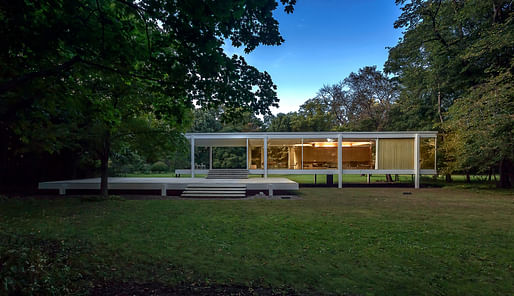
As part of the house’s 70th-anniversary celebration next month, the National Trust for Historic Preservation has announced that the iconic Farnsworth House will be renamed the Edith Farnsworth House in order to better recognize the cultural and architectural contributions of its namesake, Dr... View full entry
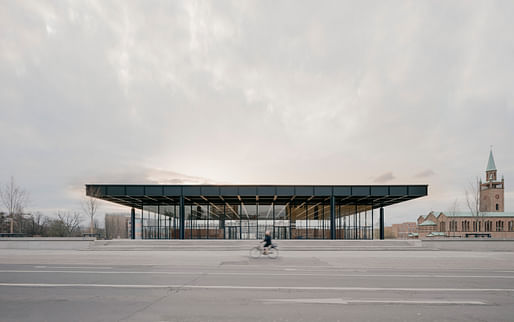
Berlin's Neue Nationalgalerie is finally back open following a six-year, $160 million refurbishment by David Chipperfield Architects. The original Mies van der Rohe building from 1968 now features a restored glass facade, expanded exhibition space, sculpture garden, and improved LED... View full entry
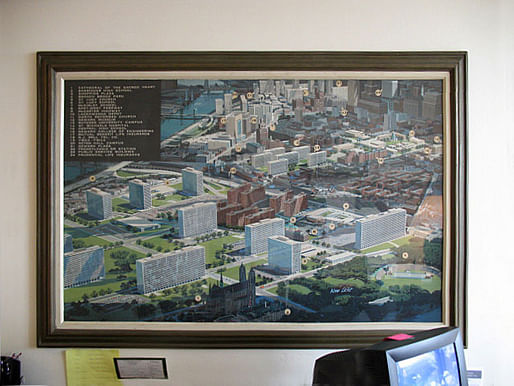
“It’s been fifty years since Ludwig Mies van der Rohe’s death and the details of his international career have been carefully archived. But a mysterious painting has surfaced that reveals what may be an early version of his master plan in Newark” — JerseyDigs
The supposed painting depicts what could have been a disastrous expansion of the footprint of van der Rohe’s iconic 1960 apartment complex. Courtesy of Newark Public Library Digital Collections His Colonnade Apartments are perhaps the foremost example of the “Towers in the Park” typology... View full entry
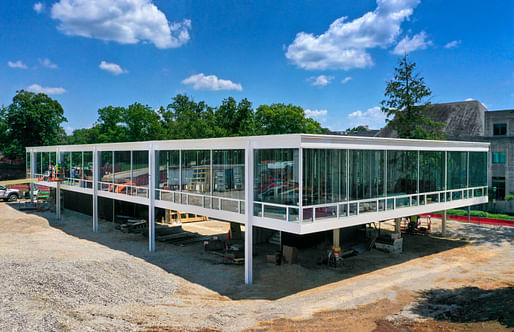
Indiana University (IU) has shared an update of their Mies Building at the Eskenazi School of Art, Architecture + Design. The scheme, currently under construction, realizes a recently rediscovered 1952 design by Mies van der Rohe for the IU Bloomington campus. The scheme has been adapted for... View full entry
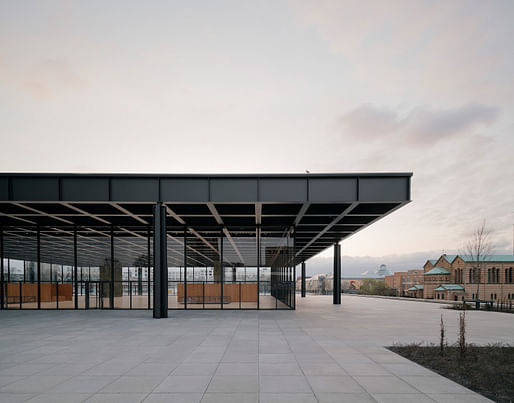
Nearly a decade after being appointed to refurbish one of Modernism's most iconic buildings, the team of architect David Chipperfield wrapped up construction on the Neue Nationalgalerie in Berlin. In a recent virtual ceremony, the keys were handed over to the clients — Berlin State... View full entry

In celebration of its 100th anniversary, German consumer products company, Braun, has teamed up with Chief Creative Officer and founder of Off-White and artistic director of Louis Vuitton Menswear, Virgil Abloh, to reimagine one of the brand’s most iconic products. Dieter Rams' classic... View full entry
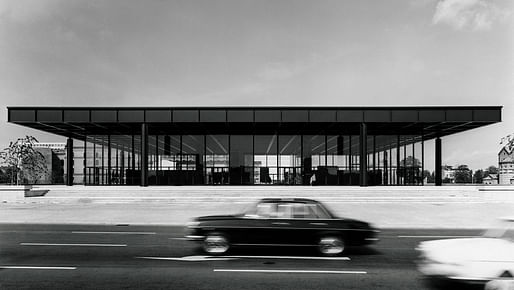
The Neue Nationalgalerie in Berlin is set to reopen in the summer of 2021, more than six years after it closed for renovation, with an exhibition of the American sculptor Alexander Calder in the temple-like steel-and-glass upper level of the building.
Designed by Ludwig Mies van der Rohe and first opened in 1968, the museum is undergoing a €100m modernisation and refurbishment by the Berlin-based British architect David Chipperfield [...].
— The Art Newspaper
Reflecting on the significance, and also quirks, of Mies van der Rohe's 1967 New National Gallery, the architect of the ambitious renovation project, David Chipperfield, told the New York Times in a 2017 interview: "Mies took architecture to its extreme. And as a result, the building has... View full entry

Originally opened in 1972, the Martin Luther King Jr. Memorial Library was Mies van der Rohe's only library and his last building. The landmark was closed in 2017 to commence modernizations which have been completed this year, recently reopening the building last month. The three-year... View full entry
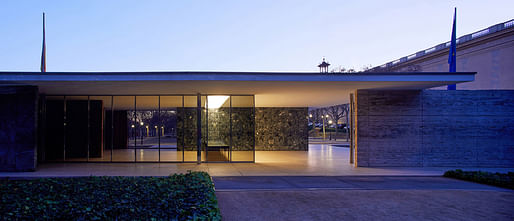
Marking the 135th anniversary of the birth of German designer Lily Reich, Fundació Mies van der Rohe presents its 2nd edition of the Lily Reich Grant for Equality In Architecture. Reich was Mies van der Rohe's close collaborator for many years and was a key player in the conception and... View full entry
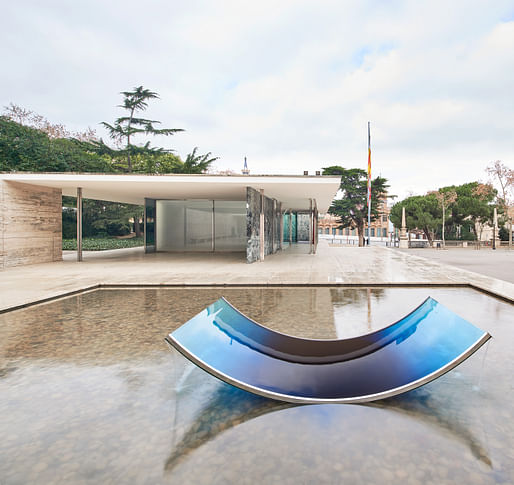
Rotterdam-based designer Sabine Marcelis creates a visually mesmerizing exhibition playing with glass and its material capabilities in No Fear of Glass. Currently exhibited at the Mies van der Rohe Pavilion in Barcelona, Sabine sought to create pieces in response to a request made to Mies during... View full entry
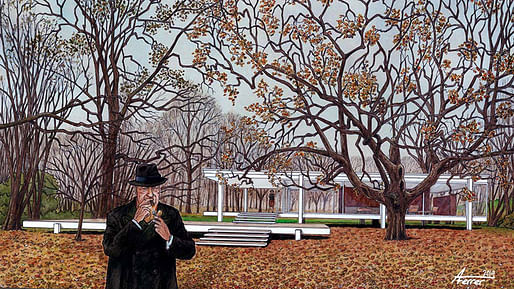
Agustín Ferrer Casas, a Spanish illustrator and writer began working on the graphic novel in 2015, in an endeavor to tell the story of Mies' life and career. Now in 2019, the book is ready for release. Image by Agustín Ferrer Casas Casas did his homework for the 4-year project, working from a... View full entry


