


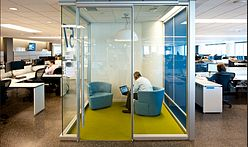
The original rationale for the open-plan office, aside from saving space and money, was to foster communication among workers, the better to coax them to collaborate and innovate. But it turned out that too much communication sometimes had the opposite effect: a loss of privacy, plus the urgent desire to throttle one’s neighbor. — New York Times




5 Comments
wait, wasn't there literally an article just a few months ago in NYT titled New Office Designs, Room to Roam and to Think about new trends in office designs ft work like Seattle offices of Russell Investment, The Bill & Melinda Gates Foundation headquarters by NBBJ (and their own office) where there’s "not a private office or cubicle anywhere, and there’s constant low-level hubbub"
I do work in one of those, sometimes I think my head will explode. If I am on conference call I have to cover my second ear, so I can hear whats on another end of the phone. It decreases productivity, rather then creates something. instead of open communication all I hear now is how others are frustrated with their computer problems. yes thereir is more social interaction, but do not see how projects benefit from it. Now they just yell from their seats if they have question regarding project they are working on and do not really care if I am focused on another one.
Nam - I've posted comments about these problems for a while now around here. See my comment on that other news item, and on Lian's blog about the GSD's newish desks in the trays. People HATE working like this - open office is not set up for "collaboration" - the only thing it's good for is surveillance by the top predator - oops - management .
here's Lian's follow up to her other post.
Read: Quiet: The power of introverts in a world that can’t stop talking, by Susan Cain With limitless appetite for self-referencing talk and need for constant attention, extroverts dominate contemporary social life. They assume effusive talkcasts to be welcomed by everyone within hearing rage. Susan Cain’s ear-splitting “culture of personality” could include open plan offices that are the introvert’s worst nightmare [Quiet: The power of introverts in a world that can’t stop talking, Susan Cain]. Such workspaces abet noise annoyance and repeated disruptions to work focus from colleagues’ conversations and phone calls, with next to no means of mitigation or escape. Aside from impaired work performance and intensified cognitive demands to filter out loud, persistent and often startlingly unpredictable distractions, unwanted indoor noise is associated with adverse health outcomes, reduced self-rated health and job satisfaction. A large amount of office banter occur within exclusive social cliques that have nothing to do with work; intrusive social activity in the limited confines of a shared office is associated with chronic stress, hypertension and sleep problems. Head phones and other strategies used by introverts to screen out the noise are often viewed as unsociable by free range talkers. The time is ripe for an Introverts’ Rights Revolution. Its not just reduced productivity but impaired health that one needs to worry about in shared work spaces. Open plan offices abet noise annoyance and exacerbate repeated disruptions to work focus from fellow workers’ conversations and phone calls. Aside from lower work performance and intensifying cognitive demands to filter out loud, persistent and often startlingly unpredictable distractions, unwanted indoor noise is associated with adverse health outcomes related to reduced self-rated health and job satisfaction. In a nationally representative study published in theScandinavian Journal of Work and Environmental Health in 2011, higher work absence occurred in employees in shared and open plan offices in the Danish Work Environment Study. This was attributed to chronic stress and heightened potential for conflict from intrusive ambient noise and non-auditory disturbance. We already know that office noise is associated with higher stress hormone levels, hypertension and sleep problems; the worry is that higher mortality risk observed in residents living close to busy highways or underneath noisy flight paths could potentially also apply to long-term exposure to noisy workplaces. Far from enhancing work collaboration, a large amount of office banter occur within social cliques in implied zones of exclusion and have nothing to do with work. Permanently implanted head phones and other strategies to screen out the noise are often viewed as unsociable by free range talkers which in turn leads to intercollegiate friction.open/closed. you need some of each. why is this so hard?!
Block this user
Are you sure you want to block this user and hide all related comments throughout the site?
Archinect
This is your first comment on Archinect. Your comment will be visible once approved.