anchor
10 Buildings that Changed America
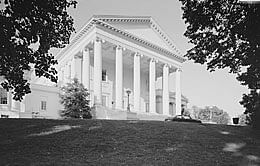
Virginia State Capitol Richmond, Virginia Thomas Jefferson, 1788
A new TV and web production coming to PBS in 2013 about ten influential American buildings that changed the way we live, work, and play.
— wttw.com
5 Comments
WTF? Where's the McDonald's drive through? How could a top ten list of influential american buildings completely ignore the impact of suburban/car culture? The Golden Arches (or something like it) has clearly had a bigger influence than either the Venturi house or the Disney concert hall.
Yo!
they gots a shopping mall and a factory in the mix. prolly mcdonalds fits in one of those episodes. could be either one actually, depending on whether its pre-pink slime period or after...
America is waiting
“When [Bishop] Athanasius sought to overcome resistance from monastic establishments, he chose a more effective strategy than accusing their most respected leaders of demonic possession. Instead he effectively co-opted the most famous of them--Anthony--by writing an admiring biography picturing Anthony as his own greatest supporter. Since Anthony had died, Athanasius had a somewhat free hand, and his biography turned Anthony into a model monk--a model, that is, of what the bishop wanted monks to be. For in his famous Life of Anthony, the sophisticated and fiercely independent teacher known from his letters disappears, and Athanasius replaces him with his own vision of an ideal monk--an illiterate and simple man. So while Anthony’s letters show him to be educated in philosophy and theology, Athanasius pictures him as someone who despises educated teachers as arrogant men who are ignorant of God. And although in his letters Anthony never mentions bishops, clergy, or church rules, Athanasius pictures him instead as a humble monk who willingly subordinates himself to the clergy and “the canon of the church.” Athanasius also depicts Anthony as one who hates Christian dissidents as much as he did--and who, like the bishop himself, calls them not only heretics but “forerunners of Antichrist.” Far from acting as an independent spiritual mentor, Athanasius’ Anthony pleads with the bishop to not allow anyone to revere him, especially after his death. As the biography ends, Athanasius pictures Anthony bequeathing all that he has--his sheepskin cloak and his outer garment--to Athanasius and the bishop’s trusted ally, Bishop Serapion of Thumis, to show that Anthony regarded them as his spiritual heirs and trusted them to guard his memory.”
--Elaine Pagels, Revelations: Visions, Prophecy, & Politics in the Book of Revelation (2012).
Thus I’d now like to (step back) and address what might just be your real intent, that being to elevate the value of architecture within general culture. My advise to you (specifically as a writer) is to fictionalize this world where you see architectural value elevated. It could be short stories, a novel, or even a series of novels. The point being to create something that “the public” can relate to, consume, and hopefully even be inspired by--essentially putting ideas into people’s mind via fiction. Also, forcing yourself to really imagine this world and how it manifests itself might just also deliver solutions to what you see as today’s real problems.
--Stephen Lauf, in “CONTOURS: The Divisions that Bind Us” (2012.01.19).
"they gots a shopping mall and a factory in the mix. prolly mcdonalds fits in one of those episodes. could be either one actually, depending on whether its pre-pink slime period or after..."
I don't know but given that it is 10 Buildings that Changed America and considering that the biggest legacy of the built environment during the 20th century has been the large scale reshuffling to create the car centric suburbs, it would seem that a drive-thru typology would be foremost on said list. Shopping malls, which are already a dying breed, don't seem nearly as important.
Yo!