

Follow this tag to curate your own personalized Activity Stream and email alerts.
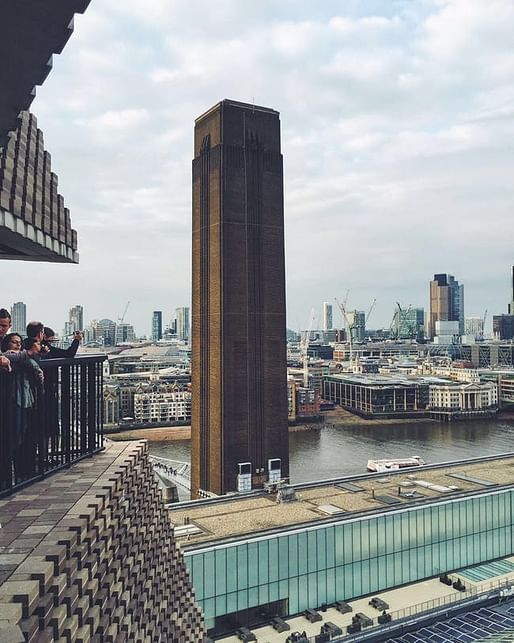
London is pure object in these images and likewise in those taken from the other aforementioned viewing points. Like visitors to a museum, we wander the corridors atop the Switch House and observe the artefacts curated for our all-consuming gaze: a shard, a walkie-talkie, a gherkin, etc. Like Tower Bridge, the new Museum of London, Battersea Power Station and the Tate Modern, the skyline of the city is presented as a display – complete with its own exhibition gift shop. — failedarchitecture.com
George Kafka argues that London's trend in preservation and commemoration in the built environment is directly related to the decline of small-scale spaces and small businesses centered around everyday life. Kafka cites recent developments in London's built environment over the past few years... View full entry
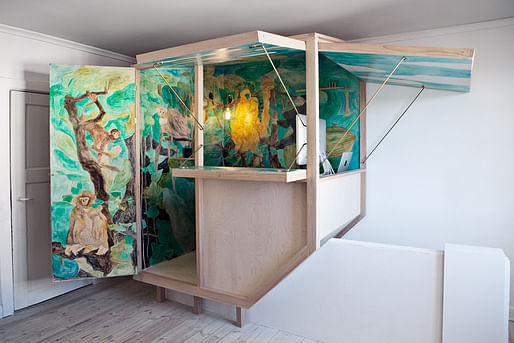
Inspired by the vintage French Citroën Type H cargo van, "La Cabane" designed by independent creative director Julien Franc Wahlgreen functions as a room within a room that can enhance the increasingly common working-from-home experience. Plus, the structure's beach shack or quaint treehouse... View full entry
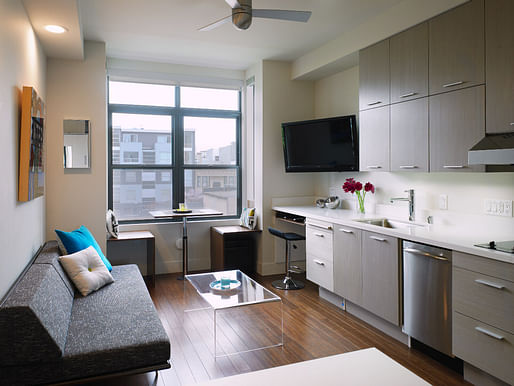
The Urban Land Institute (ULI) recently published a report titled "The Macro View of Micro Units", which shares the latest findings in the revived trend of micro dwellings in the United States. The report arose from a ULI Foundation research grant that the Multifamily Housing Councils received in... View full entry

Up in the slopes of the Swiss village Verbier in the Alps, BUREAU A's "Antoine" is a little wooden cabin hidden inside a concrete rock that camouflages with its environment. Inspired by Swiss cultural elements like the literature of iconic writer Charles-Ferdinand Ramuz, hidden bunkers, and the... View full entry

What if you only had to buy one piece of furniture to make your tiny apartment abundantly livable?
CityHome, a new project from MIT Media Lab’s Changing Places group, promises to make that fantasy a reality. The highly transformable device, loaded with built-in sensors, motors, and LED lights, promises to make a 200 sq.ft. apartment feel three times larger.
— citylab.com

Hong Kong's Kowloon Walled City was the densest place on the planet before it was torn down 20 years ago. In this Wall Street Journal interactive, you can take a trip through the city, explore its history and hear from the people who lived there.
The WSJ has developed an impressive rich-media piece on the Kowloon Walled City using photography, video, audio, text and interactive features to tell the stories of the history, environment and inhabitants. View full entry
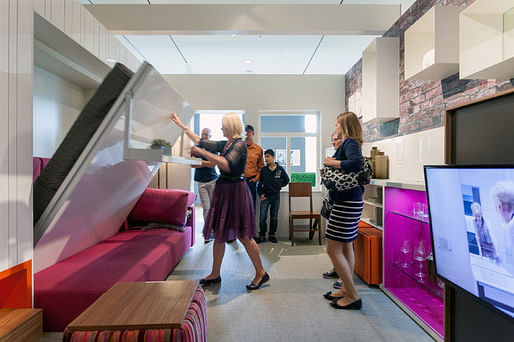
Mr. Tyler’s entire home was only 78 square feet. And while his “Midtown mansion,” as he called it, was a far cry from the lavish town homes and shimmering penthouses that have spawned a thousand lustful television shows, a video tour posted on YouTube of Mr. Tyler’s little room has been viewed nearly 1.7 million times over the past year and a half. A similar video, about a 90-square-foot apartment on the Upper West Side, has been viewed even more times. — nytimes.com
An exhibit at the Museum of the City of New York, called “Making Room,” brought a 30 percent bump in attendance during its opening week in January, and the museum has maintained an 11 percent increase in foot traffic during the show’s run, compared with the same period last year. View full entry

Nick Lembo, the president of Monadnock, recruited nArchitects for the competition. “Some architects shy away from modular construction, and some are intimidated by micro-units,” he said. “But Mimi and Eric were excited by the creative challenges. They created an incredibly space-efficient unit with an open design that will make it feel larger than its square footage.” — nytimes.com
Previously on Archinect: New York Mayor Bloomberg Announces Winner of adAPT NYC Micro-Unit Apartment Competition View full entry

It is in empty spaces like [under Hong Kong's overpasses] that a group is campaigning for the government to build youth hostels, arts performance venues, offices for small- to mid-sized businesses and, most intriguingly, temporary housing. The group sees this unused land as an opportunity to alleviate Hong Kong’s problem of young people not being able to afford to rent in the world’s most expensive property market. — smartplanet.com

When you walk in, you encounter what is, at first glance, a small studio apartment. Within that cube are actually 8 functional spaces. The living room and office become the bedroom with a tug of a bookshelf. Open one of the closets and you'll find 10 stackable chairs that go around a telescopic dining table for large dinner parties. An entire guest room with bunk-beds and a closet is revealed behind a wall that slides out on tracks. And of course, a well-equipped kitchen and bathroom await. — gizmodo.com
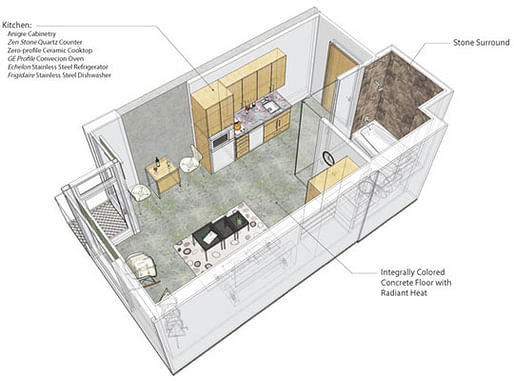
It’s true that micro-units are not family-friendly, but it’s less true that a small apartment is inherently inhabitable. While the debate rages on about how much space is too little, there is little talk of how much is too much.
Different constituencies may have their reasons for opposing these tiny units, but however varied they may be, all seem to reflect a distinctly American perception of what qualifies as “enough” space.
— opinionator.blogs.nytimes.com
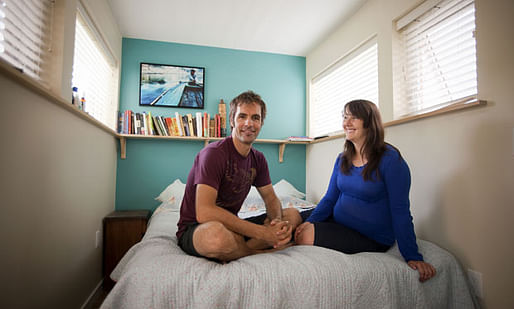
The Milllennials, the generation born from 1983 onwards, enjoyed a childhood free of bunkbeds or even shared bathrooms. Growing up in plush megahomes undoubtedly helped them become, in the words of one author, “self-centred, needy, and entitled with unrealistic work expectations.” Oddly, it also spawned a group of people patently unimpressed with backyards and breakfast nooks. — news.nationalpost.com

Mayor Michael R. Bloomberg, Deputy Mayor for Economic Development Robert K. Steel and Department of Housing Preservation and Development Commissioner Mathew M. Wambua today launched the adAPT NYC Competition, a pilot program to develop a new housing model for the City’s growing small-household population. adAPT NYC seeks to create additional choices within New York City’s housing market to accommodate the city’s changing demographics. — NYC.gov
The design competition involves a Request for Proposals for a rental building composed primarily, or completely, of micro-units -- apartments smaller than what is allowed under current regulations. New York City's housing codes have not kept up with its changing population, and currently do not... View full entry
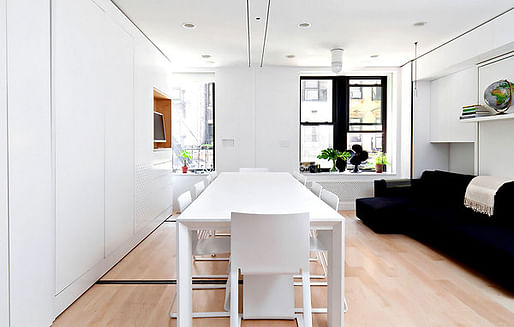
This laboratory, as Mr. Hill calls it, for small-space, sustainable and — it must be stressed — high-end living is the first tangible product from his fledgling company, LifeEdited. It comes with an awkward manifesto that nonetheless manages to gather an armful of social and economic trends and philosophies, including happiness research, the booming field of collaborative consumption and data on the proven efficiencies of cities. — nytimes.com
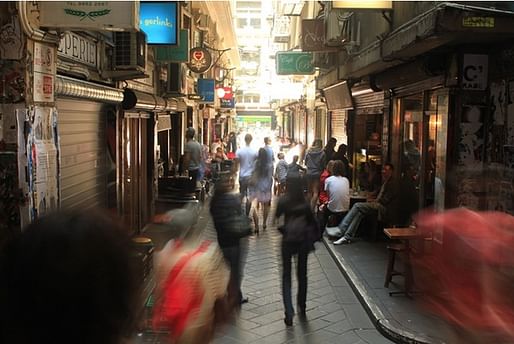
Daniel Toole is a 26-year-old, Seattle-based architect who has, quite accidentally, found himself immersed in the hidden world of alleys. Recently awarded a travel fellowship by the local American Institute of Architects branch, he headed to Japan and Australia to study this arguably under-appreciated urban form. — theatlanticcities.com


