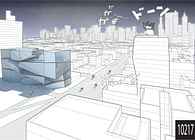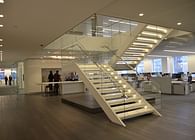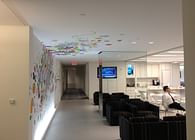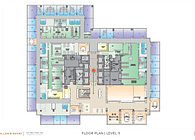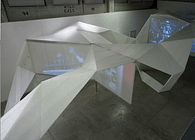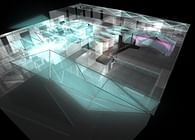

This project was designed mainly using Digital Project software.
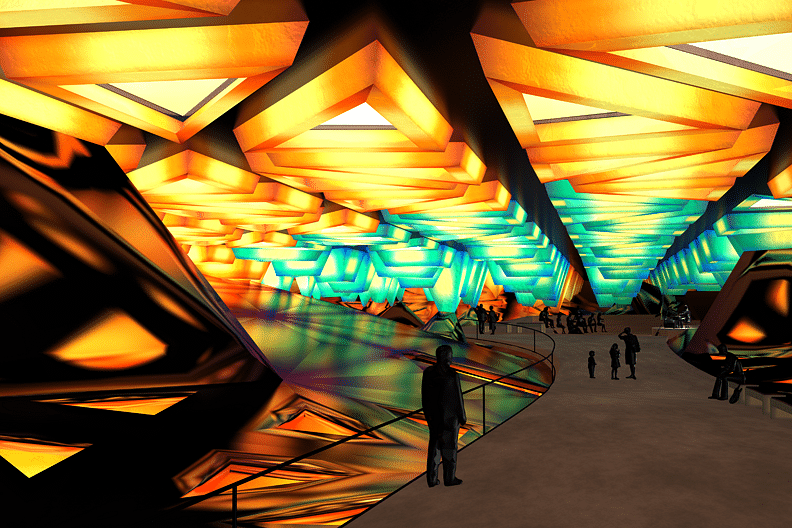
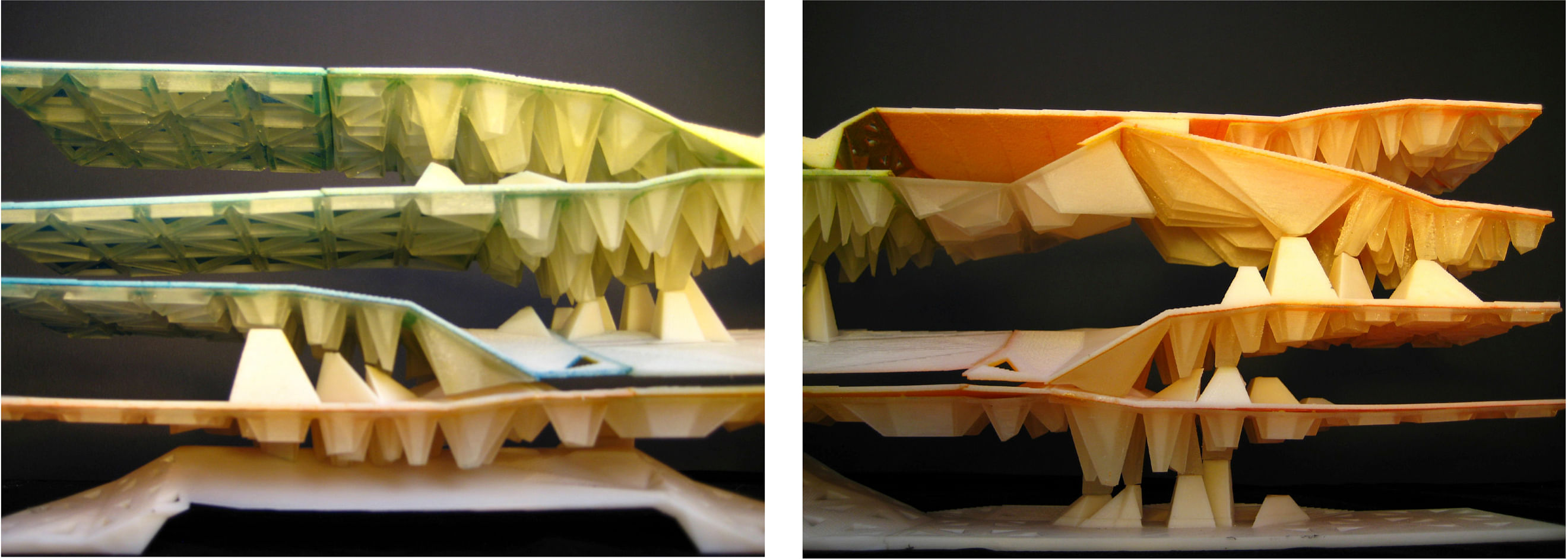
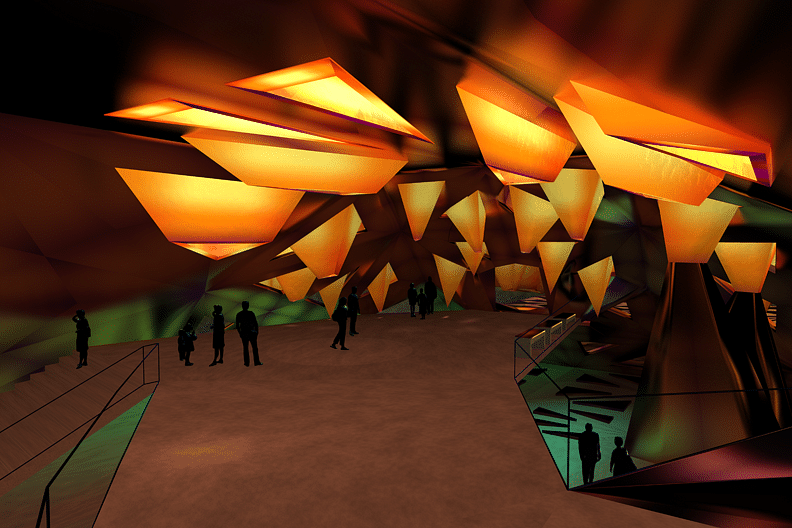
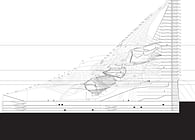
This collaborative project, done with two other SCI Arc students, was designed mainly using Digital Project software. The aim of our project is to achieve a fixed degree of manipulation of surfaces based on the driving factor of occuli, to control the movement of light, air and circulation. The surfaces are defined by a network of points at 8 levels, one at each half-step between floors for greater control. The points, and then the surfaces, react to the location of occuli in both plan and section, adapting and splitting.
The surfaces split planometrically to allow the movement of people, light and air, adapting to programmatic and performative needs. They react in section relative to the diameter of driving occuli. Large diameters precipitate a greater change in the z-axis of points driving the plane, while smaller cause less. These relationships should work at a large range of scales. While the overall geometry of the building, as defined by its wireframe, reacts to large-scale occuli that define major programmatic and performative openings and divisions, the scale of the surface division will be subdivided, and smaller perforations will occur.
Basic Requirements and Programmatic Elements:
100,000 square feet
Lobby
Classrooms
Auditorium
Practice Rooms
Flex Space
Cafe
Status: School Project
Location: Qatar
My Role: One of a 3 person design team.