

Qatar: Doha - Day 1: December 23, 2016
Over the holidays, I embarked on a three week trip with my sisters that took us to Qatar, Oman and Sri Lanka. The next few posts will cover the architecture, culture and highlights of the trip.
 Our first stop in Doha, Qatar was actually a strategically planned full day layover on the way from New York City to Oman. We landed in the city of Doha at 7 am and our connecting flight departed at 7 pm. In the few hours we had, we did a brief tasting menu of the various sites Doha had to offer. This allowed us to take advantage of Qatar Airline’s free Doha City Tour. Tourists with layovers are given the option of either a free day visa allowing tourists access to the city with the tour group ONLY or a $27 visa allowing passengers to explore the city on their own. The tour lasts about two and a half hours on a large bus and stops at the Dhow Harbor, Katara Cultural Centre, the Pearl-Qatar, and Souq Waqif. We opted to purchase a day visa so we could extend our stay in the city beyond the tour and visit the Museum of Islamic Art designed by Architect I.M. Pei.
 Lamp Bear by Swiss artist Urs Fischer is a 23-foot canary yellow teddy bear sculpted from bronze. The Qatar Museum and the Hamad International Airport (HIA) commissioned sculptures by high profiled international artists such as Tom Claassen, Tom Otterness, Rudolf Stingel and Urs Fischer.
Doha, was founded around 1820’s as a small fishing and pearling village. The country remained relatively poor in the region until the discovery of oil in 1939. The first production and export in 1949 transformed Doha into one of the wealthiest cities in the region. In 1971, Qatar announced its independence from the English Protectorate and Doha was named as the official capital city.
 The Pearl Monument in Corniche stands as a testament to the once flourishing pearl trade.
Katara Cultural Center
The Katara Cultural Center is a cultural village with various traditional and modern structures such as an open amphitheater, an opera house, a multi-purpose cinema, a multi-purpose conference hall, a beach, and a souq (market place). Pigeon Tower at Katara Cultural Center.
 Traditional mosque at Katara Cultural Center.


Souq Waqif
The Doha City Tour ended at the Souq Waqif, one of the existing active souks (market places) in the region. Traditionally the Souq Waqif served the Bedouins of the Arabian and Syrian Deserts. In 2004, the souq was renovated and restored according to the traditional Qatari architectural techniques. Buildings constructed after 1950 were demolished and buildings built before 1950's were restored. We remained at the souk and had lunch and coffee to keep us fueled. The souq was only a 15 minute walk to the Museum of Islamic Art.


 Al Fanar Islamic Cultural Center is the largest mosque in Qatar with an iconic spiral minaret.
 A sneak peak at the The Qatar National Museum designed by Architect Jean Nouvel still under construction.
The Museum of Islamic Art
The Museum of Islamic Art was officially open in November 22, 2008. Architect I.M. Pei was coaxed out of retirement to design the museum. He embarked on a six-month quest throughout the Muslim world to study the diversity of Islamic architecture in order to inspire his design. He visited sites such as the Grand Mosque in Córdoba, Spain; Fatehpur Sikri, a Mughal capital in India; the Umayyad Great Mosque in Damascus, Syria; and the ribat fortresses at Monastir and Sousse in Tunisia.
His final design inspiration was the 13th-century sabil (ablutions fountain) of the Mosque of Ahmad Ibn Tulun in Cairo, Egypt (9th century). The intense visceral experience of the austere and simple architecture of the mosque struck Mr. Pei.
Mr. Pei suggested the current site of a peninsula off the Doha Corniche.


The Interior of the Museum of Islamic Art


 The center dome atrium rises 164 feet high. It is concealed from the exterior by the central tower walls. An oculus captures light within the geometric patterned dome.


 The plan of the museum is a simple geometry surrounding an open atrium. The plan itself is etched into metal plates that are integrated into the door frame of each exhibition room. Circulation on each floor is continuous.

Site Plan courtesy I.M. Pei Architect
Building Plan courtesy I.M. Pei Architect

Building Section courtesy I.M. Pei Architect

 The glass curtain walls face the Gulf and West Bay area of Doha and frame the city skyline.

The museum exhibits art and artifacts spanning three continents from the 7th to the 19th century. The delicate exhibitions, designed by Jean-Michel Wilmotte, are carefully integrated into the architecture and presented in specially designed encasement and lighting.

 Astronomical and Mathematical Instrument. Gilded Brass Planispheric Astrolabe.
At the end of the day, we called an Uber using the museum WiFi to the airport to catch our flight to Muscat, Oman. Thus ended the short, yet incredibly unique taste of Doha.
Next stop, Oman.

This work by J.A.Wong is licensed under a Creative Commons Attribution-NonCommercial-NoDerivs 3.0 Unported License.
View full entry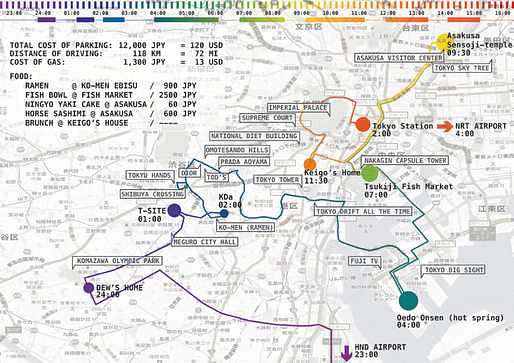
In the last entry, Beijing Rising - Of Walls and Walkways, I introduced my summer fellowship and the groundwork and research of Beijing that I have so far compiled. In this entry, I give a brief snapshot of a quick layover I had on my way to China. Arriving in Tokyo at 23:00 on a... View full entry
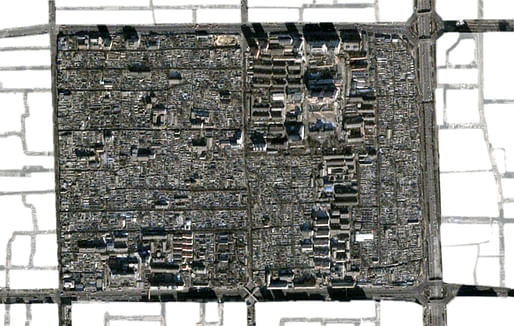
This past spring I was honored and deeply grateful to be named the 2013 graduate level recipient of the Steedman Summer Traveling Fellowship. Awarded annually to two students of architecture, in Sam Fox School of Design & Visual Arts at Washington University in St. Louis (one graduate... View full entry
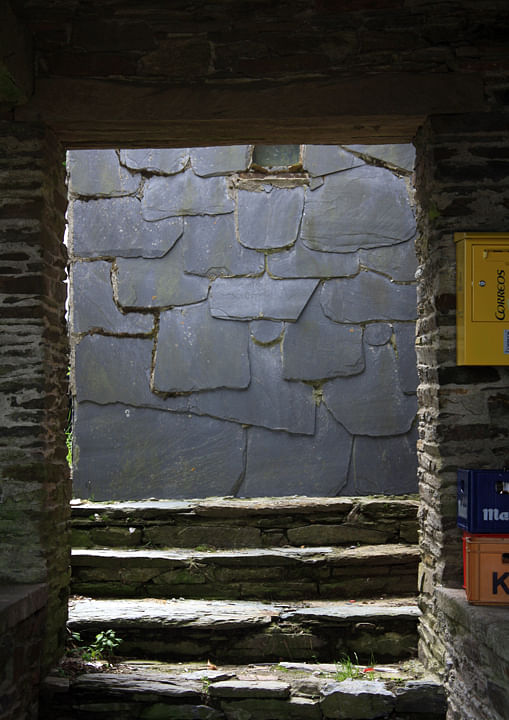
"Any reader who has come with me so far through the Iberian Peninsula should be prepared for a pilgrimage across northern Spain to the sanctuary at Santiago de Compostela, the finest journey in Spain and one of the two or three best in the world. It is a twofold pilgrimage to a... View full entry
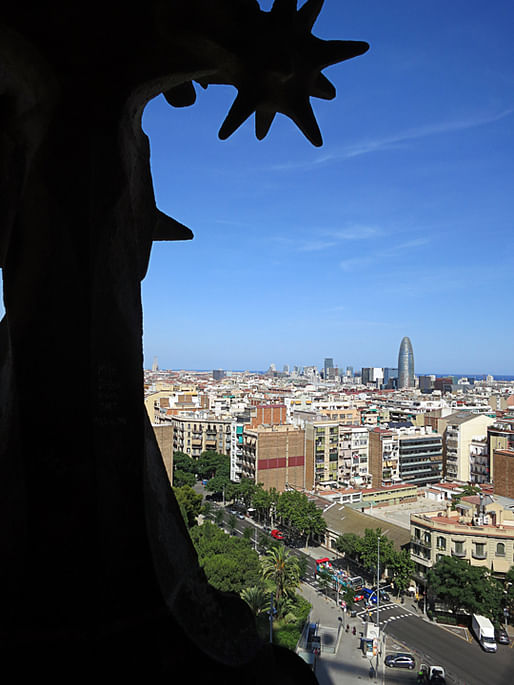
In the previous post on Barcelona I introduced El Gòtic, the heart of Barcelona’s old city, and Las Ramblas, the city wall turned promenade. A bike ride through the neighborhoods of Barceloneta, Vila Olímpica and Sant Martí introduced some of the more recent... View full entry
After a semester abroad in the cool quiet blue of Helsinki and an exhilarating journey across Eastern Europe, I begin my summer semester with WUSTL's Sam Fox School in the colorful loud vibrant Barcelona as Alexander embarks on his cycling pilgrimage to the Camino de Santiago with his... View full entry

After finishing our journey south through Eastern Europe, Jennifer and I parted ways. While she remained in Barcelona to partake in a summer studio with WUSTL’s Sam Fox School, I ventured on to reunite with my father to cycle the Camino de Santiago across Northwestern Spain from Madrid to... View full entry
Eastern Europe in a Wink, Conclusions It is difficult to absorb the intense, non-stop nature of the trip we had just completed. Every day was jammed with as much as we could see. The loose itinerary we left for ourselves was liberating, but it took a lot of focused, on the spot planning to make... View full entry
Eastern Europe in a Wink, Part IV Riding high on the heels of our eye opening experience in Serbia, we continued our journey by bus down through the dramatic mountains of Bosnia into Croatia. COUNTRYSIDE By the end of the exhaustive 16 hour passage (packed, hot, and no leg room) the sparkling... View full entry

Eastern Europe in a Wink, Part III Continuing our 10-day gambol through Eastern Europe, we jumped on a last minute opportunity to fly to Serbia. Our initial interest in coming to Serbia stemmed from a friendship we formed with Uros Kostic, a native of Belgrade also studying abroad in Aalto... View full entry
Eastern Europe in a Wink, Part II After our short flirtation with the Estonians, the two of us set forth to continue our hopscotch south through Eastern Europe.This seemingly aimless pouncing resulted from a combination of our curiosities, contacts, and ability to take advantage of Europe’s... View full entry
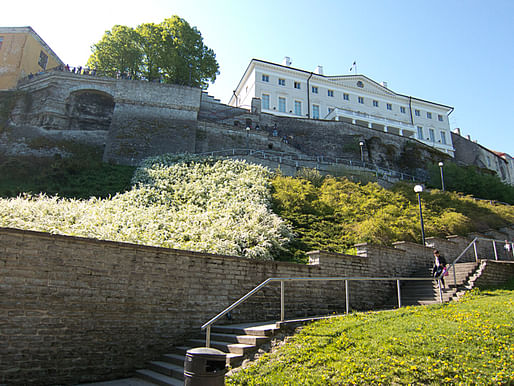
As the country of the midnight sun finally lives up to its name we depart Helsinki with fond memories. With 10 days to get from Helsinki to Barcelona, Spain the whirlwind tour of Eastern Europe begins with a 3 hour ferry ride across the Baltic Sea. TALLINN, ESTONIA (May 25, 2012) The... View full entry
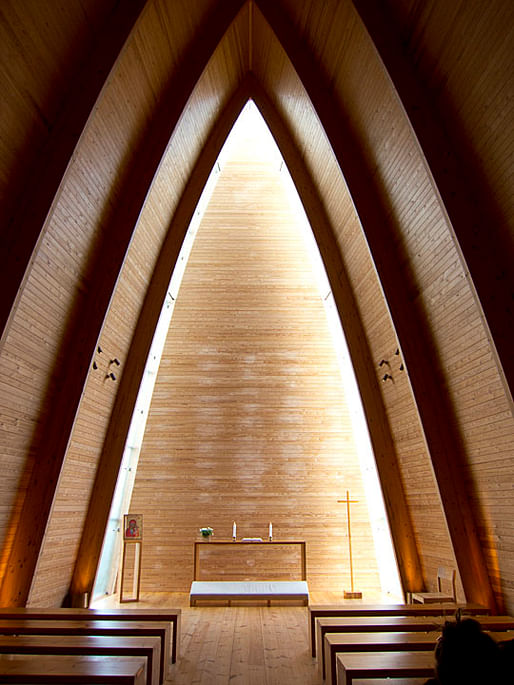
Following the excursion to the northern Arctic Circle, and to the eastern Lakelands of Finland, the semester in Helsinki was capped with a final tour through western Finland. In just two days we visited multiple chapels and cemeteries such as Erik Bryggman’s Resurrection Chapel, and... View full entry
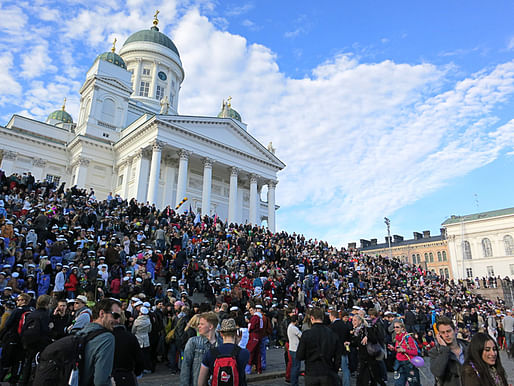
A few posts ago we spoke of Helsinki’s spring awakening. One week ago, however, we experienced Finland’s Spring Explosion.Explosive street life at the steps of Senate Cathedral We speak of May Day, the traditional spring festival celebrated across northern and central Europe... View full entry
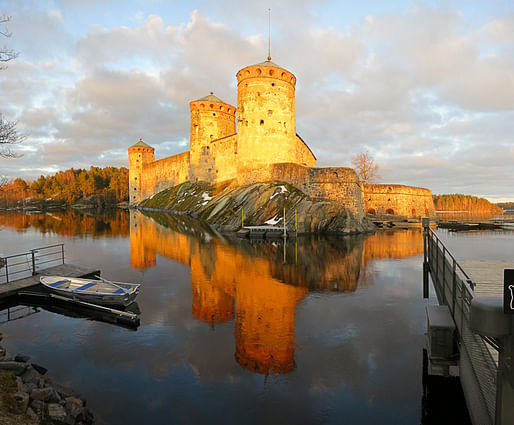
In addition to our personal travels, our semester program includes three architectural study tours throughout the diverse regions of Finland. A few months ago, we reported on our excursion to the Arctic Circle. Here, we present to you our adventure through the deep woods of Finland’s... View full entry
Captivating Organ in Aalto's Church of the Cross - Lahti, Finland
The last time we touched base about Helsinki it was early April, and we found ourselves caught in the middle of a tug-of-war between sun and snow. It seems, and we must stress with fingers crossed, it seems, that good weather is here to stay, and that Spring has overcome. Almost all the snow has... View full entry
Part III of Spring Break installment For the final leg of our adventure west of Finland, we journeyed up to Oslo, the capital city of Norway. Hopping on an overnight ferry out of Copenhagen, we cut our way up into the choppy North Sea and awoke in the early morning to watch Norwegian Fjords pass... View full entry
Part II of Spring Break installment Just 15 miles beyond the windmills of Copenhagen’s shore we have Malmö, a Swedish city that has boldly rebranded and reconceptualized itself over the past decade. Malmö skyline from atop the ferry as we leave Copenhagen for Oslo. This panorama... View full entry
Part I of Spring Break installment København Back in March, the two of us ventured back across the Baltic to visit our warmer Nordic neighbors to the west. This is the first installment of three entries covering our spring break adventure. The iconic windmills of Copenhagen Much like... View full entry
Much has happened, and it seemed, for a fleeting moment, spring was here to stay in Helsinki; we found ourselves with consecutive days of sunshine, blue skies, melting snow, thawing sea ice, and the clocks jumping forward one hour. Then on April 1, like a sick joke, we got 4 more inches... View full entry
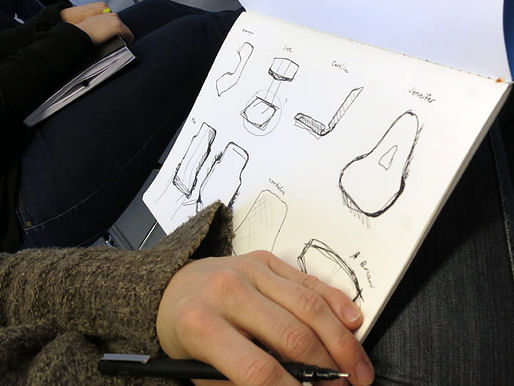
Hello, Archinect! In our last chair post, Prototyping a Place to Sit, we created molds and laminated foam core prototype shells of a variety of Finish wood case study chairs. Taking in our new understandings of ergonomics, profiles, seat dimensions, and discussions of comfort, aesthetics, and... View full entry
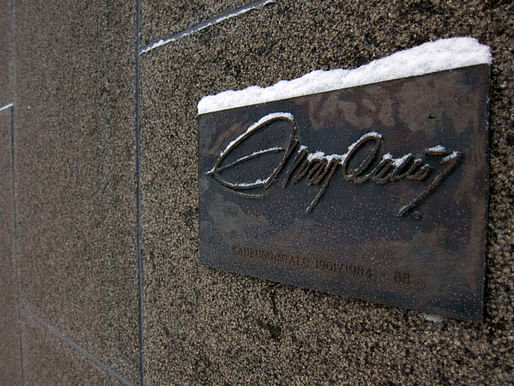
As we experience Finland and Helsinki we continue to catalog and document the plethora of details, nuances, and findings that cross our path. We hope to share these findings with you. Here you have it, our first installment of an ongoing series: Sights, Sounds, and Observations. Enjoy, and please... View full entry
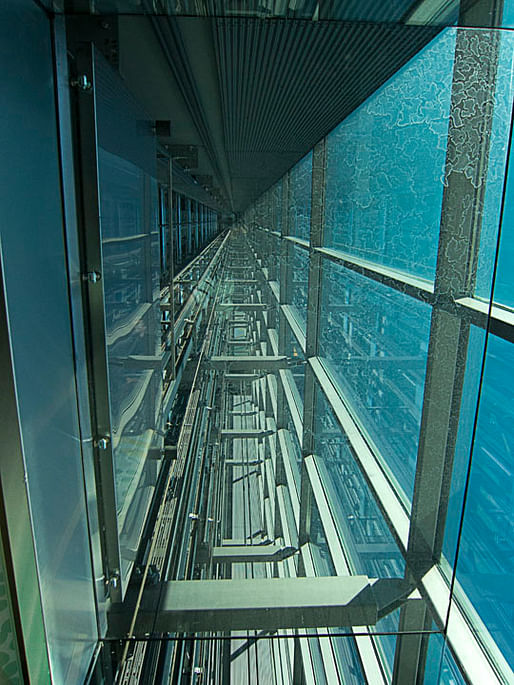
Elevator at National Pensions Building by Alvar Aalto. Helsinki, Finland
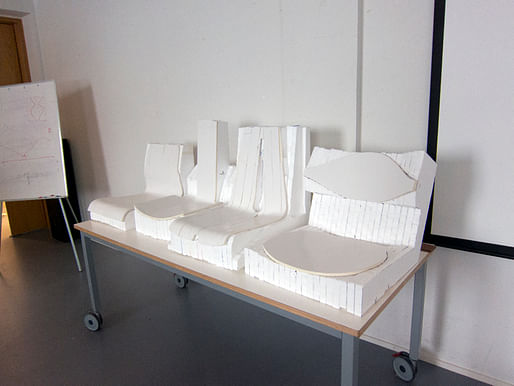
In our last chair post, Digitizing a Place to Sit, we showed you our initial process of digitizing our 4 Finnish bent wood case-study chairs (we have since uploaded a video to better demonstrate the process). We now take our measured drawings to produce a 1:1 prototype of the shells in... View full entry
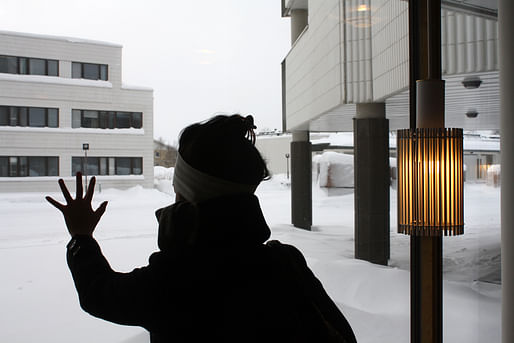
Rovaniemi: Home to the arctic circle, Santa Claus, reindeer, world class skiers, and of course, a wealth of Alvar Aalto works. Excursion As our colleagues Brian and Brownyn of the Red Herring mentioned in an earlier post, we traveled to the northern Finnish City of Rovaniemi for a study tour... View full entry
The Mieskuoro Huutajat, or Men's Choir Shouters, is a shouting choir from Oulu, Finland.
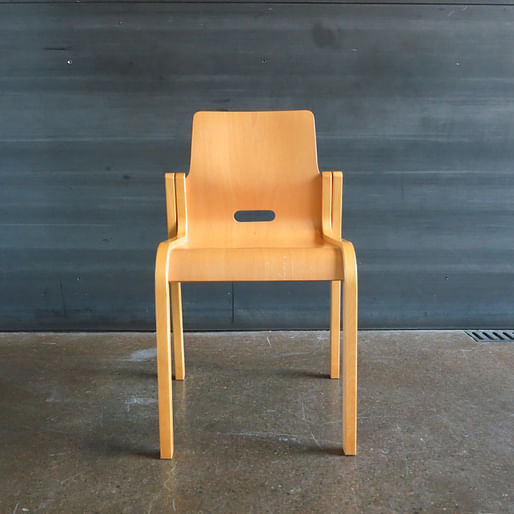
Of the four classes we are taking in Helsinki, one of them is Furniture Design with Julie Scheu. A product designer, Julie is also in the process of obtaining her masters degree at TaiK, the industrial, fashion, interior, and furniture design department at the Aalto University in... View full entry
Demonstration of the digitizer machine by Jennifer Wong, filmed by Alexander Morley.
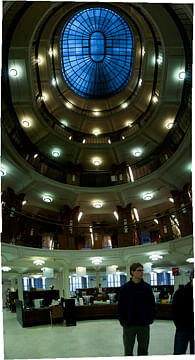
(January 20-30, Orientation) Here we are. Its cold, its dark, and its snowy. These are the immediate subjective impressions, all of which we knew were coming. We arrive early morning by sea, with less than a few hours of sleep on the ferry. Tired, hungover, and wanderlust, we force... View full entry
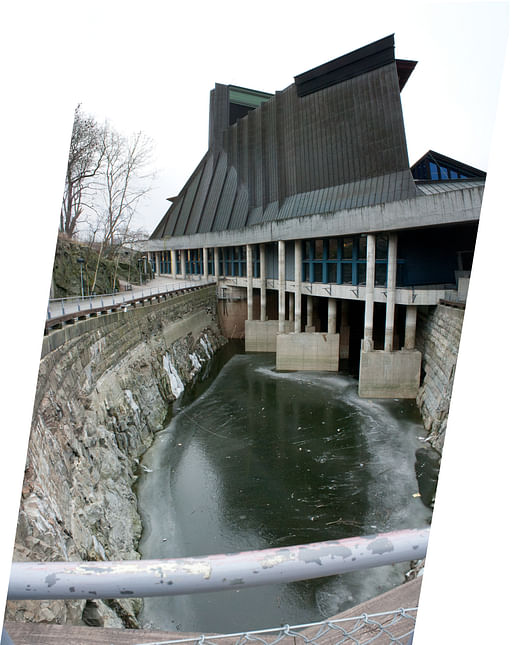
JANUARY 20-21, 2012 It is time to begin our Spring Adventure abroad in Helsinki. We go by way of Stockholm for two days, unite with two friends, and carry on to Finland. Both of us were working internships in New York City over our winter break, and on the evening of January 19th we flew with... View full entry
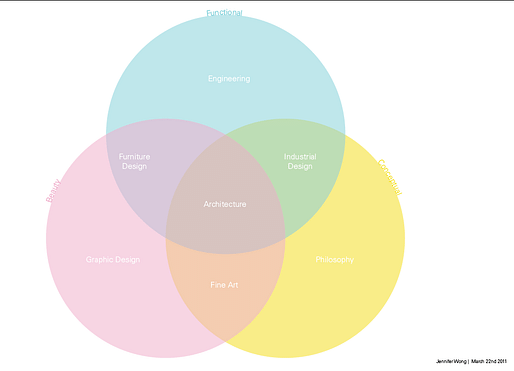
Architecture is subjectively founded on principles. The key word is subjectively. In school, in practice, and in life, we as architects attempt to make sense of, digest, and argue subjective principles as an attempt to find a greater meaning to shaping space. Whether it is our peers, our... View full entry
A new adventure begins as we finish one chapter; we hope to share our story with you. We are graduates of Washington University in St. Louis, Sam Fox School of Design & Visual Arts.


