


a mere 5 years on from my last post on contract employment, the recent rumblings out of my native state this past week should have every architecture firm re-examining their h.r. practices pronto.
to wit: the new law in california (AB-5 for those who track these things by their bill name) in part codifies a 3 part test first defined by massachusetts to determine if someone is truly an "employee" of a particular company. they are:
an independent contractor must be free from the control of the hiring entity
an independent contractor must perform work outside the normal scope of the hiring entity
an independent contractor must be an independent established practitioner of the trade performed.
the california law carves out exceptions for a host of professions, including architects and engineers. however, these exceptions are not permanent and certainly may not show up in other states' laws (oregon and washington state have already had legislators step forward to announce their intent to introduce similar bills in their respective legislative bodies).
what does this mean to the average architecture firm? without the exception, would anyone doing the normal work in an office be able to be classified as an 'independent contractor'? seems very doubtful, at least based on my experience. most would fail the first test - if the firm is telling you how to do the redlines, you aren't free from their control.
food for thought on the heels of yet another labor day here in the u.s....
View full entry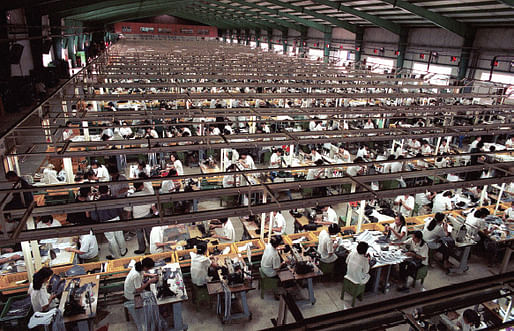
some random reading that you may want to labor through this holiday: bim needs ownership - will the architects rise up and take the territory? ever? a good selection of seamless panorama's of alvar aalto's interiors are now available through google views. (and while you're at it, revisit dan... View full entry

So, the US economy actually shrank at a (mildly astounding) -2.9% annual rate for the first quarter of 2014, according to revised estimates by the CBO. You read that right - it contracted. At an 'oh my dear lord, the world could be ending' potential rate, IF it were to last through the year... View full entry
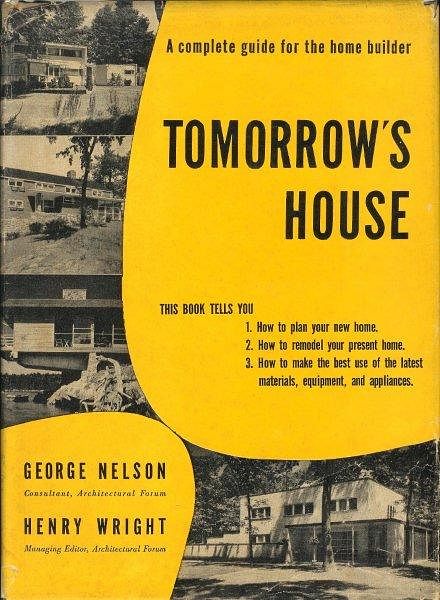
In his 1946 book “Tomorrow’s House’, George Nelson (along with Henry Wright) created a popular, post-war consumer pattern book defining the "house of the future". Equal parts designer, critic, writer, gadfly, and teacher, Nelson at the time was setting up his own industrial design shop... View full entry

photo credit: sciencebuzz.org The lillies have come and gone around these parts and we're moving quickly into summer. And, it's probably time to bring this blog out of hibernation. There's a lot moving within the profession these days - NCARB's announced a movement to try and finally address one... View full entry
In agreeing to review Steve Mouzon’s latest book, “New Media for Designers + Builders”, I’ve willingly become a part of an experiment tied to its underlying premise: that the ways we can communicate have proliferated exponentially and that harvesting some basic command of... View full entry
in the wake of the pritzker prize committee's decision to not act on 'awarding' (technically, the request was to 'jointly recognize') denise scott brown a retroactive medal, another - and perhaps more interesting - opportunity quietly opened up to properly recognize collaborative efforts... View full entry
(photo copyright taylor rhodes) “The market is broken on both sides,” explained Sharef. “Many applicants don’t have the skills that employers are seeking, and don’t know how to get them. But employers also ... have unrealistic expectations.&rdquo... View full entry
a friendly reminder for all you recent graduates (or those looking for work) relative to those upcoming interviews: it's almost never about who you are or what names are on your resume. it isn't about fancy schools or who your studio professor was. it's about what you've done. what... View full entry
everyone's talking about 'green shoots' these days - either they're sprouting or being choked out before they ever begin. green shoots? how about full on growing plants. right now... it feels.... busy - at least at my firm. we're winning a lot of opportunities, hiring... View full entry

interesting dichotomy of numbers out today. on the one hand, the aia's architecture billings index (which i am a participant with) is truly picking up steam over the past few months. at the very least, reading through the tea leaves, it indicates that work is picking up overall. and i... View full entry
much ink has been spilled the past couple of weeks over yahoo ceo marissa mayer's recent decision to require all employees to work inside the office. a vast majority of the knee jerk responses have focused in on why at-home workers are more productive, have a healthier work-life balance and... View full entry
we've been beating this drum, relative to what will help 'right' our economy, since 2009: it's all about construction. all. about. construction. it's really this simple: get construction spending back to 'normal' levels and everything else will fall into place. so, it's nice... View full entry
a confluence of articles out today are worth collating and reading in sum. all, as you may have guessed from today's title, are about jobs. or employment. or 'how are we going to get people working again?' robert samuelson argues, yet again, that we're in a particularly stubborn situation... View full entry
so we have a har-bowl after all. bleah. can't really root for either team, so it's time to catch up on some reading... following up on my last post, it really is all about teams... you a winner? or a loser? hope you're the former... about that corner office... i... View full entry
well, it's getting to be crunch time for the nfl. my current hometown falcons are playing a meaningful game in late january, we still have the option of a 'bi-coastal tech bowl (sf and new england/boston)', a all-bird bowl (falcons/ravens); the 'har-bowl' (as nominated below)* and whatever you... View full entry

it's going to be a full sprint through the beginning of the next year, so finding time to develop any of the topics on my list is....well....going to be impossible. but there's some loose ends, throughout the year, that i'd like toss out for your holiday reading pleasure: for those of you... View full entry
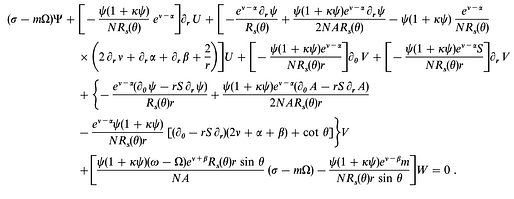
for anyone "looking for a job", the following equation will almost certainly drive the decision about how much pay will be offered: (fees/expenses) + ((skill-sets+need)/availability) = rate x (duration of project) or some variation thereof. in shorthand: the rate's driven by a combination of the... View full entry
if you've lasted 4 or 5 years in this profession, you know that entry level wages for architects aren't the highest among the 'learned' professionals. constantly bemoaned, it's a murky subject, shrouded in a lot of secrecy, and fueled by fierce competition in the marketplace. it's the root... View full entry
yet another post about the rise of the contract worker. yes, there are people for whom this kind of lifestyle is something to be desired. but my experiences and discussions tend to confirm the opposite: most people crave stability. not all, but most. for a ton of obvious reasons... View full entry
recently, we put our first advertised job posting out in four years. there's several reasons for the time lag, not all of them due to the economy or a downturn in our fortunes. on the contrary, we've done relatively well- steady, but well - during that stretch. the biggest issue is we... View full entry
what's been danced around, mostly, as the great recession has lingered on is exactly what kinds of jobs have been lost and what kinds of jobs are coming back. it comes as no surprise to see, in the nytimes today, a report that validates this supposition. the upshot? as you can see... View full entry
Today’s meditation is on the ‘producer’. No, we’re not referring to a grocer or sales generator. For our purposes, we’re looking to the recording industry for some inspiration. A producer, in the world of recorded music, is the person “whose job is to... View full entry
it's pretty rare that a single chart can show so much about the current state of the industry, but this one, from Macro Monitor, does a great job. the upshot? 2.27M construction payroll jobs lost between '06 and '11. only 60k net new jobs since feb. 2011. only... View full entry
with the greek election behind us (and mixed initial reactions), let's take a quick snapshot as to where our own economy is. i found this article based on David Rosenburg's studies sobering and enlightening at the same time. the summary? Forty-five million Americans (one in... View full entry

One of the more persistent sentiments I’ve personally seen more openly laid out over the past few years of this recession is one which claims ‘there’s too much overhead at my firm’. Most often, this statement is being made by someone who is presumably not part of that... View full entry
out from the commerce department today: "WASHINGTON (AP) — U.S. builders increased their spending on construction projects for a second month in April. A pickup in home construction and commercial projects offset a fifth consecutive decline in government spending. The Commerce... View full entry
a quick update today: as reported on tuesday, the latest case-shiller housing price index taunts us with a mixed report. the good news? phoenix, denver, miami all seem to have hit their bottom and are rebounding since the same time last year. this is relative of course - phoenix and... View full entry
"why didn’t anyone teach us ‘business skills’ in school?" if a nickel were deposited in my bank account for each time that phrase has been uttered the past 4+ years, i’d be… well… mark zuckerberg (or at least as wealthy on paper. at the ipo.)... View full entry
last friday, i caught dwain cox of chik-fil-a as he spoke at the atlanta creative mornings series. beyond being a great speaker and head of innovation for the cow-run company, he's also the former owner of his own design consultancy. in fact, as he tells it, the main reason for the jump to... View full entry
Central to the blog is a long running interest in how we construct practices that enable and promote the kind of work we are all most interested in. From how firms are run, structured, and constructed, the main focus will be on exploring, expanding and demystifying how firms operate. I’ll be interviewing different practices – from startups to nationally recognized firms, bringing to print at least one a month. Our focus will be connecting Archinect readers with the business of practice.


