

Sep '11 - Jan '13
Well Archinect, with the beginning of a new year I'm going to be closing the door on this blog. Seems fitting given that I've found my job (the original focus and intent of this blog), and I'm now busy enough with work that I can hardly make time to post anymore. I haven't completely ruled out the idea of continuing to blog about my internship and eventual licensure, but for now I will not be making a new blog on these topics.
I thank you all for your interest and participation in my blog and I wish you all the best in 2013 and beyond. I hope that if you are looking for work that this might in some way help you and that my experiences, both good and bad, might serve as lessons for you to glean something from.
Thank you Archinect for allowing me the platform. When I saw that you were opening up the blogging platform from just the student blogs, I was probably one of the first to jump on the chance to get a blog.
Happy 2013!
P.s. Enjoy the randomness of what the glamorous life as an intern architect brings with a few photos.

Scanning as built drawings

Deciding materials and color selection (plus a little graffiti testing)

Changing air filters. This was one month of use during which we had a ton of smoke in the air from nearby wildfires.

Lots and lots of CAD. I snapped this to show my wife where our lives cross ... Chemistry classrooms

Saved this little guy from the heating duct in the old building where we have our offices. We still have no idea how he got in there past the filters.
View full entry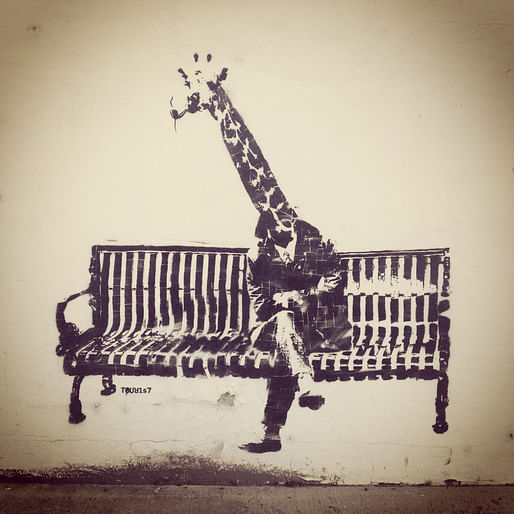
It's been three months since I accepted my full-time job and while I've had time to sit down and write, I just haven't taken the time to do so (my apologies). However, I did want to go over my job search process and the things I've learned from it with the hope that It will prove to be useful... View full entry
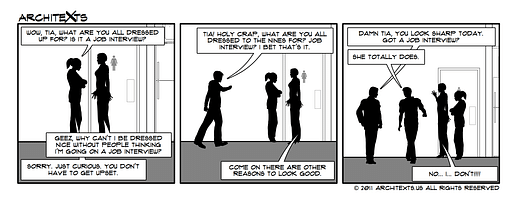
The title of this blog was really meant to be a placeholder until I came up with a better one but I think it "works" In my last post I promised news, and in the interest of not burying the lead, here we go... I got a job! And in other, related, news; I already had a job. If that's confusing at... View full entry

I'd like to insert the word "Good" at the beginning of the title to this blog post, but I'd hate to jump the gun and look like an idiot. However, saying that there will be news breaking soon on my job search can go either way, so I guess I've learned something else about covering news this past... View full entry

My sister-in-law was staying in a hotel and was taking advantage of the hotel’s gym to get some exercise. While she was running on the treadmill a little boy came in and began playing on the various pieces of equipment. Of course, there were signs up everywhere saying that children needed... View full entry
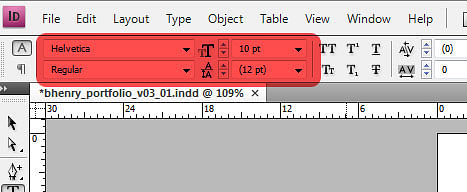
Paragraph styles are something that I think a lot of beginning users of InDesign tend to overlook. It's not that they are hard to use or set up it's just that we normally don't deal with this type of feature for text in many of the programs we use. For example, how many of you pay attention to... View full entry
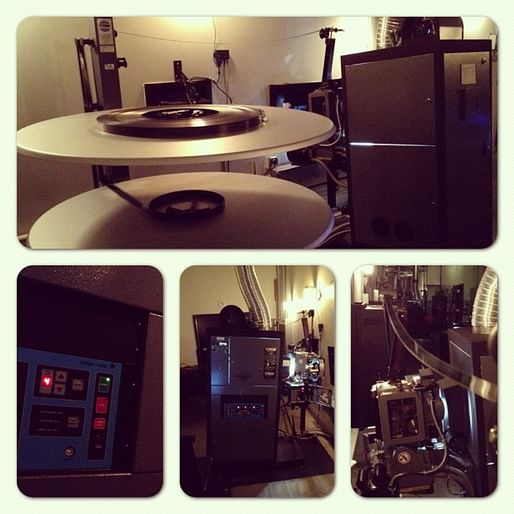
If you didn't know already, I work as a part-time projectionist at the local movie theater. It is an interesting job and I find working with film remarkably enjoyable. However, the times ... they are a-changin'. For the past little while the movie industry has been moving to digital and phasing... View full entry
I remember reading something recently (I can't seem to find it right now so you'll have to believe me on this stat) that said that the majority of entry-level positions in architecture are not advertised. Assuming my memory serves me well and this is indeed the case, then you might say that your... View full entry
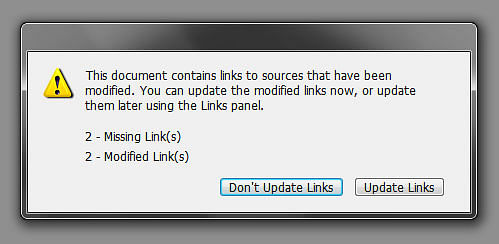
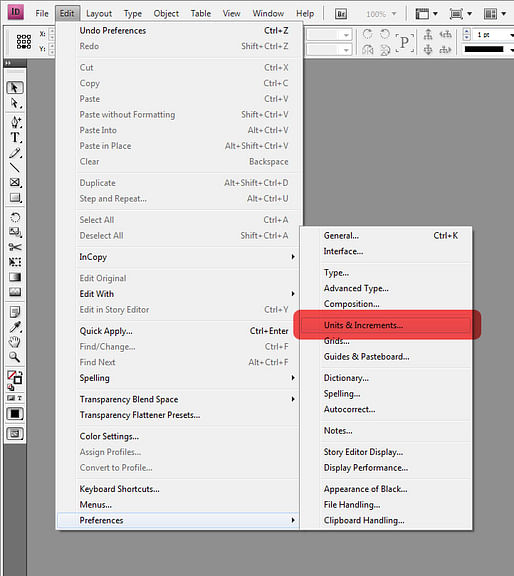
This post on Portfolio A.ID (Adobe InDesign) was sparked by Chad Wulleman, who left a comment on my last post. I hope this is in line with what he was suggesting but even if not, it's good information to know. If you're familiar with Photoshop you'll know that when you insert an image or... View full entry
Back in the good old days of grad school I was searching for some tutorials for rhino and I came across a series of posts on Archinect titled, Elite Modeling School, put up by Harvard GSD school blogger Bryan Boyer. Two wonderful things happened because of this. One, I got some great tips and... View full entry

While there are a lot of parallels to draw between Indiana Jones' search for the Holy Grail and your job search, I thought I'd focus on the actual selection of the job / holy grail. This of course assumes that you've accurately deciphered all the clues and codes, made it past the Nazis who are... View full entry
He Chose Poorly
I knew this before, but I'm realizing more and more that it really is all about who you know and how much effort you put into your initial contact with a firm. I had some time to waste today between a couple of meetings and I ventured over to my old stomping grounds to talk to a few members of... View full entry

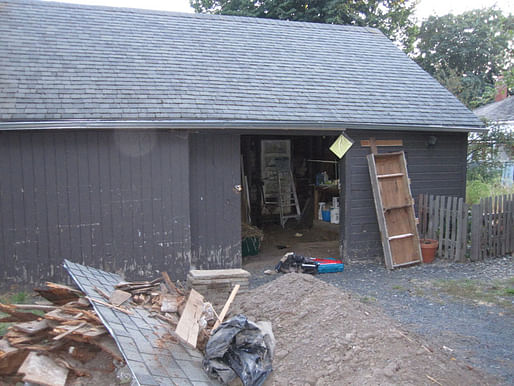
(source) With the design-build project that I’ve been working on coming to a close and my portfolio off to the printer for a test print I thought I’d write about something I’ve been meaning to write about for a while now, job search strategery. As a disclaimer I’ll say... View full entry
At least according to this video (0:42). I'll have to recompose the post I was writing at another time. View full entry
Archinect emailed me the other day. Apparently if you don't post on your blog for a month they get worried. Despite the flu that is doing its best to kill me slowly, I'm still alive. It's no excuse but I have been keeping myself fairly busy. While I haven't landed a full-time job, I do have work... View full entry

I caught a tweet linking to an article on offthemall.org today and because of my recent post I thought I'd share and critique: Ask the Jury: Which Architects Have the Best Web Sites? Personally, I think the jury got it all wrong ... well mostly. I liked what Enoch Sears had to say about knowing... View full entry
I'm sitting at work right now (I'm a part time projectionist at a local movie theater) where I should be working on my portfolio. The big hang up is my master's thesis. I just can't figure out a way to show it that makes me happy. I'm sure I'll figure it out but rather than hitting my head... View full entry
I've been seeing a lot of recommendations recently about having some sort of online presence when you go job hunting. It ranges from simply creating a LinkedIn profile to having a complete website at www.your-name-here.com. Given that there are so many ways to locate, contact, and put yourself... View full entry
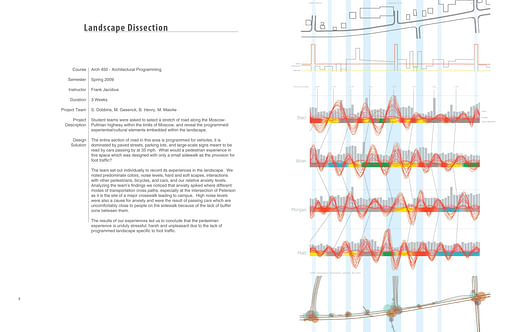
I keep trying to come up with something interesting to post with this but nothing is coming out right. Regardless, I wanted to put up a few pages of my portfolio in progress and maybe get some feedback, advice, words of encouragement, etc. These are just some select pages, all from my... View full entry
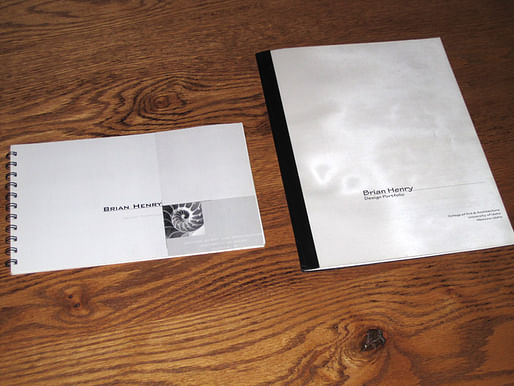
My portfolio hasn't seen very many changes over the years. The smaller, landscape oriented one was my first ever that I submitted with my application for the third year of the U of I architecture program. The one pictured next to it was one that I submitted during my fourth year for a scholarship... View full entry
I graduated earlier this year and instead of listening to the advice of everyone, I didn't land myself a job right away. Instead, my wife and I moved into a new apartment, I did some random construction jobs here and there, took on (and am still working to complete) a small design-build project... View full entry
Commentary on looking for work, portfolio and resume design, networking, social media and the job search, interviews, dealing with rejection and the joy of landing a job.


