

Follow this tag to curate your own personalized Activity Stream and email alerts.
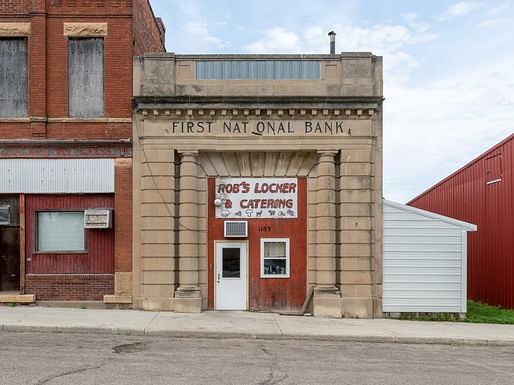
It's fascinating to document how architectural and cultural trends are deployed across the country, but we've seen that widespread disinvestment — as well as patterns of renovation and repurposing — add to an already palpable sense of impermanence. — NPR
Chicagoans Zach Huelsing and Jon Lehman’s Rural Indexing Project was first launched during the Obama administration and has grown to an archive of more than 1,200 locations spread across 25 different states. Huelsing and Lehman both studied architecture and urban planning respectively, and their... View full entry
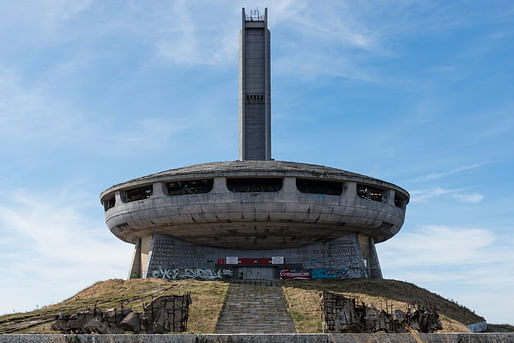
What do you do with a building that was built to glorify an oppressive Communist system but, ravaged by rain and snow and stripped bare by thieves, is now a wreck? Should it be torn down in the spirit of reckoning with history — just as the statues of Confederate generals have been toppled in the United States and monuments to Soviet hegemony have been demolished across Ukraine, particularly since Russia invaded in February? — The New York Times
After receiving two rounds of funding totaling $245,000 from the Getty Foundation in back-to-back years, the ever-popular photographer’s subject is struggling to raise the millions needed to restore it to the former 'glory' seen in what its designer Georgi Stoilov called “morally and... View full entry

Politicians, planners and policy-makers have frequently debated the benefits of allowing architecture to decay – neither demolishing nor preserving it, but letting entropy take hold. What makes this approach to ruins equally empowering and horrifying? — Failed Architecture
Writer and artist Owen Vince penned an excellent Failed Architecture essay on the intricate interplay between managed decline and indifferent decay, architectural reverence and conscious abandonment, preservation, erasure, and deliberate ruination. "To allow a structure to degrade — refusing... View full entry
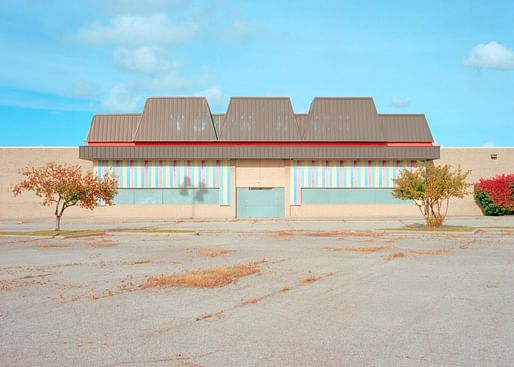
“I’m looking for subtle signifiers of an exuberant bygone optimism,” [Photographer Tag Christof] said. “Whether people realize it or not, the things I photograph are the direct result of a system that defines progress only in economic terms.” Christof...has spent the last five years crisscrossing the country in an effort to document architectural sites vanishing from the landscape. — The Outline
Whether you spent your teenage years moodily occupying the food court or have experienced malls primarily as ruin porn, the architectural significance of these former bustling commercial centers can't be overstated. A kind of high water mark of capitalism, the shuttered and demolished malls... View full entry
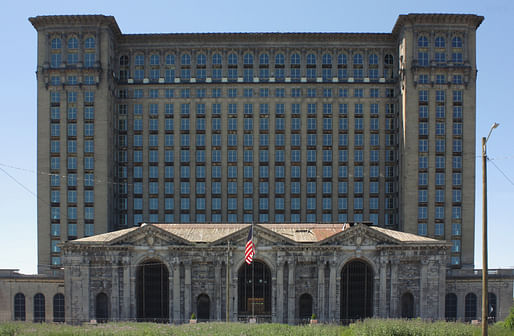
Talk about redeveloping the long-vacant Michigan Central Station in Detroit's Corktown area heated up again Thursday during an announcement about this year's Detroit Homecoming, which will hold the first significant private event in the 104-year-old train station since the mid-1980s. [...]
"(Redevelopment of) the depot is going to take a marathon, but we're not at the beginning of the race, we're a few miles into it," said Matthew Moroun, whose father, Matty, bought the building in 1995.
— crainsdetroit.com
"I said, 'there's one thing: Every time I read a damn national story about Detroit, there's a picture of the train station with the holes in the windows as the international image of the city's decline,'" Detroit Mayor Mike Duggan is quoted saying, recalling his conversation with billionaire... View full entry
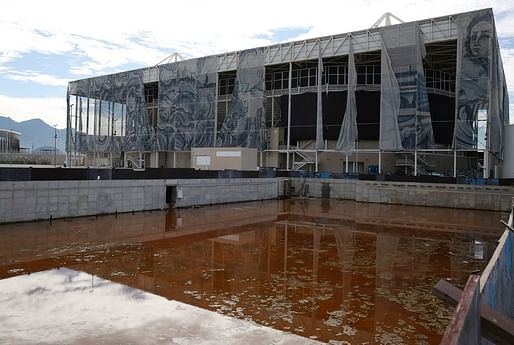
The Olympics are a costly venture. In fact, they’re more like a high-stakes gamble. Countries pour money into the festivities, often going far over budget, with the hope that they’ll receive a return—either through tourist dollars or else through raising the city’s profile internationally... View full entry
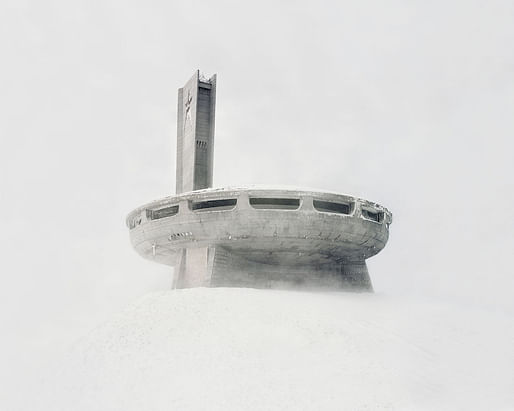
Danila Tkachenko is a Russian photographer whose series Restricted Areas crystallises the tendencies of many artists working on themes of the post-Soviet space. As Calvert 22’s Power and Architecture season demonstrates, there is a healthy interest in the abandoned or neglected buildings that once served as landmarks of Soviet ambition: the rack and ruin of utopia. What sets Tkachenko apart is the unforgiving simplicity of his compositions. — calvertjournal.com
All photos from Danila Tkachenko's series Restricted Areas. For far more of these beauties, head over to Calvert Journal.Related stories in the Archinect news:New photo book documents the beautifully outlandish architecture of Soviet bus stopsHaunting beauty: Alexander Gronsky photographs... View full entry
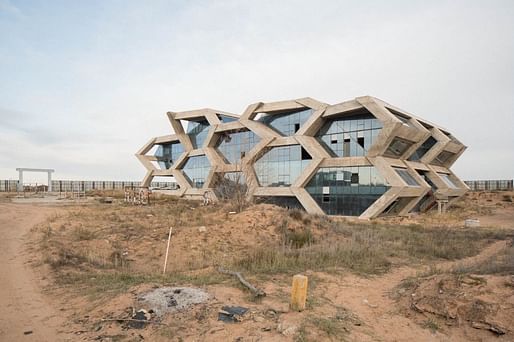
"Foreigners consider [Kangbashi] to be abandoned. Chinese consider the city to be still developing," [photographer Raphael Olivier] explains.
"A lot of the early news reports focus on it being a failed, weird place -- but it's also a huge accomplishment and people there are not necessarily unhappy, there is a huge sense of hope. You have to respect that on a certain level."
— CNN
Other angles on the effects of China's massive urbanization:China's Manhattan replica continues to lie abandoned as economy slows'Re-education' campaigns teach China's new ghost city-dwellers how to behaveOrdos in 2014 - "Brave City of The Future"Photos Of A Massive Chinese-Built Ghost Town In... View full entry
English photographer Rebecca Litchfield braved radiation and KGB-style interrogation techniques to capture the beauty of this bygone era in a series called Soviet Ghosts.
Her work took her to schools, hospitals, factories, and accidentally, a top secret radar installation. “Many of the abandoned buildings are pretty unknown to the public, they are hidden behind tall fences and gates, I think it is easy to just pass without knowing what is inside,” says Litchfield.
— wired.com
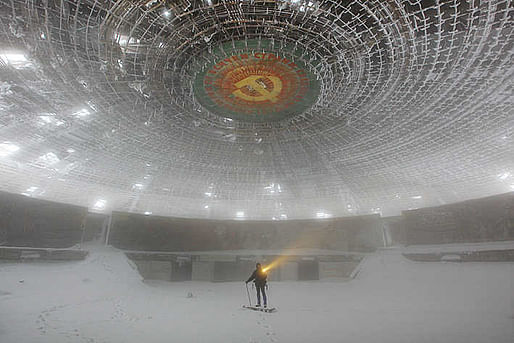
The argument for preserving old buildings is a very strong one that I wholeheartedly support myself. However. On the rare occasions that I get to visit a forgotten building as magnificent as this one, I can’t help day dreaming about some of the incredible monumental relics I know back home and quietly wishing that a few more of them had been left to grow old and perish naturally rather than being unceremoniously hooked up to the proverbial life support machine of modern tourism... — humanplanet.com
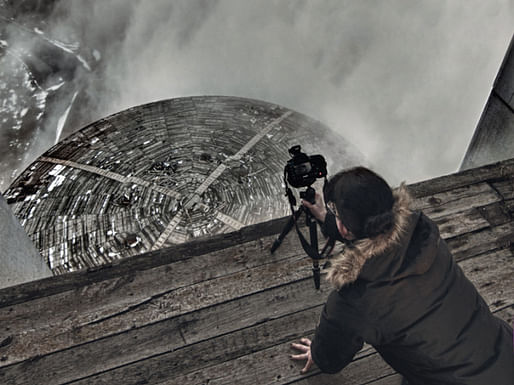
Photographer, Timothy Allen, explores the ruins at the Buzludzha monument in Bulgaria. View full entry
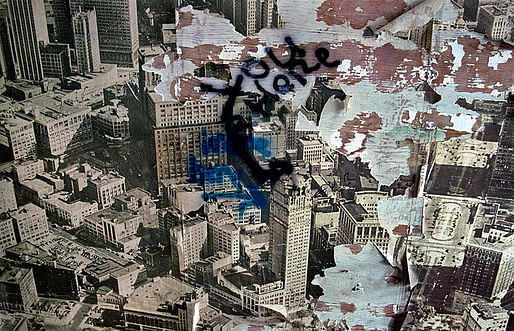
Ruins don’t encourage you to dwell on what they were like in their heyday,before they were ruins. The Colosseum in Rome or the amphitheater at Leptis Magna have never been anything but ruins. They’re eternal ruins. It’s the same here. This building could never have looked more magnificent than it does now, surrounded by its own silence. Ruins don’t make you think of the past, they direct you toward the future. The effect is almost prophetic. This is what the future will end up like... — nytimes.com
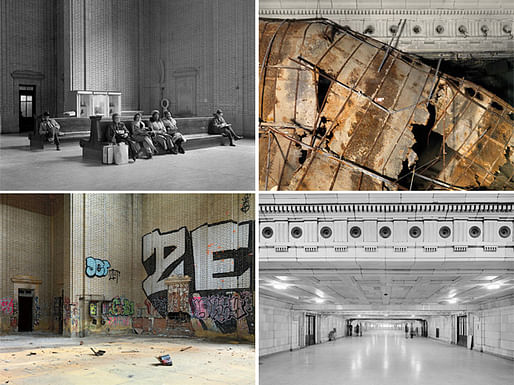
The truth I’m trying to present is one about site-specific forgetting. If our history is a history of forgetting how to remember the past, as I am arguing, then the city of Detroit is the engine of our conflicted deliverance. It’s the machinery we’ve used for particular acts of forgetting, each connected to the place and time where the forgetting got done. — Places Journal
This week on Places, two features by Detroit residents contextualize the city's ruins. In "The Forgetting Machine: Notes Toward a History of Detroit," Jerry Herron reflects on the decline of Hudson's and the improbable hopefulness of the retrofitted car park in the Michigan theater. He critiques... View full entry


