

Follow this tag to curate your own personalized Activity Stream and email alerts.

Following last week’s visit to residential specialists DAHLIN, we are moving our Meet Your Next Employer series to Brooklyn, NY this week, where we meet the self-described “unconventional architecture practice” SITU. Founded in 2005 by four friends studying architecture at The Cooper Union... View full entry

Following last week’s visit to California-based SmithGroup, we are keeping our Meet Your Next Employer series partly on the west coast this week to meet residential specialists DAHLIN. The 180-strong firm, whose nine offices span California, Washington, Utah, Montana, and Texas, and... View full entry

Following last week’s visit to Los Angeles-based OPEN OFFICE, we are moving our Meet Your Next Employer series east to Providence, Rhode Island, where we find CIVIC. Founded by architect Manuel Cordero, and based in Providence’s Innovation District, CIVIC’s work is defined by an inclusive... View full entry

Following last week’s visit to New York-based Morris Adjmi Architects, we are moving our Meet Your Next Employer series west to Los Angeles, where we find OPEN OFFICE. Recently founded by friends and colleagues Edward Cronin and Reed Webster, the firm has just moved into an office at the... View full entry

Following last week’s visit to New York-based ODA Architecture, this week’s edition of our Meet Your Next Employer series remains partly in NYC where we meet Morris Adjmi Architects (MA). Established in New York City in 1997 by Morris Adjmi following his 13-year-long collaboration with Aldo... View full entry
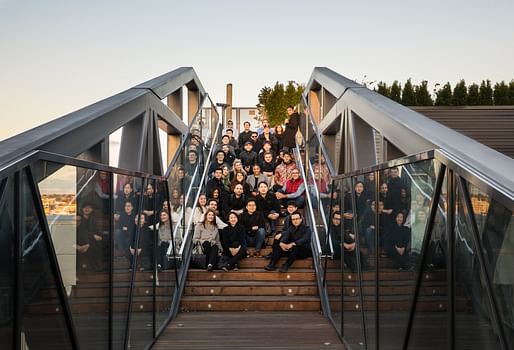
Following last week’s visit to Los Angeles-based Stayner Architects, we are moving our Meet Your Next Employer series east to New York City, where we find ODA Architecture. Founded in 2007, the studio has developed an international reputation for delivering what it describes as... View full entry

On July 26th, voting closes for the election of the next RIBA president. When the winner commences their two-year term as president on September 1st, 2023, they will be confronted with a list of burning issues across the UK’s architectural profession; and will be expected to publicly lead a... View full entry
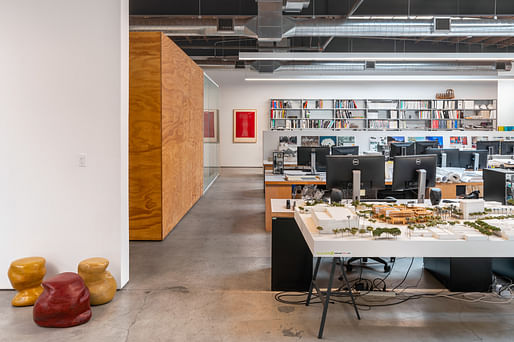
Following last week’s visit to Toronto’s Yabu Pushelberg, we are moving our Meet Your Next Employer series to Los Angeles where we find TOLO Architecture. Founded in 1998 by Peter Tolkin, the firm was renamed TOLO in 2018 after Sarah Lorenzen joined as a principal. Throughout... View full entry

It was midafternoon on a Monday and the Pritzker Prize-winning architect Frank Gehry — despite having just turned 92 in a pandemic, completed the top floor of his building in the Grand Avenue development, and prepared for a show of new sculpture at the Gagosian Gallery — had little interest in sitting back to reflect on this potentially meaningful moment in his life and career. — The New York Times
Frank Gehry in conversation with NYT culture reporter Robin Pogrebin. Touring the acclaimed architect's Los Angeles studio, passing models of small residential projects as well as enormous urban developments, the exchange touches on several completed and ongoing Gehry projects that have also made... View full entry

“All my buildings fly, which when you think about it makes perfect sense because an architect spends his life fighting against the force of gravity,” he says. “By levitating a building, it does not take from the city and its people – it gives something back.” — Financial Times
Renzo Piano in conversation with the Financial Times. Related on Archinect: Construction completes on Renzo Piano's long-awaited Academy Museum of Motion Pictures in LA. Photo by Josh White, JWPictures © Academy Museum Foundation View full entry

Job interviews are a crucial part of the hiring process. Usually, it means your application was well received, and so now, it's time for both parties to get to know each other in a deeper way. But, how does one prepare for the interview? Surprisingly, I've found that many people do not prepare... View full entry

Continuing with our regional Spotlight on Los Angeles, we've selected 9 Los Angeles firms that are currently searching for the right candidate to join their team. During any job search, learning about your future employer and the culture of the offices they run is key. For this week's... View full entry

A common question when preparing for an interview is on what to wear. A tie? A blazer? Is a dress okay or pants? Are sneakers too casual?How does one determine what's appropriate and what's over the top? First, it's important to understand that dress is only one factor when it comes to making a... View full entry

A lot of times those still in school and even those actively searching for a job want to know what can be done to heighten the chances of being selected for an opportunity. One frequently untapped strategy is capitalizing on the informational interview. In a simple sense, this is merely... View full entry

You've just walked out of a job interview and you're feeling pretty good about how things went. You prepared beforehand, researched the firm, had solid answers to their questions, and even posed some good questions of your own. As you drive off you take a deep sigh of relief, you've done all you... View full entry


