

Mar '12 - Apr '15
 This week’s Built-In: Architecture & Entrepreneurship Meetup on Digital Marketing in Architecture in NYC brought a few major epiphanies that were definitely worth elaborating on.
I left Architecture late last year for a number of reasons, but mainly to seek out projects where design was one of many components in building great things, products, services, or experiences.
The latest event from Built-In brought together a wildly-engaging collection of professionals with unique connections to AEC [architecture, engineering, and construction] industries. Moderated by @georgevaldes, the conversation highlighted some tangible marketing strategies used outside traditional practice. The discussion made clear there are many young designers on the same boat I was in a year ago.
Built-In — a Meetup group coordinated by George Valdes, Adrian von der Osten, and a team of passionate young architects — have held similar events over the past several months, all of which have raised fundamental questions on practice, culture, and technology.

Sidenote: Common Areas of Build Grand Central Expansion is Pretty Awesome.
The panel for Marketing in Architecture, represented a wide diversity of products and services:
Karen Zabarsky, Marketing Coordinator at SHoP Architects, called for the end of marketing departments as isolated operations within firms.
Dino de Céspedes, Co-Founder of @anewyorkagency, broke down why ‘messaging’ is essential to connecting with clients, but is often overlooked.
David Gull, AIA LEED, Head of Architecture & Client Services at Floored, outlined how the field might benefit from different tools.
Peter Garber, Chief Product Officer at Architizer, ruminated on a practice model resembling that of film, in which ultimate specialization leads to super high-efficiency.
Alex Shepley, Business Developer at Honest Buildings, addressed how greater transparency in the building process could open up new opportunities in AEC industries.
The discussion definitely brought to light how architecture and complementary industries might implement marketing practices to acquire new clients and grow their businesses.
Between the panel discussion and subsequent discussions, there was a lot to digest, but I collected a few takeaways that can hopefully continue the conversation past the event.

1. Between Architecture & Marketing lies a Huge Void.
Architects [this may be a gross generalization] don’t really understand Marketing, and no one understands architecture. If you’ve ever asked an architect, “what type of architecture do you do?” you’ve encountered the archi-stink-eye [I’ve cringed at this question myself more than once].
But is the question so problematic? Consumers have grown accustomed to products that are fine-tuned to their needs.
Take the startup industry: investors, partners, and clients need to understand instantaneously what the offering is before acting on it. Under this logic, “what type of architecture do you do?” is essentially emphasizing the cloud of mystery surrounding the field.
Not having a clear mission, specialization[s], or target client demographic as a practice equates to an unhealthy dependence on one’s personal network, which is finite. If the question comes up, you have to have a super-clear answer, even if it’s not necessarily what the audience wants to hear.
2. Young Architects Want [and Need] New Markets.
During the Q+A, Several young designers raised concerns about the the current state of practice; jobs are scarce, competition is intense, wages are stagnant, and even more popular offices find themselves struggling to achieve sustainable growth. Meanwhile, the startup world is filled with young, energetic entrepreneurs trying to change outdated products or processes from the ground up. There are definitely similarities in work structure — some long hours, arduous discussion, and macro-level conceptualization. But where the two fields differ greatly is in culture.
Startup founders understand building the right team and making the right hires is essential to their survival and success. Conversely, many architecture offices largely envision a new hire’s arrival as great for production, the dismal working conditions being byproduct of gaining experience, or “paying ones dues.”
It was great to hear Karen Zabarsky’s description of SHoP’s Marketing Department resembling that of a healthy startup, where there is direct collaboration with business and production sides of the office, rather than being “marooned in the corner,” a symptom far too common in firms that actually have marketing departments.
Recent architecture graduates and young professionals are figuring out there’s many ways to connect to potential clients…
3. And They’re Figuring out How to Acquire Them.
Architecture graduates are defecting in droves, moving into startups, interaction, graphic design, even marketing [self-promotion]. There’s a growing awareness that design-thinking honed in architecture studios is a highly-valued asset for a number of different fields.
The really cool thing about all the ex-architects I know is that they’re still incredibly passionate about the built environment, and never stop thinking about the relationships between space and experience. This passion carries over into every creative project they do, and is extremely valuable.
4. Startups Can Provide a Marketing Roadmap for Architects.
Iterative production, lean operations, and data analytics are a few startup tactics that feel ready-made for architecture. From a marketing standpoint, branding and messaging are some of the first topics to come up, as they facilitate the ‘image’ potential clients see, hear, and experience. This could emphasize a methodology, style, scale, or technology of a firm, but whatever the message, it needs to be crystal clear to anyone and everyone.
The “What is our mission?” conversation is too often overlooked. Whether it’s targeting new clients, hiring the best and brightest designers, or developing valuable partnerships, the firm’s mission sets all of these in motion, transforming clients from being aware to being advocates.

Branding Strategy for Architects, via @anewyorkagency
5. Architecture is Still Mysterious in an Age of Transparency.
Blame it on identity crises, terrible flash websites, “we-do-it-all” mantras, or lack of public engagement, but a huge chunk of the general population has no idea what architects do. In the startup world, there’s an awareness that, with every new product, educating customers on its potential value is essential, whereas meritocratic thinking where great work should speak for itself is much more common in architecture.
Here’s an example. Startup X releases an app in beta, gets valuable data and feedback from users, shifts the app’s functionality, rereleases it, and repeats. With every new iteration, the product becomes smarter, faster, and more in tune with its user.
Although architecture is inherently complex, with many more moving parts, most small firms don’t have a target demographic, program, or scale, and clients’ feedback is often seen as a danger to a design’s efficacy. and, once projects are completed, there is little to no follow-up on a building’s performance, user feedback, or opportunities for improvement.
6. Products are not Successful because of Buyers, but because of ADVOCATES.
The ultimate goal for every product or service is transforming people who are aware into advocates who will do everything in their power to help you succeed. In a way, this goes back to the importance of ‘Mission.’, where people can see, admire, share, tweet, like, and favorite your work, solely because they believe in the same values, or have benefited from your work, insights, or knowledge.
However, lead generation in architecture is highly reliant on two sources: client word-of-mouth and RFP’s [I won’t bother with competitions, Rem Koolhaas’ talk with FastCompany summed it up quite well]. These two sources of work were probably sufficient fifty years ago, where designers were limited by their network, location, class, and social circles. Whereas now…
7. We have this thing called the INTERNET.
You know, that thing we use daily to keep in touch, access news, consume media. David Gull said it best when he was downright confused as to why architects aren’t taking advantage of video, whether it be for potential clients or covering completed projects. Video is pervasive, and with the fast development of virtual reality, it isn’t unreasonable to suggest this technology will be a THE way to communicate with clients.
Yet, in the “Everyone is a Brand” era, architects have have stayed out of the digital limelight. People [potential clients] want to know more about where their products come from, what type of labor practices created them, and what the larger narratives are. It’s a great opportunity for architects to exhibit…
8. THOUGHT LEADERSHIP. It’s the Message that Matters.
With an excess of media comes the possibility that work, theories, and achievements get lost in the digital ether. But every architect I’ve worked for, worked with, or interacted with is a wealth of useful insights on the built environment. This abundance of knowledge is why architecture is built to capitalize on the Information Age.
With that said, thought leadership is critical to delivering the right message to the right clients and publics in order to make meaningful connections that translate into real opportunities. In many other fields, there is no “content” to share, a lot of it is bullshit, probably written by an external agency. Architects have the opposite problem; there is an abundance of knowledge that usually doesn’t permeate beyond insulated conversations.
Between blogs, podcasts, and eventually Periscope, the public is aching to make meaningful connections, to advocate for things they believe in, and there’s no better time to tear down the wall between architecture and the rest of the world.
It’s time to let the public advocate for great architecture.
Keep up with Built-In’s future Meetups here.
View full entry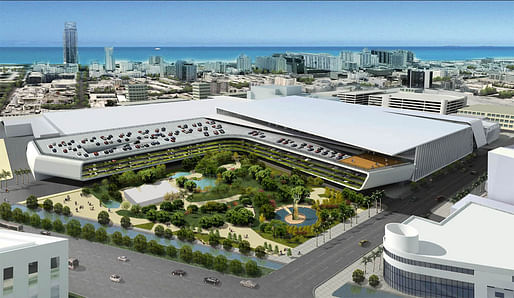
For a long time (three years to be precise), I considered Miami Beach to be the South Florida node of progressive architecture, a design-oriented community, in stark contrast to the ‘mainland’ of Miami-Dade. South Beach brought Hargreaves & Associates to South Pointe Park – a one of a... View full entry

Architects have had a long history of idolizing fashion – it’s fabrics, geometries, material performance – and the Charles James exhibition at the Met portrays the fashion designers work in a way that all but forces you to hold the work in equally high regard. Perhaps a little late to the... View full entry
When the question, "what's your thesis?" comes up, elaborating on the topic of atmosphere usually results in an obscure conversation about what atmosphere is exactly. How do you develop an architectural provocation based on something apparently immaterial, and for the most part, invisible? As a... View full entry
"The Middle" [an impromptu name for my research] takes up the question of middle-urbanism, i.e., contexts which can neither be described as urban, suburban, or rural, or the endless classifications to prop up over the last several years. As the urbanization of the world become more prominent... View full entry
It's been a while since I've blogged, or written anything substantial for that matter, but as we approach the midway point of thesis at Taubman College, I thought I'd share the experience, as well as the particular trajectory of "Project: Territory." Perhaps Taubman College's biggest asset is its... View full entry

I must say, it was a bit disconcerting getting an impromptu announcement from John McMurrough that Andrew Zago was in the East Review space, ready to give a talk on Drawings. Sure, we have tons of work due this week for just about every class, but the work made for engaging conversation... View full entry
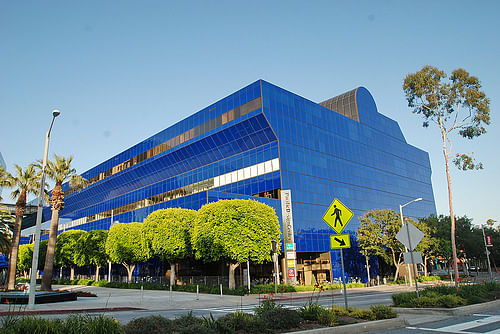
In a class entitled "Urbanism After Mass Media" at Taubman College, a conversation arose about the overlap between architecture, advertisement, icon, logo, and capitalism [in a nutshell]. Primarily, the discourse was based on several readings; using texts from Bob Somol, Sylvia Lavin, Peter... View full entry

Introduction by Anya Sirota to topic of "Objective Uncertainty" This panel will consider transformative design procedures Introduction of Giuseppe Lignano & Ada Tolia [Co-Founders of LOT-EK], [Lignano & Tolia] Objects & Operations Stack & Shift We believe in design that is... View full entry
As an addendum to the previous post's attempt to transcribe Tagliabue's lecture earlier this evening at Taubman College, a more personal, subjective reflection is warranted. It is quite difficult to speak of EMBT without immediately thinking of Enric Miralles as an architectural figure... View full entry
Live Blogging #2 Before we get the show on the road, I'm pretty excited to see the recent work of Benedetta Tagliabue. I must say, probably similar to most architecture students, I am most familiar with the work of EMBT, an office which greatly effected us as students [at Florida International... View full entry
Live tweeting [tumbling?] from Stamps Auditorium, University of Michigan...let's do this! Monica Ponce de Leon's introduction John McMurrough asks to notify the audience that this lecture counts for AIA Continuing Education credits [super important!] Monica referencing establishment of... View full entry
Now that I'm post-graduate-school, and [for the time being] post-architectural-practice, I'm using this blog as an outlet to generate meaningful conversation on the limitations as well as latent opportunities in architectural practice. Co-Founder @anewyorkagency


